The average American drinks about three cups of coffee a day. That’s over a thousand cups a year — and the way you brew those cups shapes how your mornings feel, how your coffee tastes, and honestly, how much money stays in your wallet. So choosing between a moka pot and a drip coffee maker isn’t some tiny kitchen decision. It’s a lifestyle call.
Both brewers have been around for decades, both are affordable, and both make genuinely good coffee. But they work in completely different ways, and the cup they produce is nothing alike. One gives you something thick, punchy, and intense. The other gives you a clean, easy-drinking mug you can sip on for an hour without thinking twice.
If you’ve been going back and forth between these two, this guide is built to help you stop guessing. We’ll break down how each one actually brews coffee, what the flavor differences really taste like, and which brewer makes sense based on how you live and drink. No hype, no filler — just the stuff that actually helps you decide.
How a Moka Pot Actually Works
The moka pot was invented by Alfonso Bialetti in Italy back in 1933, and the design hasn’t changed much since. That tells you something — it works, and it works well.
A moka pot has three chambers. You fill the bottom chamber with water, drop a filter basket loaded with ground coffee into the middle, and screw the top chamber on tight. Place the whole thing on your stove. As the water heats, steam pressure builds in the lower chamber and forces hot water upward through the coffee grounds. The brewed coffee collects in the top chamber with a satisfying gurgling sound that’s become almost iconic in Italian kitchens.
The pressure inside a moka pot reaches about 1 to 2 bars. That’s not quite espresso territory (espresso machines run at around 9 bars), but it’s significantly more pressure than any gravity-based brewer. This pressure is exactly what gives moka pot coffee its bold, concentrated character.
Quick fact: The Bialetti Moka Express is one of the most recognized coffee makers on the planet. Over 300 million units have been sold worldwide, and the original design sits in museums of modern art.
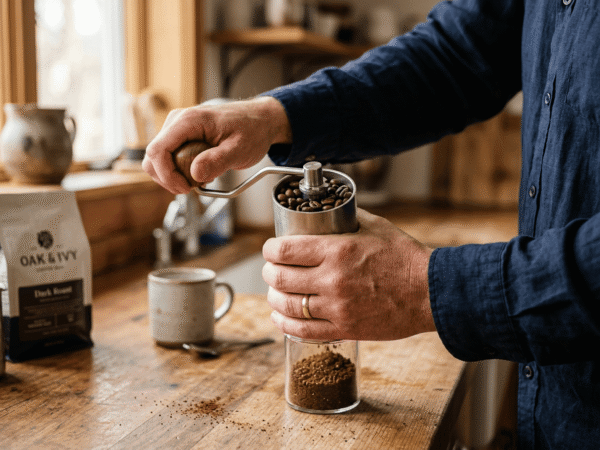
The grind you use matters a lot here. You want something finer than drip but coarser than true espresso — a medium-fine grind works best. If you’re unsure about getting the right consistency, a quality coffee grinder designed for moka pots makes a big difference in your results.
The whole brewing process takes about five to seven minutes on the stove. There’s no timer, no automatic shutoff — you stand near it, listen for the gurgle, and pull it off the heat. It’s hands-on, and some people love that ritual. Others find it annoying before their first coffee.
How a Drip Coffee Maker Actually Works
Drip coffee makers are about as straightforward as coffee brewing gets. You fill a reservoir with cold water, put a paper or reusable filter in the basket, add your ground coffee, and press a button. The machine heats the water and drips it slowly over the grounds. Gravity pulls the brewed coffee down through the filter and into a carafe.
No pressure. No steam. Just hot water meeting coffee grounds and gravity doing the rest.
The water temperature in a good drip machine hovers between 195°F and 205°F — what the Specialty Coffee Association considers the ideal extraction range. Cheaper machines sometimes struggle to hit this window consistently, which is why the quality of your drip maker actually matters more than people think. If you’re shopping for one, checking out the best drip coffee makers can save you from ending up with a machine that under-extracts and leaves you with sour, weak coffee.
The brewing cycle usually takes four to eight minutes depending on how much coffee you’re making. Most machines brew anywhere from four to twelve cups at once, making them a natural fit for households with multiple coffee drinkers or anyone who wants a full pot waiting when they roll out of bed.
Modern drip machines often come with programmable timers, auto-shutoff, and thermal carafes. Some high-end models even have built-in grinders — a combo that works well if you want fresh-ground coffee without a separate appliance cluttering your counter.
The paper filter plays a bigger role than most people realize. It traps coffee oils and fine particles, which directly affects the body and mouthfeel of your cup. More on that in a minute.
Flavor: The Real Difference You’ll Taste Every Morning
This is where these two brewers part ways in a big way, and it’s probably the most important section if you’re trying to make a decision.
Moka pot coffee tastes strong, concentrated, and full-bodied. It has a richness that sits heavy on your tongue, with a noticeable bitterness that espresso lovers tend to enjoy. The oils from the coffee grounds make it through the metal filter and into your cup, which adds body and a slightly creamy texture. You’ll pick up deeper, roasted flavors — chocolate, caramel, toasted nuts. It’s the kind of coffee that announces itself.
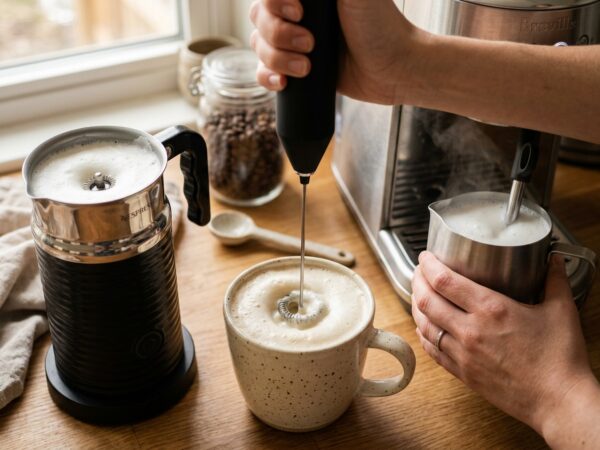
A single moka pot serving is small — usually about two to four ounces. Most people don’t drink it straight like a regular cup of coffee. You either sip it slowly, almost like an espresso shot, or you add hot water to make an Americano-style drink. Adding steamed milk turns it into something close to a latte or cappuccino. If you own a good milk frother, you can genuinely make café-quality drinks at home with a moka pot.
Drip coffee tastes clean, smooth, and lighter. The paper filter absorbs most of the coffee oils and removes fine particles, leaving you with a cup that’s easy to drink and less intense. You’ll notice brighter flavor notes — fruitiness, floral hints, a pleasant acidity. These nuances come through more clearly because the coffee isn’t overpowered by body and bitterness.
Drip coffee is what most Americans grew up drinking. It’s comfortable. It’s the kind of coffee that pairs with everything — breakfast, a sandwich, a conversation, a long afternoon of work. You can drink eight ounces or more without feeling overwhelmed.
Here’s a useful way to think about it: moka pot coffee is like a shot of whiskey — small, intense, meant to be appreciated in small amounts. Drip coffee is like a cold beer — easy, refreshing, something you can enjoy over a longer stretch of time.
Neither style is “better.” They’re just aiming at different targets.
Caffeine Content: Which One Gives You More of a Kick?
People often assume moka pot coffee has more caffeine because it tastes so much stronger. That’s partly true and partly misleading, depending on how you measure it.
Per ounce, moka pot coffee does contain more caffeine. The pressurized extraction pulls caffeine from the grounds more efficiently, and the concentrated serving means each sip packs more punch.
But per serving? Drip coffee often delivers more total caffeine. Think about it — a standard moka pot gives you about two ounces of coffee. An average drip serving is eight to twelve ounces. Even though drip coffee is less concentrated, you’re drinking a lot more of it. A typical eight-ounce drip cup contains about 95 to 165 mg of caffeine, while a two-ounce moka pot serving has roughly 60 to 100 mg.
So if you’re looking for a caffeine boost, it depends on how much you actually drink. One moka pot serving gives you a quick, concentrated hit. A full mug of drip coffee gives you a steadier, longer-lasting supply of caffeine over time.
The type of bean matters too, by the way. Robusta beans have nearly double the caffeine of Arabica beans. If you’re using a dark roast Robusta blend in your moka pot, you’re going to feel it. Picking the right coffee beans for your brewer is half the battle.
Ease of Use and Convenience
Let’s be honest — morning coffee shouldn’t feel like a chore.
A drip coffee maker wins this category without much debate. You set it up, press a button, and walk away. Many models let you program them the night before, so coffee is literally ready by the time you stumble into the kitchen. Cleanup is simple: toss the paper filter, rinse the carafe, done. If you’re brewing for a family or a household of roommates, a drip maker handles volume effortlessly. A small drip coffee maker can even fit in tight apartment kitchens or dorm rooms without taking up much space.
A moka pot asks more from you. You need to heat water separately (or at least wait for it to heat on the stove), grind your coffee to the right size, monitor the stove, listen for the right gurgling sounds, and remove it from heat at the right moment. Overshoot the heat and your coffee tastes burnt and bitter. Undershoot and you get weak, under-extracted coffee.
Cleaning a moka pot is easy but takes a bit more attention. You need to disassemble it, rinse out the grounds, clean the filter basket, and let the parts dry. Most moka pot purists recommend never using soap — just hot water — because soap residue can affect flavor over time.
The moka pot isn’t complicated. Anyone can learn to use one in a day or two. But it’s not “set and forget.” If you’re a morning zombie who needs coffee before you can function enough to make coffee, a drip maker is probably your better friend.
Cost: What You’re Actually Spending
Both of these brewers are budget-friendly, especially compared to espresso machines, which can run anywhere from $200 to well over $1,000.
A solid moka pot costs between $25 and $50 for the most popular sizes (3-cup and 6-cup). The Bialetti Moka Express, still the gold standard, usually sits around $30 to $40. Since there are no electrical parts, there’s almost nothing that can break. A well-maintained moka pot can last 10 to 20 years. You’ll replace the rubber gasket and filter plate every year or two — a $5 fix.
Drip coffee makers have a wider price range. You can grab a basic, reliable model for $25 to $50, or spend $150 to $300 on a higher-end machine with better temperature control, a thermal carafe, and a built-in grinder. If you’re looking for something solid without spending too much, the best coffee makers under $100 category has a lot of great options. The catch with drip makers is that they eventually wear out — heating elements fail, carafes crack, and pumps stop working. Most last three to five years with regular use, though well-built ones can go longer.
There’s also the ongoing cost of paper filters. They’re cheap individually — maybe $0.02 to $0.05 per filter — but that adds up over hundreds of cups a year. A reusable metal filter eliminates this cost, though it slightly changes the coffee’s flavor profile (more oils pass through, making your drip coffee taste a bit more full-bodied).
The moka pot uses no filters, no electricity, and has virtually no replacement costs. From a pure long-term value standpoint, it’s hard to beat.
Brewing Capacity and Who It’s Best For
This is a practical consideration that often gets overlooked, and it can honestly be the deciding factor.
Moka pots come in fixed sizes. A “3-cup” moka pot makes about 4.5 ounces of coffee (those are Italian-sized espresso “cups,” not American mugs). A “6-cup” makes about 9 ounces. And here’s the thing — you can’t really brew a half batch in a moka pot. The chamber needs to be full for proper extraction. So you need to pick your size and commit.
If you’re a single person who drinks one or two strong cups in the morning, a 3-cup or 6-cup moka pot is perfect. If you’re trying to serve four people at a breakfast table, you’ll be running batch after batch, and it’s going to get old fast.
Drip coffee makers scale beautifully. You can brew two cups or twelve cups from the same machine. Most households with multiple coffee drinkers naturally gravitate toward drip for this reason. Fill the reservoir, add grounds, and everyone pours their own cup at their own pace. Simple.
Think about who else drinks coffee in your home. Think about whether you entertain guests. Think about your typical morning — are you alone and unhurried, or is it chaos with people running out the door? Your answer points you clearly toward one brewer or the other.
Portability and Travel Use
Moka pots are naturally portable. No electrical cord, no bulky carafe. Toss one in a bag with some pre-ground coffee, and you can brew anywhere you have a heat source — a camping stove, a hotel room hotplate, even a campfire with a grate. For outdoor coffee lovers who want something stronger than basic camp coffee, a moka pot is an outstanding choice. It also pairs well with stovetop coffee percolators as part of an off-grid coffee setup.
Drip coffee makers are countertop appliances. They need electricity and a flat, stable surface. You’re not taking one on a road trip or a camping weekend. Some people buy a separate portable brewer for travel — like an AeroPress or a pour-over cone — but the standard drip maker stays home.
If portability matters to you at all, the moka pot has a clear edge.
Grind Size and Coffee Beans: Getting the Best From Each Brewer
Both brewers are forgiving enough to work with pre-ground coffee, but using the right grind makes a noticeable difference in flavor.
For a moka pot, you want a medium-fine grind — somewhere between table salt and sand in texture. Too fine (like espresso grind) and the water can’t push through, leading to bitter, over-extracted coffee or even a dangerous pressure buildup. Too coarse and the water rushes through without extracting enough flavor, leaving you with a weak, watery cup. Getting the right grind with a hand coffee grinder gives you more control over this than pre-ground bags.
For drip coffee, a medium grind works best — about the texture of regular beach sand. Most pre-ground coffee sold in grocery stores is actually ground specifically for drip machines, so you can use those without any adjustments. If you want to step up your game, grinding fresh with a grinder matched to drip brewing gives you noticeably more flavor clarity.
As for bean selection, darker roasts tend to shine in a moka pot because the intense brewing method amplifies those roasted, chocolatey notes. Lighter and medium roasts do well in drip machines because the gentler extraction lets the more delicate flavors come through without being buried.
That said, there are no hard rules here. Plenty of people brew light roasts in moka pots and enjoy the results. Coffee is personal — experiment until you find what you like.
How They Compare to Other Brewing Methods
You might be wondering how these two stack up against the rest of the brewing world. Quick context helps.
If you’re coming from a French press background, you’ll find that moka pot coffee is similarly full-bodied but more concentrated, while drip coffee is cleaner and lighter. The comparison between a French press and a moka pot is actually one of the most common debates in home brewing. Similarly, French press vs. drip is another matchup worth understanding if you’re weighing multiple options.
Pour-over brewing (like a V60 or Chemex) sits close to drip in flavor profile — clean, nuanced, and filter-brewed. But pour-over requires more hands-on technique, while drip automates the process. If the idea of a pour-over appeals to you but you want the convenience of a machine, a pour-over style drip coffee maker bridges that gap nicely.
Espresso is the closest relative to the moka pot. True espresso uses much higher pressure (9 bars vs. 1-2 bars), which creates crema and an even more concentrated shot. But real espresso machines cost a lot more money and take up a lot more space. The moka pot gives you about 80% of the espresso experience for about 10% of the cost.
Which One Should You Pick?
Instead of telling you which brewer is “better” — because that depends entirely on you — here’s a simple way to think about it.
Go with a moka pot if you love intense, bold coffee with a thick body. If you drink one or two strong cups in the morning and that’s enough. If you enjoy the hands-on ritual of stovetop brewing. If you want to make espresso-style drinks like lattes and cappuccinos at home without buying an espresso machine. If you care about long-term value and want a brewer that lasts decades with zero electricity costs. If portability and simplicity of design appeal to you.
Go with a drip coffee maker if you prefer a lighter, smoother, and more mellow cup. If you brew for multiple people or want a full pot ready in the morning. If convenience is a top priority — you want to press a button and walk away. If you like programmable features, timers, and automatic shutoff. If you drink larger volumes of coffee throughout the day.
And honestly? Plenty of coffee lovers own both. A moka pot for slow weekend mornings when you want something special. A drip maker for busy weekdays when you need coffee fast and in quantity. The two complement each other surprisingly well.
FAQ
Is moka pot coffee the same as espresso?
No, not technically. Moka pot coffee is strong and concentrated, but real espresso requires around 9 bars of pressure while a moka pot generates only 1 to 2 bars. The flavor profile is similar — both are bold and intense — but espresso has a layer of crema and a slightly different texture. That said, many people happily use moka pot coffee as an espresso substitute for milk drinks at home, and the results are genuinely good.
Can I use espresso grounds in a drip coffee maker?
You can, but you probably shouldn’t. Espresso grounds are much finer than what drip machines are designed for. The water passes through too slowly, causing over-extraction. Your coffee will taste harsh and bitter, and the grounds might overflow the filter basket. Stick with medium grind for drip machines. If you need help dialing in the right consistency, using a hand grinder gives you fine-tuned control.
Does moka pot coffee taste burnt?
It can, but only if you brew it wrong. The most common mistake is using high heat, which pushes the water through too fast and scorches the coffee. Use medium to low heat, start with pre-heated water, and pull the pot off the stove as soon as the gurgling starts to sputter. With the right technique, moka pot coffee tastes rich and smooth, not burnt.
How do I store coffee beans to keep them fresh for either brewer?
Whole beans stay fresh for about two to four weeks after roasting when stored properly. Keep them in an airtight container, away from heat, light, and moisture. Avoid the freezer — the temperature swings from taking beans in and out cause condensation, which degrades flavor. A dedicated coffee bean storage solution keeps your beans at peak freshness longer than a standard bag clip.
Can I make iced coffee with both brewers?
Absolutely. For drip coffee, simply brew a strong batch and pour it over ice — or better yet, make a pumpkin cream cold brew using cold brew concentrate for a smoother result. For the moka pot, brew a double-strength batch and pour it directly over a tall glass of ice. The concentrated nature of moka pot coffee actually makes it ideal for iced drinks because it doesn’t get watered down as quickly as drip coffee does.
Your Next Step
Both the moka pot and drip coffee maker have earned their place in millions of kitchens for good reasons. They’re not competing against each other as much as they’re serving different moods, different mornings, and different people.
If you’re still on the fence, ask yourself one question: what does your ideal morning coffee moment look like? If it’s standing at the stove, hearing that rumble, and pouring a small cup of something that hits like a freight train — the moka pot is calling your name. If it’s waking up to the smell of a fresh pot, filling your favorite oversized mug, and not thinking about the process at all — a drip maker is your answer.
Either way, you’re making real coffee at home, saving money compared to café runs, and drinking something you actually enjoy. That’s a win no matter which brewer ends up on your counter.