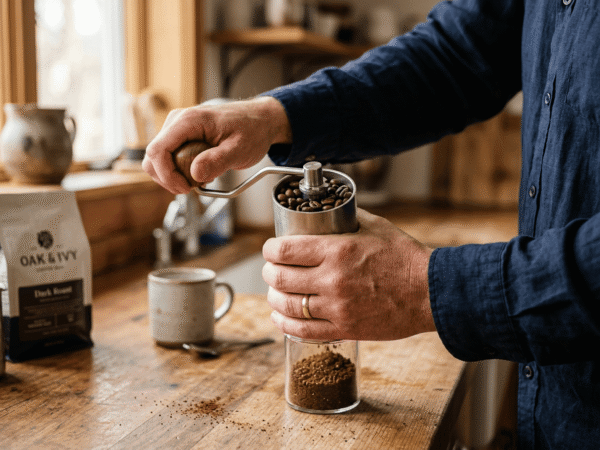
Pre-ground coffee starts losing its flavor within 30 minutes of grinding. That’s not opinion — it’s chemistry. Oxygen breaks down the aromatic compounds the moment beans are ground, and by the time that bag sits on your shelf for a week, you’re basically brewing a shadow of what coffee should taste like. A drip coffee maker with a built-in grinder fixes this problem completely. It grinds your beans seconds before hot water touches them. The result? A cup that actually tastes like the roaster intended.
But here’s where things get tricky. Not every grind-and-brew machine does a good job. Some have weak grinders that produce uneven grounds. Others nail the grinding but mess up the brewing temperature. And a few are so loud your family will ban you from using them before 9 AM.
I’ve spent serious time comparing these machines — looking at grinder type, brew quality, ease of cleaning, noise levels, and whether they actually deliver on the promise of “coffee shop quality at home.” If you’re shopping for a drip coffee maker with a grinder and don’t want to waste money on the wrong one, you’re in the right place.
Why a Built-In Grinder Actually Matters
You might be wondering — can’t I just buy a separate grinder and a separate coffee maker? Absolutely. And for some people, that’s the better move (more on that later). But a combined unit has some real advantages that are hard to ignore.
Freshness on autopilot. When your grinder is built into the brewer, you load beans, press a button, and walk away. The machine grinds exactly what it needs and brews immediately. There’s no transfer step, no grounds sitting exposed to air, no extra cleanup. For busy mornings, this is a genuine time-saver.
Counter space. A quality burr grinder takes up about as much room as a small coffee maker. Combining both into one unit literally halves your counter footprint. If your kitchen is already crowded with appliances, this matters more than you’d think.
Consistency. Good grind-and-brew machines are calibrated so the grind size matches the brew method. You don’t need to guess or adjust — the manufacturer has already dialed it in for drip brewing. That said, the best models still let you fine-tune if you want to experiment.
The tradeoff? You’re putting two machines into one body. If the grinder breaks, the whole unit is affected. And built-in grinders aren’t usually as customizable as standalone options. But for most home coffee drinkers who want great coffee without a complicated setup, the convenience is worth it.
If you’re curious about how grind size impacts flavor across different methods, our breakdown on French press grind size explains the science really well.
What to Look For Before You Buy
Not all grind-and-brew machines are created equal. Here are the things that actually matter — and a few that brands love to hype up but don’t make much difference.
Burr Grinder vs. Blade Grinder
This is the single most important thing to check. Burr grinders crush beans between two abrasive surfaces, producing uniform particles. Blade grinders use a spinning blade that chops beans randomly, creating a mix of fine dust and large chunks.
Why does this matter? Uneven grounds mean uneven extraction. The tiny particles over-extract (bitter), the big chunks under-extract (sour), and you end up with a muddled, unpleasant cup. Every serious coffee machine worth recommending uses a burr grinder. If a model uses a blade grinder, skip it — no matter how good the rest of the features look.
Within burr grinders, you’ll see two types: conical burrs and flat burrs. Conical burrs are quieter and generate less heat, which helps preserve flavor. Most home grind-and-brew machines use conical burrs, and that’s perfectly fine for drip coffee.
Brew Temperature
The Specialty Coffee Association (SCA) recommends brewing between 195°F and 205°F. Below that range and your coffee under-extracts — it’ll taste weak and sour. Above it and you risk scorching the grounds, pulling out harsh, bitter flavors.
Some budget machines don’t hit this range consistently. The water might start cool and only reach optimal temperature halfway through the brew cycle. Look for machines that specifically mention SCA-compliant brewing or thermal stability.
Grind Settings
More grind settings give you more control. But don’t get seduced by a machine advertising 20 grind levels if you’re only brewing drip coffee. For drip, you really need medium-fine to medium-coarse options — maybe 5 to 8 settings is the sweet spot for most people.
Where extra settings become useful is if you also want to grind beans for other methods. Maybe you’ve got a French press or a pour-over setup. A machine with broader grind range lets you use the grinder independently for those methods too.
Capacity and Carafe Type
Think about how much coffee you actually drink. A 12-cup machine is great for a household, but if you’re brewing for just yourself, all that extra capacity means stale coffee sitting on a hot plate.
Speaking of which — thermal carafes vs. glass carafes is a big decision. Glass carafes with hot plates keep coffee warm but continue cooking it, which degrades flavor within 20-30 minutes. Thermal carafes hold temperature without a heat source, so your coffee tastes good for an hour or more. The better machines almost always use thermal carafes.
For keeping your coffee hot on the go, you might want to check out the best thermos for coffee — a solid thermal carafe paired with a good thermos means fresh-tasting coffee all day.
Cleaning and Maintenance
Here’s something most review articles gloss over, and it’s honestly the reason many people abandon their grind-and-brew machine within a year. These machines are harder to clean than standard drip makers. Ground coffee gets trapped in the grinder chute, oils build up on burrs, and if you ignore maintenance, your coffee starts tasting rancid.
Before buying, check whether the grinder is easily accessible. Can you remove the burrs for cleaning? Does the brand include a cleaning brush? Is there a descaling reminder? These aren’t flashy features, but they determine whether you’ll actually enjoy using the machine long-term.
Best Drip Coffee Makers With Grinder — Honest Picks
I’m not going to rank 15 machines here. Most of them aren’t worth your time. These are the ones that genuinely perform well, and I’ll tell you exactly who each one is best for.
Breville Grind Control (BDC650BSS)
If budget isn’t your main concern and you want the most control over your coffee, the Breville Grind Control is the one to beat. It has a stainless steel conical burr grinder with adjustable grind size and amount. You can brew anywhere from a single cup to a full 12-cup carafe, and the machine automatically adjusts its calibration based on how much you’re making.
The LCD screen shows you exactly what’s happening at each stage. You get a steep/release valve system that lets coffee bloom before full extraction — something you’d normally only see in manual pour-over methods. The brew temperature stays consistent in the SCA-recommended range.
Who it’s for: Coffee enthusiasts who want maximum control, don’t mind spending around $300, and actually enjoy tweaking their brew settings.
The catch: It’s a large machine. Make sure you measure your counter space, especially the height — it needs clearance for loading beans from the top. Cleaning the grinder assembly also requires some attention, though Breville includes decent tools for this.
Cuisinart Grind & Brew Plus (DGB-900BC)
Cuisinart has been making grind-and-brew machines for years, and the DGB-900BC represents their most refined version. It features a conical burr grinder (older Cuisinart models used blade grinders — avoid those), a thermal carafe, and a clean, simple interface.
The machine offers a “Grind Off” button, which is really handy. Some mornings you might have pre-ground coffee and just want to brew. With many competitors, you can’t bypass the grinder without it throwing an error. Cuisinart handles this smoothly.
The auto-start function is another real-world winner. Load your beans and water the night before, set the timer, and wake up to freshly ground, freshly brewed coffee. The thermal carafe keeps it hot without a hot plate.
Who it’s for: Families and anyone who wants reliable daily performance without overthinking settings. It’s priced around $200, which hits a nice value sweet spot.
The catch: The grind settings aren’t as precise as the Breville. You get options, but fine-tuning isn’t its strength. If you’re particular about dialing in your grind, you might feel limited.
Ninja Coffee Bar with Built-In Frother (CFN602)
Ninja doesn’t always get respect from coffee purists, but here’s the thing — for the average home coffee drinker, Ninja machines make genuinely good coffee. The CFN602 combines grinding, brewing, and frothing in one unit.
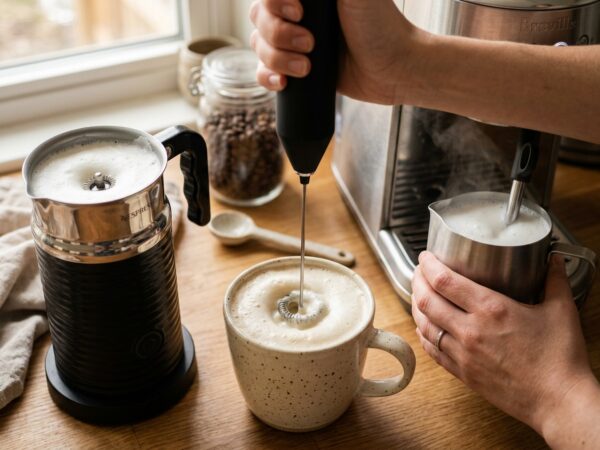
You get six brew sizes (from a single cup to a full carafe) and multiple brew styles including classic, rich, over ice, and specialty. The built-in frother lets you make simple lattes and cappuccinos without buying a separate device. If you’ve been wanting to try making a latte with a frother, this machine gives you everything in one package.
Who it’s for: People who want versatility — not just black coffee but also milk-based drinks and iced coffee. It’s a great all-in-one at around $230.
The catch: The grinder is functional but not as quiet or refined as Breville’s. And coffee purists will note that the extraction doesn’t quite match SCA gold cup standards. For most people though, the difference won’t be noticeable.
KRUPS Grind and Brew Auto-Start (EC314050)
If you’re watching your budget and want something under $120 that still grinds and brews, KRUPS offers a solid entry point. It has a conical burr grinder, a 10-cup glass carafe, and a programmable auto-start timer.
Let’s be honest about what you’re getting at this price: the grinder works, but it’s noisier than premium models. The glass carafe with hot plate means you should drink your coffee within 30 minutes for best taste. The build quality is decent but clearly a step down from Breville or Cuisinart.
Who it’s for: Budget-conscious buyers who want the freshness of grinding right before brewing but don’t want to spend $200+. Students, small apartments, first-time grind-and-brew buyers.
The catch: Limited grind adjustability, and the hot plate will slowly cook your coffee if you leave it sitting. Pour what you need and turn it off.
Breville YouBrew (BDC600XL)
This is an older Breville model that you can sometimes find discounted, and it’s still a genuinely capable machine. It features Breville’s burr grinder technology, a thermal carafe, and a flavor control dial that adjusts steeping time.
The reason I mention it: if you find one on sale or refurbished, it can be a great deal. The core grinding and brewing performance is close to the Grind Control, just without the fancy LCD and some of the newer convenience features.
Who it’s for: Deal hunters who want Breville quality at a lower price point. Check manufacturer-refurbished options — they often come with a warranty.
Separate Grinder + Drip Maker: When That’s the Better Play
A combined machine isn’t always the best choice. If you brew using multiple methods — maybe drip on weekdays and pour-over on weekends — a standalone grinder gives you far more flexibility. A high-quality burr grinder like the Baratza Encore paired with a reliable automatic drip coffee maker can actually outperform most grind-and-brew combos.
You’d also want to consider a separate setup if you’re serious about grind consistency. Even the best built-in grinders don’t match what a dedicated $150+ grinder can do. The particle distribution is tighter, the grind settings are more numerous, and you can calibrate specifically for each brew method.
Our guide on the best coffee grinder for drip coffee breaks down what to look for if you decide to go the two-piece route.
The bottom line: grind-and-brew machines are about convenience. Separate setups are about maximum quality and flexibility. Neither approach is wrong — it depends on what you value more.
Getting the Best Results From Your Grind-and-Brew Machine
Owning the right machine is only half the equation. How you use it makes a big difference in what ends up in your cup.
Start With Good Beans
Your grinder can only work with what you give it. Stale, low-quality beans ground fresh will still taste like stale, low-quality coffee — just slightly less stale. Look for beans with a roast date on the bag (not just an expiration date). Ideally, use beans within 2-4 weeks of roasting. Our best coffee bean guide can help you find something you’ll genuinely enjoy.
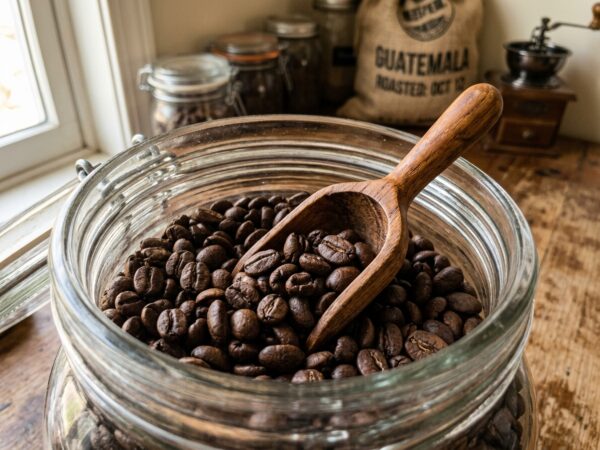
Pro Tip: Store your beans in an airtight, opaque container at room temperature. Don’t freeze them. Don’t refrigerate them. The moisture and temperature fluctuations cause more harm than good. We’ve covered this in depth in our piece on proper coffee bean storage.
Use the Right Water
Coffee is about 98% water. If your tap water tastes off — chlorinated, metallic, sulfuric — that flavor carries straight into your cup. Filtered water is the easiest fix. Avoid distilled water though, because the minerals in water actually help with extraction. A basic carbon filter pitcher works perfectly.
Nail Your Coffee-to-Water Ratio
The SCA’s golden ratio is roughly 1 gram of coffee for every 15-18 grams of water. In more practical terms, that’s about 2 tablespoons of ground coffee per 6 ounces of water. Most grind-and-brew machines have settings for brew strength — “mild,” “medium,” “bold” — and these adjust the grind amount automatically. Start with the middle setting and adjust based on your taste.
Clean It Regularly
I can’t stress this enough. Coffee oils go rancid. They build up on the grinder burrs, in the chute connecting the grinder to the brew basket, and inside the carafe.
Run a cleaning cycle with a descaling solution every 4-6 weeks, depending on water hardness. Wipe down the grinder chute weekly. Remove and brush the burrs monthly if your machine allows it. This single habit will keep your coffee tasting fresh and extend the machine’s life by years.
Did You Know? Old coffee oils are actually one of the most common reasons people think their machine is “breaking down.” The coffee starts tasting bitter and rancid, so they assume something mechanical is wrong. In most cases, a thorough deep clean brings the flavor right back.
How Loud Are These Machines, Really?
Let’s talk about the elephant in the kitchen. Grind-and-brew machines are loud. That burr grinder spinning at high RPM, crushing beans into grounds — there’s no getting around the noise.
Most models produce 70-80 decibels during the grinding phase, which is about the same volume as a vacuum cleaner. The grinding only lasts 30-60 seconds, but if you’re using the auto-start feature at 6 AM and your bedroom is near the kitchen, that’s going to wake you up.
The Breville Grind Control is noticeably quieter than budget models, sitting around 70 dB. The KRUPS is on the louder end. Cuisinart falls somewhere in between.
If noise is a deal-breaker, there’s a workaround: grind your beans the night before using the machine’s grinder function (most models let you grind without brewing), store the grounds in the brew basket, and then use the auto-start to just brew in the morning. You lose a tiny bit of freshness — maybe 8-10 hours of oxidation — but you gain a quiet morning. It’s a compromise that works for a lot of people.
Price vs. Performance: What You Actually Get at Each Budget
Under $100: You’ll find blade grinder models and a few basic burr options. Expect compromises in grind consistency, build quality, and temperature stability. These can work for casual coffee drinkers who just want something better than pre-ground, but don’t expect anything close to coffee shop quality. For machines in this range without a grinder, our best drip coffee makers under $100 list has some strong picks.
$100-$200: This is where things get interesting. The KRUPS and mid-range Cuisinart models live here. You get burr grinders, decent temperature control, and thermal carafe options. For most households, this price range delivers the best value.
$200-$350: Premium territory. Breville Grind Control, top-end Cuisinart, and Ninja models. Better grind consistency, more programmability, quieter operation, and build quality that lasts 5+ years with proper care.
Above $350: You’re looking at Moccamaster with a separate grinder or specialty machines. At this point, you’re paying for precision engineering and SCA certification. Worth it for enthusiasts, but overkill for someone who just wants a solid morning cup.
FAQ
Can I use pre-ground coffee in a grind-and-brew machine?
Yes, most grind-and-brew machines have a bypass or “grind off” option that lets you add pre-ground coffee directly to the brew basket. Cuisinart, Breville, and Ninja all include this feature. It’s useful for those mornings when you want flavored coffee or a decaf blend that you bought pre-ground.
How long do the grinder burrs last in a grind-and-brew machine?
Conical burr grinders in home machines typically last 3-5 years with regular use (about 1-2 pots per day). You’ll know the burrs are wearing down when your coffee starts tasting off despite using fresh beans and clean equipment, or when the grinding sounds different — more metallic or strained. Some manufacturers sell replacement burr sets, but on budget models, it might be more cost-effective to replace the whole machine at that point.
Are grind-and-brew machines hard to clean?
They require more maintenance than a basic drip maker, but it’s not complicated. You’ll need to clean the grinder chute, brush the burrs, and descale the machine regularly. Budget about 10-15 minutes per week for routine maintenance. The initial setup and your first cleaning might take a bit longer as you learn how things disassemble, but it becomes quick once you’ve done it a couple of times.
Is a grind-and-brew machine better than buying a separate grinder and drip maker?
It depends on your priorities. A combined machine wins on convenience and counter space. A separate setup wins on grind quality, flexibility, and repairability. If you only brew drip coffee and value simplicity, a grind-and-brew is perfect. If you use multiple brew methods or want the absolute best extraction, go with separate pieces.
What grind size should I use for drip coffee in these machines?
Medium grind is the standard for drip coffee — roughly the texture of coarse sand. Most grind-and-brew machines come pre-calibrated for this, so the default or middle setting usually works well. If your coffee tastes sour or watery, try a slightly finer grind. If it’s bitter or harsh, go a bit coarser.
Your Next Step
Here’s what it comes down to. If your mornings are rushed, your counter space is limited, and you want noticeably better coffee than what pre-ground delivers, a drip coffee maker with a built-in grinder is one of the smartest kitchen upgrades you can make. The Breville Grind Control is the best overall choice if your budget allows it. The Cuisinart DGB-900BC hits the sweet spot of quality and value. And the KRUPS EC314050 proves you don’t need to spend a fortune to enjoy freshly ground coffee every morning.
Whatever you choose, remember that the machine is only part of the equation. Fresh beans, clean equipment, good water, and the right ratio — those four things matter just as much as the hardware. Get those right, and you’ll wonder why you ever drank anything else.