A single coffee bean can taste wildly different depending on how you brew it. Put that same medium-roast Ethiopian bean through a French press and a Moka pot, side by side, and you’ll swear they came from two different bags. That’s how much the brewing method matters.
If you’re stuck choosing between a French press and a Moka pot, you’re not alone. Both are affordable, manual brewers loved by coffee enthusiasts worldwide. Both skip the need for electricity (well, mostly). And both deliver bold, flavorful coffee that puts most automatic drip machines to shame. But the similarities pretty much end there.
The French press steeps coffee grounds in hot water like a tea, producing a full-bodied, oil-rich cup. The Moka pot forces pressurized steam through finely ground coffee on a stovetop, creating something closer to espresso — thick, concentrated, and intense. They’re solving two very different cravings.
So which one deserves space on your kitchen counter? That depends on what kind of coffee drinker you are. Let’s break it down honestly — the flavor, the process, the cleanup, the cost, and everything else that actually matters when you’re spending your real money.
How Each Brewer Actually Works
Before comparing these two head-to-head, it helps to understand what’s happening inside each one. The mechanics are completely different, and that’s exactly why the coffee tastes so different too.
The French Press: Immersion Brewing
A French press is about as straightforward as coffee brewing gets. You add coarse coffee grounds to the glass carafe, pour hot water over them, wait about four minutes, and push the metal mesh plunger down. That’s it.
The technical term is immersion brewing — the grounds sit fully submerged in water for the entire brew time. There’s no pressure involved, no filter paper, just metal mesh separating the liquid from the grounds. This means the natural oils from the coffee beans pass right into your cup, along with some fine sediment. That’s what gives French press coffee its signature thick, almost creamy mouthfeel.
The grind size for a French press matters a lot here. You want coarse grounds, roughly the texture of sea salt. Too fine, and the coffee over-extracts during those four minutes, turning bitter and gritty. Too coarse, and you get a weak, underwhelming brew.
The Moka Pot: Pressure Brewing on Your Stovetop
The Moka pot — invented by Alfonso Bialetti in Italy in 1933 — works on a completely different principle. It’s a three-chamber metal device that sits on your stove. You fill the bottom chamber with water, place finely ground coffee in the filter basket in the middle, screw on the top chamber, and heat it up.
As the water heats, it creates steam pressure (about 1–2 bars) that forces the water upward through the coffee grounds and into the top chamber. You’ll hear that distinctive gurgling sound when the brew is nearly done — that’s the last bit of water and steam pushing through.
The result? A small amount of highly concentrated coffee. It’s not true espresso (which requires around 9 bars of pressure), but it’s the closest you’ll get without an espresso machine. It’s dark, intense, and packs a serious punch in a small cup.
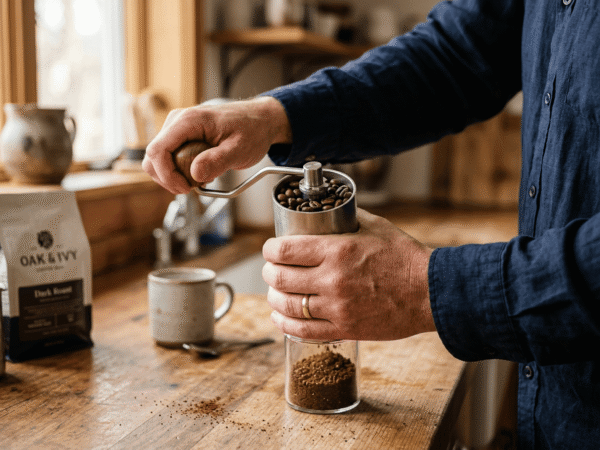
If you’re exploring Moka pot brewing, having the right grinder makes a noticeable difference in your final cup.
Flavor and Taste: The Biggest Difference
Let’s get to what most people actually care about — how does the coffee taste?
French Press Flavor Profile
French press coffee is rich, full-bodied, and smooth. Because the metal mesh filter lets the coffee’s natural oils through (unlike paper filters that absorb them), you get a heavier, more textured cup. There’s a pleasant weight to it on your tongue.
You’ll pick up more of the bean’s nuanced flavors — chocolate undertones, fruity notes, earthy tones — because the immersion method extracts flavor gently and evenly. It’s forgiving in that way. The taste is rounded, not sharp.
There’s also a small amount of fine sediment that settles at the bottom of your cup. Some people love this (it adds to the richness), others find it slightly gritty. Either way, it’s part of the French press character.
Moka Pot Flavor Profile
Moka pot coffee is an entirely different experience. It’s concentrated, bold, and intense — almost syrupy compared to a French press. Think of it as espresso’s little sibling. There’s a slight bitterness that’s characteristic of pressure-brewed coffee, often with a smoky, caramelized edge.
Because the water is pushed through the grounds under pressure, extraction happens faster and more aggressively. You get a sharper flavor, with more bite. Some people describe it as having a slightly metallic taste, especially with aluminum Moka pots (stainless steel models tend to produce a cleaner flavor).
The Moka pot also generates a thin layer of crema-like foam on top — not as thick as real espresso crema, but enough to notice. It’s a nice visual cue that you’ve brewed it right.
Quick comparison:
French press gives you a “sit back and savor” kind of cup. Moka pot gives you a “wake up and get moving” kind of cup. Neither is objectively better — they’re just different moods.
Strength and Caffeine: Who Packs a Bigger Punch?
Here’s where things get interesting, because “strong coffee” means different things to different people.
Flavor Strength vs. Caffeine Content
If you mean flavor intensity, the Moka pot wins easily. That concentrated brew tastes much stronger than a French press cup. A standard 2-oz Moka pot serving hits your palate hard.
But if you’re talking about actual caffeine, it’s more nuanced. A typical 8-oz French press cup contains roughly 80–100 mg of caffeine. A 2-oz Moka pot serving contains about 100–130 mg. Ounce for ounce, the Moka pot delivers significantly more caffeine. But most people drink a full mug of French press coffee, not a small shot of Moka pot brew.
So in practice? If you drink one standard serving from each brewer, you’re getting comparable caffeine levels. The Moka pot just concentrates it into a smaller volume.
Pro Tip: If you want a stronger French press cup, extend your steep time by 30–60 seconds or add slightly more grounds. For a stronger Moka pot brew, use a darker roast — the extraction under pressure amplifies those bold, roasty characteristics.
Ease of Use: Which One Is Simpler?
Both brewers are manual and don’t need electricity (the Moka pot just needs a heat source). But the learning curve and daily effort aren’t quite the same.
French Press: Almost Foolproof
You can learn to use a French press in about two minutes. Boil water, add grounds, pour, wait, press. There’s very little that can go wrong if you use the right grind size and don’t let it steep too long.
It’s also more forgiving with water temperature. Anywhere between 195°F and 205°F works fine. You don’t need a thermometer — just boil the water and let it sit for 30 seconds before pouring.
The whole process takes about 5–6 minutes from start to cup. If you’ve ever compared a French press to a pour over, you already know the French press requires far less attention and technique.
Moka Pot: Simple But Needs Attention
The Moka pot isn’t complicated either, but it does demand a bit more focus. You need to monitor the heat level on your stove — too high and the coffee burns, too low and the extraction stalls. The grind size needs to be fine (but not espresso-fine), and you shouldn’t tamp or pack the grounds too tightly.
Timing matters too. You need to remove the Moka pot from heat right when the gurgling starts, or the coffee can over-extract and taste bitter or burnt. It takes a few tries to learn the sweet spot on your particular stove.
Total brew time is around 5–10 minutes, depending on your heat source and pot size.
Did you know? One common mistake new Moka pot users make is starting with cold water. Using pre-heated or warm water reduces the time the grounds spend on the heat, which means less bitterness in your cup. Some baristas even recommend boiling the water separately and pouring it into the bottom chamber before assembling the pot.
Cleanup and Maintenance
Nobody talks about cleanup in coffee reviews, but you deal with it every single morning. It matters.
French Press Cleanup
Honestly? French press cleanup is the one annoying part of owning one. Those wet, goopy grounds stick to the bottom of the carafe and inside the mesh filter. You need to scoop them out (don’t dump them down the sink — they’ll clog your pipes over time), disassemble the plunger, rinse everything, and occasionally deep-clean the mesh screen to prevent oil buildup.
It takes about 2–3 minutes each time. Not terrible, but not quick either.
Moka Pot Cleanup
The Moka pot is actually easier to clean. Once it cools, unscrew the three sections, knock out the puck of spent coffee grounds (it comes out in a neat little disc), and rinse everything under water. Most Moka pot manufacturers, including Bialetti, recommend not using soap — the natural coffee oils that build up inside the pot actually season it and improve the flavor over time, similar to a cast iron skillet.
Just rinse with warm water, let it air dry, and you’re done. Takes about a minute.
Warning: Never put an aluminum Moka pot in the dishwasher. It will oxidize, discolor, and potentially affect the taste of your coffee. Hand wash only.
Cost and Value
Both brewers are budget-friendly, especially compared to espresso machines or high-end pour-over setups. But there are some differences worth noting.
A decent French press — like a Bodum Chambord or a SterlingPro — runs between $20 and $40. Glass carafes are cheaper but fragile. Stainless steel or double-walled versions cost a bit more but last significantly longer.
A quality Moka pot — the classic Bialetti Moka Express is the gold standard — costs between $25 and $50 depending on the size (1-cup, 3-cup, 6-cup, 9-cup, or 12-cup). Stainless steel models from brands like Bialetti’s Venus line or Grosche Milano tend to be slightly pricier but work on induction stovetops.
Neither brewer requires filters, pods, or any ongoing consumables beyond coffee and water. Over a year, that’s hundreds of dollars saved compared to pod-based machines like Keurig or Nespresso.
For anyone exploring other affordable brewing options, there’s a solid breakdown of the best cheap coffee makers that covers multiple price ranges.
Capacity and Serving Size
This is a practical consideration that doesn’t get enough attention.
A standard French press comes in 3-cup (12 oz), 4-cup (17 oz), 8-cup (34 oz), and 12-cup (51 oz) sizes. An 8-cup model is the most popular — it brews about four regular mugs of coffee, making it great for households or when you want a second cup.
Moka pots serve much smaller portions. A “3-cup” Moka pot brews about 4.5 oz of concentrated coffee — roughly 1.5 oz per “cup” by Italian standards. A “6-cup” model makes about 9 oz. If you want a full American-sized mug, you’ll either need a larger pot or you’ll dilute the brew with hot water (which creates a drink similar to an Americano).
So here’s the takeaway: If you regularly make coffee for two or more people, the French press handles volume better. If you’re a solo coffee drinker who prefers small, strong servings, the Moka pot fits your lifestyle more naturally.
Portability and Travel
Heading camping or traveling? Both brewers have their pros and cons on the road.
The French press is lightweight (especially plastic or stainless steel versions) and doesn’t need a stove — just boiled water from any source. That makes it a solid pick for hotel rooms, Airbnbs, or office desks. If you’re someone who travels with coffee gear, pairing it with a reliable travel mug keeps your brew hot for hours.
The Moka pot is compact and durable (especially the aluminum ones), but you need a heat source — a camp stove, a gas burner, or an induction plate. That adds a layer of dependency. For camping setups, stovetop brewers like the Moka pot or a percolator are tried-and-true options, though.
If portability is your top priority and you don’t want to carry a stove, the French press has the edge. If you’re car camping or have access to a kitchen, the Moka pot travels just fine.
Versatility: What Else Can You Make?
French Press Beyond Coffee
The French press is surprisingly versatile. You can use it to brew loose-leaf tea, make cold brew coffee (steep coarse grounds in cold water for 12–18 hours), froth milk by pumping the plunger rapidly, or even infuse oils and cocktails. Some people use it to strain homemade broth. It’s a multi-purpose kitchen tool disguised as a coffee maker.
If cold brew interests you, there are dedicated cold brew makers designed specifically for that, but a French press does the job perfectly fine in a pinch.
Moka Pot Beyond Black Coffee
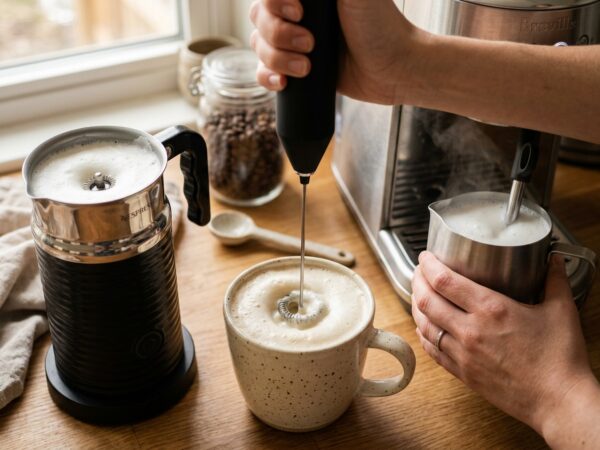
The Moka pot’s concentrated output makes it a great base for espresso-style drinks. Add steamed or frothed milk and you’ve got a homemade latte or cappuccino that genuinely tastes good. Pour it over ice for a quick iced coffee. Mix it with hot chocolate for a Moka-style mocha (which is fitting, given the name).
You won’t get the same versatility as a French press in terms of non-coffee uses, but the Moka pot punches above its weight when it comes to espresso-based drink recipes.
Durability: Which One Lasts Longer?
Glass French presses are fragile — drop one on a tile floor and you’re shopping for a replacement. That said, stainless steel French presses are nearly indestructible and last decades with basic care.
Moka pots are tanks. Aluminum Moka pots can last 20+ years easily. The rubber gasket seal needs replacing every year or two (they cost about $3–5), and the filter plate can wear out over time, but replacement parts are widely available and cheap. In Italy, it’s common for families to pass Moka pots down through generations. That’s not an exaggeration — these things genuinely last that long.
If longevity is a big factor for you, the Moka pot (especially stainless steel) has a slight edge, simply because there’s no glass involved.
Which One Should You Actually Buy?
Here’s the honest answer: it depends on what you’re looking for in your daily cup.
Pick the French press if you:
- Love smooth, full-bodied coffee with rich mouthfeel
- Want the easiest possible brewing process
- Brew coffee for multiple people at once
- Enjoy tasting the subtle flavors and origins of your beans
- Want a brewer that doubles as a tea maker and milk frother
Pick the Moka pot if you:
- Prefer strong, concentrated, espresso-style coffee
- Like making lattes, cappuccinos, or iced espresso drinks at home
- Are a solo coffee drinker who enjoys small, intense servings
- Want a brewer that lasts practically forever
- Have a gas or induction stovetop and don’t mind a bit of hands-on brewing
And honestly? Plenty of coffee lovers own both. They’re inexpensive enough that having one of each isn’t a stretch. Use the French press on lazy weekend mornings when you want to savor a big cup, and pull out the Moka pot on weekday mornings when you need that quick, concentrated hit.
If you’re curious how the French press stacks up against other brewing methods too, the comparison with espresso machines and the AeroPress are both worth a read.
FAQ
Is Moka pot coffee the same as espresso?
Not exactly. Moka pot coffee is strong and concentrated, but true espresso requires about 9 bars of pressure — a Moka pot only generates 1–2 bars. The result is similar in intensity and flavor, but the texture, crema, and body aren’t identical. Think of Moka pot coffee as espresso’s close cousin rather than a twin.
Can I use the same coffee grounds for both brewers?
You can use the same coffee beans, but you’ll need to grind them differently. French press needs a coarse grind (like sea salt), while a Moka pot works best with a fine grind (slightly coarser than espresso). Using the wrong grind size in either brewer will give you a bad cup — either too weak or too bitter. A quality hand coffee grinder with adjustable settings lets you switch between both easily.
Which brewer makes less bitter coffee?
The French press generally produces a less bitter cup because immersion brewing extracts flavors more gently. Moka pot coffee tends to have a slightly bitter edge due to the pressure and heat involved. That said, bitterness in a Moka pot is often a sign of over-extraction — using pre-heated water, medium heat, and removing the pot from the stove at the right moment dramatically reduces bitterness.
How do I store my coffee beans to keep them fresh for either brewer?
Regardless of which brewer you use, store your beans in an airtight container away from light, heat, and moisture. Whole beans stay fresh for about 2–4 weeks after roasting. Ground coffee loses its flavor much faster — within days. For the best results, buy whole beans and grind right before brewing. There’s a detailed guide on proper coffee bean storage that covers this in depth.
Can a Moka pot work on an induction stovetop?
Traditional aluminum Moka pots don’t work on induction cooktops — you need a stainless steel version. Bialetti’s Venus and Kitty lines are induction-compatible, and brands like Grosche and TOPS also make stainless steel Moka pots that work on any heat source, including induction.
Final Thoughts
The French press and the Moka pot are two of the best manual coffee brewers you can own — affordable, reliable, and capable of making genuinely great coffee. They just happen to make very different kinds of great coffee.
If you value richness, ease, and volume, the French press is your daily driver. If you crave intensity, concentration, and that almost-espresso experience, the Moka pot earns its spot on your stovetop. There’s no wrong choice here, only a matter of knowing what your taste buds actually want every morning.
Pick the one that matches how you drink coffee — or grab both and let your mood decide. Your morning routine will thank you either way.