That bag of specialty coffee you just bought? It started losing freshness the moment it was roasted. Within two weeks of opening, poorly stored beans can taste flat, stale, and nothing like the vibrant cup you expected. And yet, most people just fold the bag over with a chip clip and call it a day.
Here’s the thing — proper coffee bean storage isn’t complicated. You don’t need fancy equipment or a food science degree. You just need to understand what causes beans to go stale and how to slow that process down. The difference between a mediocre morning cup and one that actually tastes good often comes down to how you treated those beans between the moment you brought them home and the moment you ground them.
Let’s talk about what’s really going on inside that bag, and what you can do about it.
Why Coffee Beans Go Stale (And Why It Happens Faster Than You Think)
Coffee beans aren’t like rice or dried pasta. They’re a roasted agricultural product packed with volatile organic compounds — the aromatic oils and chemical compounds that give coffee its flavor and smell. After roasting, those compounds start breaking down immediately through a process called degassing.
Freshly roasted beans release carbon dioxide (CO₂) for the first few days. That’s actually a good thing — it’s why quality roasters use bags with one-way valves, so gas can escape without letting oxygen in. But once that degassing phase tapers off, the clock is ticking.
Four enemies accelerate the staling process:
- Oxygen — triggers oxidation, which degrades aromatic compounds
- Moisture — can cause beans to absorb unwanted flavors and even promote mold
- Heat — speeds up chemical reactions that break down oils
- Light — especially UV light, which degrades compounds on the bean’s surface
A 2023 study published in the Journal of Food Science confirmed what coffee professionals have long known: whole beans stored in airtight, opaque containers at room temperature retained significantly more aromatic compounds after 30 days compared to beans left in open packaging. The difference wasn’t subtle — trained tasters consistently rated the properly stored beans as superior.
So your beans aren’t just “getting old.” They’re actively losing the very things that make them taste like coffee.
The Best Way to Store Coffee Beans at Home
You don’t need to overthink this. The goal is simple: minimize exposure to oxygen, moisture, heat, and light. Here’s how to do that with stuff you probably already own — or can pick up cheaply.
Use an Airtight, Opaque Container
The single best thing you can do is transfer your beans from the original bag into an airtight container that blocks light. Glass jars with rubber-sealed lids work fine, as long as you store them in a dark cabinet. Ceramic canisters with silicone-sealed lids are even better because they naturally block light.
There are also purpose-built coffee storage containers from brands like Fellow (the Atmos canister), Airscape, and OXO that actively push air out to create a low-oxygen environment. These typically cost between $25 and $40 and genuinely do make a difference if you’re buying high-quality beans.
One thing to keep in mind: don’t use a container that’s way too big for the amount of coffee you have. A half-empty container is half-full of air, and that extra oxygen does its damage over time.
Keep Them at Room Temperature
A cool, dry spot in your kitchen — like a pantry shelf or a cabinet away from the stove — is ideal. You’re aiming for a stable temperature somewhere between 60°F and 75°F (15°C to 24°C). Avoid storing beans near your oven, on top of your refrigerator, or on a countertop that gets direct afternoon sunlight.
Temperature fluctuations are almost as bad as high heat. Every time the beans warm up and cool down, condensation can form on the surface, introducing moisture. Consistency matters.
Don’t Open the Bag Until You Need To
If you bought two or three bags during a sale, leave the unopened ones sealed. Most quality roasters package their beans in bags with one-way degassing valves and nitrogen-flushed interiors. That environment is about as good as it gets for preservation. Once you break that seal, you’ve introduced oxygen and started the countdown.
Pro Tip: If you go through coffee slowly, consider buying smaller bags more frequently rather than one large bag. A 12-ounce bag used within two weeks will consistently taste better than a 2-pound bag that sits for six weeks.
Should You Freeze Coffee Beans?
This is one of the most debated questions in the coffee world, and the answer is more nuanced than most articles suggest.
When Freezing Makes Sense
Freezing can be a legitimate storage strategy — but only under specific conditions. If you’ve bought more coffee than you can use within two to three weeks, freezing the surplus can preserve freshness remarkably well.
The key is how you freeze them. Research from Christopher Hendon’s lab at the University of Oregon (published in Scientific Reports) found that grinding frozen beans actually produced more uniform particle sizes, which can improve extraction. So the science isn’t against freezing — it’s against doing it carelessly.
Here’s the right way to do it:
Divide your beans into single-use portions — enough for one to three days of brewing. Place each portion in a small, airtight freezer bag. Push out as much air as possible before sealing, or use a vacuum sealer if you have one. Then put those bags in the freezer and only take out what you need.
The critical part: don’t put frozen beans back in the freezer. Every freeze-thaw cycle creates condensation on the bean’s surface. That moisture damages the cellular structure of the bean and introduces water that messes with extraction later. One freeze, one thaw — that’s it.
When Freezing Doesn’t Make Sense
If you’re using your beans within a couple of weeks, there’s no reason to freeze them. A good airtight container at room temperature is all you need. Freezing and thawing introduces unnecessary risk for beans you’re going to use soon anyway.
Also, avoid putting beans in the freezer alongside pungent foods. Coffee is remarkably absorbent. Even in a sealed bag, if there’s any gap in the seal, your Ethiopian Yirgacheffe could start tasting like last week’s garlic bread.
What About the Refrigerator?
Short answer: no. The refrigerator is actually the worst place to store coffee beans.
The fridge is a humid environment full of odors. Every time you open the container to scoop out beans, warm kitchen air rushes in, meets the cold beans, and creates condensation. That moisture is the enemy. And because the fridge temperature isn’t low enough to truly halt chemical degradation (the way a freezer does), you get the drawbacks of cold storage without the preservation benefits.
Think of it this way: the fridge is a middle ground that gives you the worst of both worlds. You’re better off with a cabinet or a freezer — not the space in between.
Whole Beans vs. Pre-Ground: Why It Matters for Storage
If you care about freshness, this is the single most impactful choice you can make: buy whole beans and grind them right before brewing.
Here’s why. A whole coffee bean has a relatively small surface area exposed to air. The aromatic oils and volatile compounds are locked inside the cellular structure. The moment you grind that bean, you shatter it into thousands of tiny particles, exponentially increasing the surface area exposed to oxygen.
Ground coffee goes stale in minutes to hours, not days or weeks. The Specialty Coffee Association (SCA) notes that ground coffee loses a significant portion of its aromatic compounds within 15 to 30 minutes of grinding. That pre-ground can you bought at the supermarket? It was ground weeks or even months ago. It might still make a drinkable cup, but you’re missing out on a huge amount of flavor.
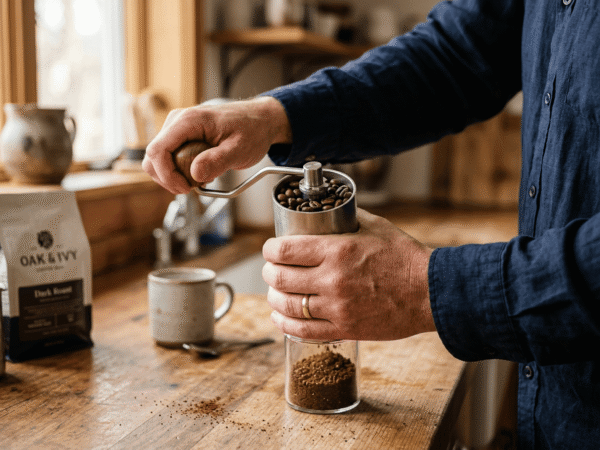
If you don’t own a grinder yet, even an affordable burr grinder in the $30 to $50 range will make a noticeable difference. And if you’re exploring different brewing methods — like comparing a French press vs. pour over — grind size becomes even more important. Storing whole beans and adjusting your grind for each method gives you far more control over the final cup.
Did you know? If you ever find yourself without a grinder, there are actually several clever ways to grind coffee beans without a grinder using common kitchen tools. It won’t be as consistent as a burr grinder, but it’s better than using pre-ground beans that have been sitting open for weeks.
How Long Do Coffee Beans Stay Fresh?
This depends on whether we’re talking about “drinkable” or “at peak flavor.” Beans don’t spoil the way milk or meat does — they won’t make you sick after a certain date. But they do lose their best qualities on a predictable timeline.
Whole Beans (Sealed, Unopened)
Most roasters recommend consuming beans within 4 to 6 weeks of the roast date for optimal flavor, though properly sealed bags with one-way valves can extend that window somewhat. Some roasters nitrogen-flush their bags, which can push shelf life closer to 2 to 3 months before opening.
Whole Beans (Opened)
Once you’ve opened the bag, aim to use the beans within 2 to 3 weeks. After that, they’re still safe to drink, but you’ll notice a decline in aroma, flavor complexity, and that lively brightness that makes fresh coffee special.
Ground Coffee (Opened)
Use it within 1 to 2 weeks at most. Realistically, if you’re grinding your own, try to grind only what you need per session. Getting the right grind size for your brewing method matters more than most people realize, and freshly ground beans respond more predictably to your grinder’s settings.
Frozen Beans
Properly frozen beans (vacuum-sealed or in airtight bags with minimal air) can last 3 to 6 months without major quality loss. They won’t taste as vibrant as beans fresh off the roaster, but they’ll be dramatically better than stale beans that sat on a shelf for the same period.
Quick Fact: Always look for a roast date on the bag, not just a “best by” date. A “best by” date might be 12 months out, which tells you almost nothing about freshness. The roast date is the real indicator. If the bag doesn’t have one, that’s often a red flag about the roaster’s priorities.
Choosing the Right Coffee Storage Container
Not all containers are created equal. Here’s what actually matters when you’re picking one.
Material
Ceramic is excellent — it blocks light completely and doesn’t retain odors. Stainless steel also works well and is practically indestructible. Glass is fine if you store the jar inside a dark cabinet, but leave it on the counter in sunlight and you’re undoing your efforts. Plastic is the least ideal because it can absorb and transfer odors over time and doesn’t always seal as tightly.
Seal Type
Look for containers with silicone gaskets or rubber seals. A simple screw-top lid without a gasket lets more air exchange happen than you’d expect. Vacuum-style canisters (like the Airscape or Fellow Atmos) go a step further by physically reducing the air volume inside the container.
Size
Match the container size to the amount of coffee you typically buy. A 12-ounce bag fits well in a container that holds about 16 ounces of beans. You want a little headroom, but not a cavernous empty space filled with stale air.
⚠️ Warning: Avoid decorative canisters with loose-fitting lids. They look nice on the counter, but they’re essentially the same as leaving your beans in an open bowl. Style means nothing if the seal isn’t tight.
If you’re someone who brews on the go and cares about keeping your coffee hot and fresh after it’s made, you might also want to look at the best thermos options for coffee — because great storage before brewing deserves great storage after.
Special Considerations for Different Bean Types
Not all coffee beans behave the same way in storage. A few distinctions are worth knowing.
Light Roasts vs. Dark Roasts
Dark roasted beans have more oils on their surface — you can actually see the shiny, oily coating. Those oils are more vulnerable to oxidation, which means dark roasts can go stale slightly faster than light roasts if stored improperly. Light roasts tend to have a drier surface and hold their flavor a bit longer, all else being equal.
That said, the difference is measured in days, not weeks. Good storage practices apply equally to both.
Single-Origin vs. Blends
There’s no inherent storage difference here, but single-origin beans often cost more and have more nuanced flavor profiles. Losing those subtle floral or fruity notes to poor storage feels like a bigger waste than losing some boldness from a standard breakfast blend. If you’re spending $18 to $25 on a bag of quality coffee beans, treat them accordingly.
Flavored Beans
Flavored coffee beans (hazelnut, vanilla, etc.) should always be stored in their own dedicated container. The flavoring oils will transfer to anything they touch — including your container, your grinder, and even nearby unflavored beans. Once your burr grinder smells like hazelnut, every cup you make will carry that note for a while.
How Your Brewing Method Connects to Storage
You might not think your brewing method affects how you should store beans, but there’s an indirect connection worth mentioning.
If you’re using a French press vs. drip coffee maker, the coarser grind for a French press means more surface area per particle — which means the ground coffee goes stale even faster than a finer drip grind. The same applies to methods like cold brew, where you might use a cold brew coffee maker with a very coarse grind. Either way, grinding right before brewing is the move.
People who make pour over coffee or espresso at home tend to be more attuned to freshness because those methods are more transparent — meaning they expose flaws in the beans more readily. If your pour over suddenly tastes flat and papery, your brewing technique might not be the problem. Your storage might be.
FAQ
How can I tell if my coffee beans have gone stale?
The easiest test is your nose. Fresh beans have a strong, pleasant aroma — you should be able to smell them clearly even before grinding. Stale beans smell faint, flat, or slightly cardboard-like. You can also look at the beans: if they appear dry and ashy (especially dark roasts that were once visibly oily), that’s a sign the oils have oxidized. Taste-wise, stale coffee often has a generic bitterness without the complexity or sweetness of a fresh cup.
Is it better to buy whole beans or pre-ground for freshness?
Whole beans, without question. A whole bean protects its interior flavor compounds behind its cell structure. Once ground, the massively increased surface area causes rapid oxidation. If you buy pre-ground, you’re starting with coffee that’s already days or weeks past its freshness peak. A simple hand grinder or even a budget electric burr grinder gives you dramatically fresher coffee every morning.
Can I store coffee beans in the bag they came in?
It depends on the bag. If it’s a foil-lined bag with a one-way degassing valve and a zip-seal or tin tie closure, it’s actually a decent short-term storage solution — probably good enough for beans you’ll use within a week or two. But if it’s a paper bag or a bag without a proper seal, transfer the beans to an airtight container as soon as you get home. Even with a good bag, a dedicated canister with a silicone gasket will do a better job keeping air out over time.
Does the roast date on the bag really matter?
Absolutely. The roast date tells you exactly how fresh those beans are. Most specialty coffee professionals suggest beans hit their sweet spot about 5 to 14 days after roasting (after the initial degassing period) and remain at peak quality for 3 to 4 weeks. A “best by” date set 12 months in the future tells you almost nothing useful. Always prioritize bags that display a clear roast date.
Can I store different types of beans in the same container?
It’s best not to, especially if one of them is flavored. Even among unflavored varieties, mixing a fruity Ethiopian with a chocolatey Colombian will muddy the distinct characteristics of both. Use separate containers for different beans, or at least rinse and dry the container thoroughly between varieties.
Your Next Step
Good coffee bean storage is one of those small habits that pays off every single morning. You don’t need expensive gear or a complicated system — just an airtight container, a cool dark spot, and the discipline to buy only what you’ll use in a couple of weeks.
If you’re still brewing with beans that have been sitting open on the counter for a month, try this: pick up a fresh bag from a local roaster, store it properly, and grind right before you brew. The difference in your cup will speak for itself. And once you’ve tasted what fresh beans can really do, you won’t go back to the chip-clip-and-hope method.
Your coffee deserves better. And honestly? So does your morning.