Nearly 40% of American households have just one or two coffee drinkers. So why does the kitchen counter look like a commercial café setup? A full-size 12-cup drip coffee maker takes up serious real estate — and most of us don’t even fill it halfway. That’s where a small drip coffee maker steps in.
If you live in a studio apartment, a dorm room, or you’re simply tired of brewing a full pot just to drink two cups, a compact drip machine makes a lot of sense. You get the same familiar, hands-off brewing you love, but in a footprint that actually fits your life. The thing is, picking the right one isn’t as simple as grabbing the smallest box off the shelf. Brew quality, capacity, build materials, and features vary wildly once you shrink the size down.
This guide walks you through everything you need to know — what to look for, what to avoid, and how to get the best cup of coffee from a machine that barely takes up more room than your toaster.
What Exactly Counts as a “Small” Drip Coffee Maker?
Before we go any further, let’s get clear on what “small” means here. The coffee industry doesn’t have a strict definition, but most people — and most retailers — use the term for drip machines that brew 5 cups or fewer at a time.
That said, “cups” on a coffee maker don’t mean the 8-ounce cups you’d pull from your cabinet. A standard coffee maker “cup” is roughly 5 to 6 ounces. So a “4-cup” coffee maker actually brews about 20 to 24 ounces — basically two regular mugs of coffee. Keep that in mind when you’re comparing sizes, because it catches a lot of people off guard.
Small drip coffee makers generally fall into two camps:
Single-serve drip machines that brew one cup at a time, often using a personal mug or a small carafe. These are the most compact options and work well for solo drinkers.
4 to 5-cup drip brewers that still feel small on the counter but give you enough coffee for two people or a second refill without restarting the whole process.
The key difference between these and pour-over drip coffee makers is automation. With a drip machine, you add water and grounds, press a button, and walk away. A pour-over demands your attention and technique. If you want simplicity with minimal space, a small drip machine is hard to beat.
Why Would You Choose a Small Drip Coffee Maker Over Other Options?
You might be wondering — with so many brewing methods out there, why pick a compact drip machine specifically? Fair question. Let’s talk about who actually benefits from one.
You Value Convenience Above All Else
A French press makes excellent coffee. So does a pour-over. But both require you to stand there, pay attention, and control variables like pour speed and timing. A small drip coffee maker is the “set it and forget it” option. You scoop grounds, add water, hit the switch, and go take a shower. Your coffee’s ready when you are.
If you’ve ever compared French press vs. drip brewing, you already know drip wins on pure ease of use. A smaller version just shrinks the footprint without changing the workflow.
Your Space Is Limited
Studio apartments, RV kitchens, office desks, dorm rooms — these spaces don’t have room for a 14-cup Cuisinart. A small drip machine might measure just 6 to 9 inches wide and 10 to 12 inches tall. Some models tuck neatly under low cabinets where a full-size machine wouldn’t fit.
You’re Brewing for One or Two People
Brewing 12 cups when you only drink 2 is wasteful. Coffee sitting on a hot plate for hours tastes stale and bitter. A smaller machine brews just what you need, so every cup is fresh. It also uses less coffee, less water, and less electricity — a small win that adds up over time.
You Want a Secondary Brewer
Plenty of coffee lovers keep a small drip machine as a backup or weekday workhorse. They might have a Chemex or a siphon setup for weekend ritual brewing, but on a rushed Tuesday morning, a quick 4-cup drip machine does the job without any fuss.
What to Look for in a Small Drip Coffee Maker
Not every compact coffee maker is worth your money. Some brew weak, lukewarm coffee. Others are built with cheap plastics that affect taste. Here’s what actually matters when you’re shopping.
Brew Temperature
This is the single most important factor that separates a good cup from a mediocre one — and it’s where many small, budget drip machines fall short. The Specialty Coffee Association (SCA) recommends a brew temperature between 195°F and 205°F (90°C to 96°C). Below that range, you get under-extracted, sour-tasting coffee. Above it, you risk bitter, over-extracted results.
Cheap small brewers often heat water to only 180°F or so. The coffee comes out flat and thin, no matter how good your beans are. If the manufacturer lists the brew temperature in their specs, pay attention to it. If they don’t mention it at all, that’s sometimes a red flag.
Pro Tip: If you already own a small drip maker and suspect the water isn’t hot enough, run a brew cycle with just water and test the temperature with a kitchen thermometer right as it drips into the carafe. You’ll know immediately if the machine is the problem.
Carafe Type: Glass vs. Thermal
Small drip machines come with either a glass carafe on a hot plate or a thermal (insulated) carafe with no hot plate.
Glass carafes are cheaper and let you see how much coffee is left. The downside? The hot plate keeps cooking your coffee after brewing. Within 20 to 30 minutes, the taste starts to turn harsh and burnt. If you pour immediately and switch off the plate, this isn’t a big deal.
Thermal carafes keep coffee hot for 1 to 2 hours without a hot plate, so the flavor stays intact much longer. They cost more and you can’t see the coffee level at a glance, but for taste preservation, they’re the better choice.
For small brewers, thermal is often the smarter pick. You’re only making 2 to 4 cups — you’ll likely drink it within an hour. A thermal carafe holds that temperature beautifully without degrading your brew.
Build Quality and Materials
Pay attention to what touches your coffee. Stainless steel and BPA-free plastics are the minimum standard you should accept. Cheaper models with low-grade plastics can leach a slight chemical taste into your brew, especially during the first few uses.
The brew basket matters too. Permanent gold-tone mesh filters let more of the coffee’s natural oils through, giving you a richer, fuller body. Paper filters produce a cleaner, lighter cup. Some small machines include a permanent filter but also accept standard #2 cone paper filters, giving you the choice — and that flexibility is nice to have.
Showerhead Design
Here’s something most people overlook: how the water distributes over the coffee grounds. Better machines use a showerhead-style spout that sprays water evenly across the entire bed of grounds. Cheaper ones just drip from a single point, which means some grounds get soaked while others barely get wet. Uneven saturation leads to uneven extraction, and that means inconsistent flavor in your cup.
You won’t always find this detail in product descriptions, but user reviews and YouTube teardowns often reveal how well a machine saturates the grounds.
Programmability and Auto Features
Full-size drip machines often come loaded with programmable timers, brew strength settings, and auto-shutoff features. In the compact category, these features are less common — but they’re not unheard of.
If you’re the kind of person who preps the machine the night before and wants coffee ready when the alarm goes off, look for a programmable model. Just know that pre-ground coffee sitting in the basket overnight does lose some freshness.
Auto-shutoff is a feature worth prioritizing regardless. It’s a safety essential, and it prevents your hot plate from scorching the last ounce of coffee into a burnt residue.
How a Small Drip Coffee Maker Actually Brews Your Coffee
Understanding the process helps you troubleshoot when something tastes off. Here’s the basic sequence, and it’s the same whether you’re using a 4-cup or a 12-cup machine.
You fill the reservoir with cold, fresh water. When you start the machine, a heating element warms the water. Once it reaches the right temperature, it rises through a tube and drips onto the coffee grounds sitting in a filter basket. Gravity pulls the brewed coffee through the grounds and filter, and it collects in the carafe below.
The whole cycle on a small machine typically takes 3 to 6 minutes, depending on the volume. That’s faster than a full-size brewer, which can take 8 to 12 minutes for a full pot. Shorter brew times on smaller machines are normal and expected — there’s simply less water to heat and less coffee to extract.
One thing to watch: if your machine brews too fast (under 3 minutes for 4 cups), the water might be passing through too quickly for proper extraction. You’ll notice a weak, watery taste. Try using a slightly finer grind to slow the flow — though don’t go as fine as espresso. A medium grind is standard for drip brewing. If you’re curious about choosing the right grind for your method, the principles are similar to those covered in finding the perfect French press grind size, just adjusted a notch finer for drip.
Getting the Best Coffee From Your Small Drip Maker
Owning a good machine is only half the equation. Technique — even with an automated brewer — still matters. Here are the adjustments that make the biggest difference.
Use the Right Coffee-to-Water Ratio
The SCA’s golden ratio is roughly 1 to 2 tablespoons of ground coffee per 6 ounces of water. For a richer cup, lean toward 2 tablespoons. For a lighter cup, stay closer to 1.
With a small brewer, precision matters more because you’re working with smaller volumes. Being off by a tablespoon in a 4-cup machine is a much bigger percentage error than in a 12-cup pot. If you’re serious about consistency, a simple kitchen scale is your best friend. Aim for about 14 to 16 grams of coffee per 8 ounces (237 ml) of water.
Start With Good Water
Your coffee is roughly 98% water. If your tap water tastes like chlorine or minerals, that flavor carries directly into your cup. Filtered water — not distilled, not softened, just filtered — gives you the cleanest-tasting results. Distilled water actually hurts extraction because it lacks the mineral content that helps pull flavor from the grounds.
Grind Fresh When You Can
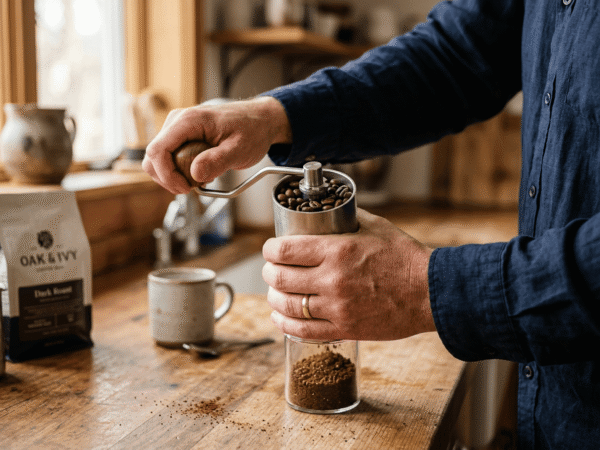
Pre-ground coffee is convenient, and there’s no shame in using it. But if you want to noticeably upgrade your cup without buying a new machine, grinding your beans right before brewing is the single biggest improvement you can make. Coffee starts losing aromatic compounds within 15 to 30 minutes of grinding. Even a basic hand coffee grinder paired with quality beans will transform what comes out of your drip machine.
Clean Your Machine Regularly
Coffee oils build up inside the machine over time. Those oils go rancid and create a stale, off-putting flavor that taints every pot you brew. Run a mixture of equal parts white vinegar and water through a full brew cycle once a month (without coffee grounds), followed by two cycles of plain water to rinse. Some machines have a dedicated cleaning cycle — use it.
Also, wash the carafe and filter basket with warm soapy water after every use. Dried coffee residue is a flavor killer.
Don’t Let Coffee Sit on the Hot Plate
If your machine has a glass carafe and hot plate, pour your coffee into a good quality thermos or an insulated travel mug as soon as brewing finishes. Your coffee will stay hot for hours without the flavor degradation that comes from continuous heating.
Small Drip Coffee Maker vs. Other Compact Brewing Methods
A small drip machine isn’t the only compact option. Let’s see how it stacks up against the other popular space-saving brewers.
vs. AeroPress
The AeroPress is smaller, cheaper, and produces a remarkably clean, concentrated cup. It’s a manual brewer though — you need to boil water separately, time your brew, and press by hand. If you enjoy the ritual, an AeroPress is fantastic. If you want to press one button and walk away, the drip machine wins. There’s a detailed AeroPress vs. French press comparison that covers manual brewing dynamics well.
vs. Single-Serve Pod Machines
Keurig-style pod brewers are equally compact and just as convenient. The trade-off? Pods are expensive per cup (roughly $0.50 to $1.00 each vs. $0.10 to $0.20 for drip-brewed coffee from grounds), they generate significant plastic waste, and the coffee quality generally falls short of what a decent drip machine produces. If cost per cup and environmental impact matter to you, a small drip maker is the better long-term investment.
vs. Moka Pot
A Moka pot brews a strong, espresso-like concentrate on your stovetop. It’s compact and affordable. But it requires stovetop attention, produces a very different style of coffee, and doesn’t make a standard “cup of coffee” without diluting. If you’re after traditional American-style drip coffee, a Moka pot isn’t really a substitute — it’s a different drink. You can read more about Moka pot vs. drip coffee to see where each method shines.
vs. Pour-Over (Single Cup)
A single-cup pour-over cone — like a Melitta or Hario V60 — takes up almost no space and makes excellent coffee. The catch is the same as with any manual method: you’re standing there, pouring in slow circles, timing your bloom phase, and controlling every variable yourself. Some people love that meditative process. Others just want coffee without a project. Know yourself, and pick accordingly.
Common Mistakes People Make With Small Drip Brewers
Even though drip brewing is simple, a few habits can sabotage your results.
Using old, stale coffee. Whole beans stay reasonably fresh for about 3 to 4 weeks after roasting. Pre-ground coffee starts declining in days. If your bag of grounds has been sitting open in the pantry for a month, no machine — small or large — will save it. Proper coffee bean storage makes a real difference here.
Eyeballing the water level. Small reservoirs amplify measurement errors. Adding an extra ounce of water might not matter in a 12-cup machine, but in a 4-cup brewer, it can noticeably dilute your coffee. Use the markings on the reservoir carefully.
Never descaling the machine. Mineral deposits from your water gradually clog the internal tubing and heating element. Over time, this slows the brew cycle, reduces water temperature, and degrades performance. Descaling with vinegar or a citric acid solution every 1 to 3 months (depending on your water hardness) keeps the machine running like new.
Brewing with hot or warm water from the tap. Always start with cold, fresh water. Hot tap water can carry more sediment and mineral deposits from your home’s plumbing, and it doesn’t actually speed up the brew in any meaningful way.
Who Should Skip the Small Drip Coffee Maker?
Look, a compact drip machine isn’t for everyone. If you regularly brew for 4 or more people, you’ll find yourself running multiple cycles, which defeats the convenience factor. In that case, a standard automatic drip coffee maker or one of the best drip coffee makers under $100 will serve you much better.
If you’re a coffee enthusiast who geeks out over bloom time, water temperature precision, and flow rate control, a manual method like pour-over or AeroPress gives you more creative control than any drip machine can.
And if you’re looking for espresso-style drinks — lattes, cappuccinos, americanos — a drip machine isn’t the right tool. You’d want an espresso machine or at least a Moka pot for that kind of brewing.
A small drip coffee maker excels in a specific sweet spot: 1 to 2 people who want good, consistent, no-fuss coffee every morning without cluttering their counter.
Quick Checklist Before You Buy
Before you click “add to cart,” run through these questions:
How many cups do you actually drink? Count in real 8-ounce mugs, not the 5-ounce “cups” manufacturers use. If you drink two big mugs, you need a 4 to 5-cup (manufacturer size) machine.
What’s your counter space situation? Measure the width, depth, and height of the spot where the machine will live. Don’t forget to check the clearance above for opening the lid.
Glass or thermal carafe? If you pour and drink immediately, glass is fine and cheaper. If you like to sip slowly over an hour, thermal keeps things warmer without burning.
Do you need a timer? If you prep at night and want coffee ready at 6 AM, make sure the model has a programmable start feature.
What’s your budget? Decent small drip machines range from about $20 to $80. You don’t need to spend more than that. The sweet spot for quality-to-price tends to sit around $30 to $50.
FAQ
How many cups does a small drip coffee maker actually brew?
Most small drip coffee makers brew between 1 and 5 “cups,” but remember that one manufacturer cup equals roughly 5 to 6 ounces. So a “4-cup” machine actually makes about 20 ounces of coffee — enough to fill two standard mugs. Always check the ounce capacity rather than the cup count to get an accurate picture.
Can I use regular ground coffee in a small drip coffee maker?
Yes, absolutely. Any standard medium-grind coffee works perfectly in a small drip machine. You don’t need special pods, capsules, or proprietary blends. Just use a #2 cone filter or the permanent mesh filter that came with your machine, add your favorite ground coffee, and you’re good to go.
Do small drip coffee makers brew weaker coffee than full-size ones?
Not inherently. Brew strength depends on the coffee-to-water ratio and the machine’s water temperature — not the machine’s overall capacity. If your small brewer heats water to the proper 195°F–205°F range and you use the right amount of coffee, your cup will taste just as strong and flavorful as one from a full-size machine. Weak coffee from a small brewer usually means too little coffee was used or the machine doesn’t heat water adequately.
How long does a small drip coffee maker last?
With regular cleaning and descaling, a quality small drip coffee maker typically lasts 3 to 5 years of daily use. Budget models might give you 1 to 2 years. The heating element and internal pump are usually the first components to degrade. Brands that offer at least a 1-year warranty are generally a safer bet.
Is a small drip coffee maker energy efficient?
Yes, quite. A typical small drip brewer uses between 550 and 900 watts, compared to 1,000 to 1,500 watts for a full-size machine. The brew cycle is shorter too, so your total energy consumption per cup is meaningfully lower. It’s a small savings, but over a year of daily use, it adds up.
Final Thoughts
A small drip coffee maker solves a very specific problem: brewing fresh, decent coffee for one or two people without taking over your counter or wasting half a pot every morning. It’s not trying to compete with a pour-over’s nuance or an espresso machine’s intensity. It’s the reliable, quiet workhorse that asks almost nothing from you and gives you a warm mug of coffee exactly when you need it.
Focus on brew temperature and build quality above everything else. A $35 machine that heats water to 200°F will outperform a $60 machine that barely reaches 185°F — every single time. Pair it with freshly ground beans from a quality grinder, use filtered water, and clean it regularly. That’s the whole formula.
Your next step? Measure your counter space, decide between glass and thermal, and pick a machine that fits both your kitchen and your morning routine. Small doesn’t mean you have to compromise on flavor — it just means you stop brewing coffee nobody’s drinking.