Here’s a number that might surprise you: ground coffee starts losing its aroma within 15 minutes of grinding. That means the pre-ground bag sitting in your pantry? It lost most of its flavor complexity days — sometimes weeks — before you even opened it.
If you brew drip coffee every morning and you want it to actually taste like something special, the grinder matters more than the coffee maker itself. Seriously. You could pair a $30 Mr. Coffee machine with a solid burr grinder and freshly roasted beans, and it would outperform a $300 brewer using stale pre-ground coffee.
But here’s where most people get stuck: which grinder should you actually buy? There are blade grinders, flat burr grinders, conical burr grinders, hand grinders, and a hundred different brands. The price range stretches from $20 all the way to $500+. And drip coffee has its own specific grind requirements that not every grinder handles well.
This guide breaks it all down. You’ll learn what kind of grinder works best for drip coffee, which features genuinely matter, and which ones are just marketing noise. By the end, you’ll know exactly what to look for — and what to skip — so you can stop guessing and start brewing better coffee tomorrow morning.
Why Your Coffee Grinder Matters More Than Your Brewer
Most people spend a lot of time comparing drip coffee makers. They research brewing temperatures, water reservoirs, programmable timers, and showerhead designs. And yes, all of that matters. But the grinder? It’s the unsung hero of the entire setup.
Think of it this way. Your drip coffee maker’s job is pretty simple — it heats water and pours it over ground coffee. The quality of what ends up in your cup depends almost entirely on the quality and consistency of those grounds. If some particles are powdery fine and others are chunky, the water extracts unevenly. The fine bits over-extract and taste bitter. The coarse bits under-extract and taste sour. You end up with a muddled, flat cup that’s somehow both bitter and weak at the same time.
A good grinder produces uniform particle sizes. That means even extraction, balanced flavor, and a cup that actually tastes like the tasting notes on your coffee bag promised. Whether you’re using a standard drip coffee maker or a pour-over dripper, the grinder is the foundation of everything.
So before you spend another dollar upgrading your brewer, make sure your grinder is pulling its weight.
What Grind Size Does Drip Coffee Need?
Drip coffee sits in the medium grind range. If you picture the grind spectrum — Turkish coffee on the ultra-fine end and French press on the coarse end — drip falls right in the middle. The texture should look and feel roughly like regular sand. Not powdery, not chunky, just… sandy.
But “medium” isn’t one fixed setting. It shifts a little depending on what type of drip brewer you’re using.
Flat-bottom basket filters (like most standard auto-drip machines) work best with a medium grind. The flat bed means water sits in contact with the grounds a bit longer, so you don’t want it too fine or you’ll get over-extraction and bitterness.
Cone-shaped filters (like Melitta-style drippers or many single-serve brewers) benefit from a medium-fine grind. The cone shape funnels water through faster, so slightly finer grounds help you get full extraction in that shorter contact time.
Gold or metal mesh filters (reusable permanent filters) need a slightly coarser medium grind. These filters have larger pores than paper, so finer particles slip through and leave sediment in your cup.
The point is this: you need a grinder that gives you control over grind size and produces consistent results at that setting. A grinder that can only do “fine” and “coarse” with nothing reliable in between won’t cut it for drip coffee. And this is precisely where the blade-vs-burr debate gets real.
Burr Grinder vs. Blade Grinder: Which One Should You Pick?
Let’s settle this quickly because it’s the first decision you’ll face.
Blade grinders work like a blender. A spinning blade chops beans randomly. The longer you hold the button, the finer the grind — sort of. The problem is there’s no uniformity. You’ll get dust mixed with large chunks every single time. No matter how long you pulse it, no matter what technique you try, a blade grinder can’t produce the consistent medium grind that drip coffee needs.
Are blade grinders cheap? Yes, you can find them for $15–$25. And if you’re on an extremely tight budget and you’re choosing between a blade grinder with fresh beans or pre-ground coffee, go with the blade grinder. Fresh-ground, even unevenly, still beats stale pre-ground.
But if you’re serious about improving your drip coffee — and your budget allows even $50–$60 — get a burr grinder. Every time.
Burr grinders crush beans between two abrasive surfaces (called burrs) set at a specific distance apart. That distance determines your grind size, and because the gap is fixed, every particle comes out roughly the same size. You get that uniformity that makes your drip coffee taste clean, balanced, and flavorful.
There are two types of burr grinders you’ll see:
Conical burr grinders have a cone-shaped burr spinning inside a ring-shaped burr. They tend to run at lower speeds, produce less heat, and generate less noise. They’re more common in home grinders and are generally more affordable. For drip coffee, conical burr grinders are an excellent choice.
Flat burr grinders use two flat, parallel rings facing each other. They produce incredibly uniform grinds — even more consistent than conical burrs in many cases. But they’re usually found in higher-end grinders (think $150+), generate more heat, and are often louder. If you’re a coffee enthusiast willing to invest, flat burrs are worth exploring. For most home drip coffee drinkers, though, a quality conical burr grinder does the job beautifully.
Pro Tip: If you already own a blade grinder, you can repurpose it for grinding spices. It actually works quite well for that — and it’ll give you an excuse to upgrade to a burr grinder for your coffee.
Manual vs. Electric: What Works Better for Drip Coffee?
This one’s more about your lifestyle than about coffee quality.
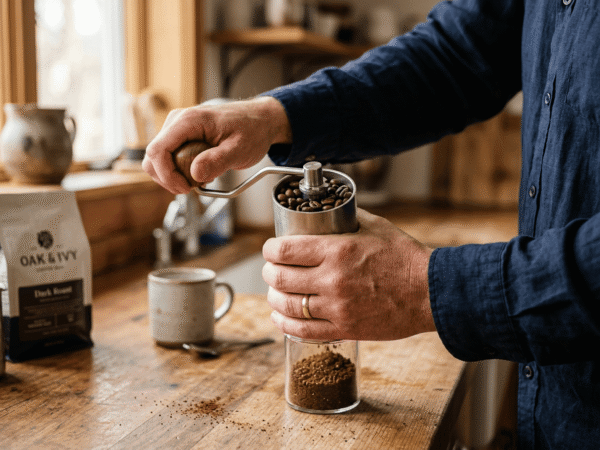
A good hand coffee grinder with quality burrs can produce grinds just as consistent as an electric grinder at the same price point. In fact, dollar-for-dollar, manual grinders often have better burr quality than electric ones because you’re not paying for a motor, housing, and electronics. Your money goes straight into the grinding mechanism.
So why doesn’t everyone just buy a manual grinder?
Time and effort. Grinding enough coffee for a full pot of drip coffee (say, 40–50 grams for 6–8 cups) by hand takes 3–5 minutes of steady cranking. If you’re making one or two cups, it’s fine — maybe 60 to 90 seconds of work. But if you brew a full pot every morning, especially before your brain has fully woken up, that daily hand-grinding session gets old fast.
Electric grinders handle 50 grams of beans in about 15–20 seconds. You press a button. That’s it.
Here’s a simple way to think about it: if you’re a single-cup or two-cup drip brewer, a manual grinder is a fantastic choice. You’ll save money and get great results. If you regularly brew 4+ cups or share coffee with your household, an electric burr grinder will make your mornings significantly easier.
There’s also the joy of using a hand grinder as a ritual — the meditative cranking, the connection to the process. Some people genuinely love it. But practicality matters, and you should be honest with yourself about what you’ll actually stick with long-term.
Key Features to Look for in a Drip Coffee Grinder
Not all burr grinders are created equal. Here’s what genuinely matters when you’re choosing one for drip coffee — and what you can safely ignore.
Grind Consistency at Medium Settings
This sounds obvious, but some grinders are designed to excel at espresso-fine grinds and don’t perform as well in the medium range. Others are built specifically for filter coffee (drip, pour-over, French press) and absolutely nail those medium settings. Before you buy, check reviews specifically mentioning drip or filter coffee performance. A grinder that’s famous for espresso might disappoint you at medium grind settings.
Number of Grind Settings
More isn’t always better, but you want enough range to dial in your exact preference. A grinder with 15–20 settings gives you plenty of flexibility for drip coffee. Some grinders offer 40+ settings, which is nice if you also brew French press or pour-over, but it’s not essential for drip-only brewing.
Stepped vs. stepless is another choice you’ll see. Stepped grinders click into fixed positions — setting 8, setting 9, setting 10. Stepless grinders let you adjust infinitely between any two points. For drip coffee, stepped grinders work perfectly fine. Stepless grinders are more important for espresso, where tiny adjustments matter enormously.
Grind Speed and Heat
Burrs spinning at high RPMs generate friction heat, which can subtly affect coffee flavor by releasing volatile aromatics before brewing. Slower grinders preserve more flavor. This is why many premium grinders boast low-RPM motors. That said, the difference is marginal for drip coffee. You’d need a very refined palate to notice it. Don’t overpay just for a slower motor unless you’re also brewing espresso or doing competitive cupping.
Hopper and Grounds Bin Capacity
If you grind daily (which you should for freshness), you don’t need a massive hopper. A hopper holding 8–12 ounces of beans is more than enough for most households. What matters more is the grounds bin. Make sure it holds enough for your typical brew. If you make a 10-cup pot, you need a bin that can hold 50+ grams of ground coffee without overflowing.
Static and Retention
These are two annoyances that cheaper grinders often struggle with. Static makes ground coffee cling to the bin, the chute, and your countertop. Retention means leftover grounds get stuck inside the grinding chamber and mix with your next batch — which means you’re partially using stale grounds every time.
Good grinders minimize both. Some use anti-static technology in the grounds bin. Others have low-retention burr designs that push almost all the coffee through. Reading user reviews for mentions of “messy” or “retention” will save you headaches.
Noise Level
This won’t affect your coffee quality, but it affects your sanity — and your family’s patience at 6 AM. Conical burr grinders are generally quieter than flat burr grinders. Some newer models from Baratza, Fellow, and OXO have specifically engineered quieter operations. If you’re grinding while others sleep, check the decibel ratings.
Best Coffee Grinder Recommendations for Drip Coffee
Instead of a ranked list (because “best” depends on your budget and needs), here’s a breakdown by category so you can jump straight to what fits your situation.
Best Budget Option: Baratza Encore ESP
The Baratza Encore has been the default recommendation for entry-level burr grinders for years, and the updated Encore ESP (released 2023) improved on the original with better burr alignment and a wider grind range. It offers 40 grind settings, handles medium grind beautifully, and produces surprisingly consistent results for a grinder under $120.
It’s not the quietest grinder, and the plastic grounds bin can build up static. But for the price, nothing else matches its combination of grind quality, reliability, and Baratza’s excellent customer support (they sell replacement parts for every component, so your grinder can last a decade).
Best for: Most people. If you’re buying your first burr grinder for drip coffee, start here.
Best Mid-Range Option: Fellow Ode Brew Grinder Gen 2
Fellow designed the Ode specifically for filter coffee — drip, pour-over, and French press. It doesn’t even go fine enough for espresso, which means all of its engineering is focused on the medium-to-coarse range where drip coffee lives.
The Gen 2 version (2024) comes with SSP burrs (previously a $100+ upgrade), a magnetic catch cup, anti-static technology, and 31 grind settings with a new “inner ring” for micro-adjustments. It’s fast, quiet for its class, and looks genuinely beautiful on a countertop. The single-dose design means you weigh out your beans and grind them all — no hopper full of beans going stale.
Best for: Dedicated drip and pour-over brewers who want excellent grind quality and don’t mind spending $195–$265.
Best High-End Option: Weber Workshops Key Grinder
If budget isn’t a constraint and you want a grinder that can handle drip coffee with laboratory-level precision, the Weber Key is in a class of its own. Its conical burr design produces incredibly uniform particles, and it has essentially zero retention. It’s beautifully built from solid aluminum and stainless steel.
At $330+, it’s a significant investment. But it’s a single-dose grinder that works exceptionally well across the full range from filter to espresso, so it covers every brewing method you might explore in the future.
Best for: Enthusiasts and home baristas who want one grinder that does everything at the highest level.
Best Manual Option: 1Zpresso JX or Timemore C3
For a manual grinder in the $50–$80 range, the 1Zpresso JX offers premium stainless steel burrs, exceptional grind consistency at medium settings, and a smooth, comfortable cranking action. It produces results that rival electric grinders costing twice as much.
The Timemore Chestnut C3 is the budget pick at around $50–$60. It’s not quite as refined as the 1Zpresso, but it’s a massive step up from blade grinding and works very well for 1–2 cup drip brewing.
Best for: Solo drip coffee drinkers, travelers, or anyone on a budget who wants quality without electricity.
Best for Large Households: Breville Smart Grinder Pro
If you’re brewing a full 12-cup pot every morning and you need speed, capacity, and convenience, the Breville Smart Grinder Pro is hard to beat. It has a large hopper (18 oz), 60 grind settings, a programmable dose timer, and a grounds container that holds enough for big batches.
The grind quality isn’t quite at the level of the Fellow Ode or Baratza Encore ESP, but it’s consistent enough for drip coffee and the convenience features make it ideal for busy households.
Best for: Families and large-volume drip brewers who value convenience alongside quality.
Quick Fact: Baratza sells more entry-level burr grinders in North America than any other brand. Their customer support team will troubleshoot over the phone and ship individual replacement parts, so you’re never stuck with a broken grinder and no options.
How to Dial In Your Grinder for Drip Coffee
Buying a good grinder is half the battle. The other half is finding the right setting for your beans, your brewer, and your taste preferences.
Here’s a straightforward process that works every time:
Start in the middle of the medium range. If your grinder has 40 settings, try around setting 18–22. If it has 15 settings, start around 8–10. Brew a cup using your normal ratio and taste it.
If the coffee tastes bitter, harsh, or overly strong, your grind is too fine. Water is extracting too much from the beans. Go one or two settings coarser and try again.
If the coffee tastes sour, thin, or watery, your grind is too coarse. Water is running through too quickly without extracting enough flavor. Go one or two settings finer.
Keep adjusting by one step at a time until you find the sweet spot. Once you find it, note the setting number and your coffee-to-water ratio. That’s your baseline.
One thing to remember: you’ll need to re-adjust when you switch to a new bag of beans. Different origins, roast levels, and ages all affect how the coffee extracts. A setting that’s perfect for a medium-roast Colombian might be slightly off for a light-roast Ethiopian. This isn’t a flaw in your grinder — it’s just how coffee works.
If you want to geek out a bit, brew your drip coffee and measure the brew time. For most auto-drip machines, total brew time should be around 4 to 6 minutes for a full pot. If it’s significantly faster, your grind might be too coarse. If it’s much longer or the filter clogs, it’s too fine.
A Few Things Most People Get Wrong About Grinding for Drip
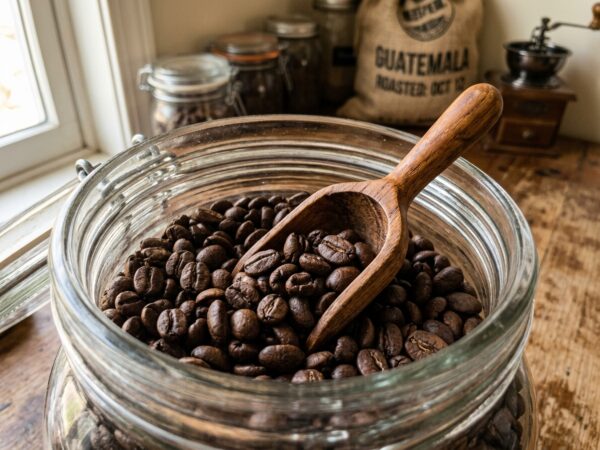
Grinding all your beans on Sunday for the whole week. I get why people do this — convenience. But it defeats the purpose of owning a grinder. Ground coffee goes stale within hours, not days. If you invested in a grinder, use it daily. It takes 15–30 seconds with an electric grinder. Even a quick two-minute hand grind is worth the effort. Pair this habit with proper coffee bean storage and you’ll notice a dramatic improvement in cup quality.
Using the same grind setting for every brew method. If you switch between a drip machine during the week and a French press on weekends, you need to change the grind setting. French press requires a much coarser grind than drip. Using drip-grind coffee in a French press will give you a muddy, over-extracted mess. That’s exactly why owning a grinder with a wide range of settings pays off — it grows with your brewing habits.
Thinking expensive always means better. A $500 grinder designed for espresso won’t necessarily outperform a $120 grinder designed for filter coffee when you’re brewing drip. Match the grinder to the task. A Baratza Encore ESP or Fellow Ode will outperform many grinders twice their price for drip coffee specifically, because they’re optimized for that medium grind range.
Does Your Bean Choice Affect Grinder Performance?
Yes, and more than you might expect.
Light roast beans are denser and harder than dark roasts. They put more stress on your grinder’s burrs and motor. If you primarily drink light roasts, investing in a grinder with high-quality steel burrs and a strong motor will serve you better long-term. Ceramic burrs can chip or wear faster with very hard, dense beans.
Dark roast beans are softer and more brittle. They grind easily but tend to be oilier. That oil builds up on burr surfaces over time, which affects grind consistency and can make the grinder taste stale or rancid. If you drink dark roasts, clean your burrs every 2–4 weeks with grinder cleaning tablets (Urnex Grindz is a popular brand) or a dry brush.
Freshly roasted beans (within 2–3 weeks of roast date) still release CO2, which can cause “fines” — ultra-small particles — during grinding. This is normal. Let your beans rest for at least 3–5 days after the roast date before grinding them. If you’re buying high-quality coffee beans, the roast date should be printed on the bag. If it isn’t, that’s a red flag about freshness.
Pairing Your Grinder With the Right Drip Setup
A grinder doesn’t work in isolation. It’s part of a system. The better your entire setup works together, the better your daily cup will be.
If you’re using a budget-friendly drip coffee maker, even a mid-range burr grinder like the Baratza Encore will immediately elevate your results. You don’t need to replace everything at once. The grinder upgrade alone often makes more difference than switching to a fancier brewer.
If you own an automatic drip coffee maker with SCA certification (like a Breville Precision Brewer or Technivorm Moccamaster), pairing it with a quality grinder unlocks its full potential. These brewers are designed to hit precise water temperatures and brew times, and they reward you the most when you give them evenly ground, fresh coffee.
Some people prefer drip coffee makers with built-in grinders — a grind-and-brew machine. These are convenient, but the built-in grinders are usually lower quality than standalone grinders at the same total price point. You’ll almost always get better results buying a separate grinder and brewer. That said, if counter space is limited and you value one-button simplicity, a grind-and-brew machine is still a massive improvement over pre-ground coffee.
How Much Should You Actually Spend?
Let’s be real: there’s a point of diminishing returns. And for drip coffee, that threshold is lower than most coffee forums would have you believe.
$50–$80: A solid manual burr grinder (1Zpresso JX, Timemore C3). Excellent grind quality for the price if you don’t mind the effort.
$100–$150: Entry-level electric burr grinders (Baratza Encore ESP, OXO Brew Conical Burr Grinder). This is the sweet spot for most drip coffee drinkers. You get consistent grinds, ease of use, and reasonable durability.
$150–$300: Mid-range electric grinders (Fellow Ode Gen 2, Baratza Virtuoso+). Noticeably better grind uniformity, quieter operation, better build quality. Worth it if you drink specialty coffee and care about nuance in your cup.
$300+: Premium grinders (Weber Key, Niche Zero, Fellow Opus for versatile use). Diminishing returns for drip-only brewing, but justified if you brew multiple methods or want a grinder that lasts 15+ years.
For most people reading this, the $100–$150 range is where the money is best spent. That’s where you get the biggest leap in cup quality per dollar invested.
Did You Know? A set of quality steel conical burrs, when properly maintained, can grind over 1,000 pounds of coffee before needing replacement. At a typical household rate of one pound per week, that’s roughly 20 years of daily grinding.
FAQ
Can I use a coffee grinder for drip coffee and espresso?
Technically, yes — if the grinder has a wide enough range. Grinders like the Baratza Encore ESP or Niche Zero cover everything from espresso-fine to French press-coarse. But be aware that switching between espresso and drip settings frequently means you’ll need to re-dial each time, and some grounds from the previous setting may remain in the burr chamber. If you’re serious about both, consider two dedicated grinders or a single high-end grinder with very low retention.
How often should I clean my coffee grinder?
For daily home use, give your grinder a quick brush-out every week — just remove the hopper and brush loose grounds from around the burrs. Every 4–6 weeks (or sooner if you notice oily buildup or stale flavors), run grinder cleaning tablets through the machine or do a full disassembly and brush cleaning. If you grind dark roast beans, clean more frequently because the oils accumulate faster.
Is a $30 blade grinder okay for drip coffee?
It’s better than nothing, and it’s definitely better than pre-ground coffee sitting in a can for months. But a blade grinder can’t produce consistent particle sizes, which means uneven extraction and a muddier cup. If $30 is your absolute ceiling, a blade grinder with fresh beans will still improve your mornings. Just pulse in short bursts and shake the grinder between pulses to redistribute the beans. Think of it as a temporary solution while you save up for a burr grinder.
What’s the best grind setting for a 12-cup drip coffee maker?
There isn’t one universal answer because every grinder’s settings are numbered differently. But aim for a medium grind that looks and feels like sand. On a Baratza Encore, that’s around setting 18–22. On a Fellow Ode, it’s around setting 4–6. Start in the middle of the medium range on your specific grinder and adjust based on taste. Bitter means too fine — go coarser. Sour or weak means too coarse — go finer.
Do ceramic burrs or steel burrs work better for drip coffee?
Both can produce good results at the medium grind range. Steel burrs are more durable, stay sharper longer, and handle hard light-roast beans better. Ceramic burrs are slightly less prone to heat transfer and are often found in budget-friendly grinders. For drip coffee specifically, the difference is minimal. If you’re choosing between two grinders and one has steel burrs and the other has ceramic, lean toward steel for longevity — but don’t stress about it.
Final Thoughts
The best coffee grinder for drip coffee is one that produces consistent medium-ground coffee, fits your morning routine, and sits within a budget you won’t regret. For most people, that’s the Baratza Encore ESP or a manual option like the 1Zpresso JX. For those who want to step it up, the Fellow Ode Gen 2 is genuinely excellent.
Don’t overcomplicate this. A good burr grinder, fresh beans stored properly, and a reliable drip brewer — that’s the trifecta. Once you taste drip coffee made from beans ground 30 seconds before brewing, you won’t want to go back.
Start with the grinder that matches your budget today. You can always upgrade later. But that first step — moving from pre-ground to freshly ground — is the single biggest improvement you’ll ever make to your daily cup.