A single cup of coffee. That’s all you want in the morning. But the moment you start shopping for a brewer, you’re stuck between two of the most popular methods on the planet — the French press and the drip coffee maker. About 40% of American households own a drip machine, according to the National Coffee Association’s 2024 trends report, while the French press remains a cult favorite among people who want more hands-on control over their brew. So which one actually deserves counter space in your kitchen?
Here’s the thing: both methods have loyal fans, and both can produce a genuinely good cup of coffee. But they work in fundamentally different ways, and those differences change the flavor, the texture, the cleanup, and even how your morning routine feels. If you’ve been going back and forth between these two, this is the comparison you need. No fluff. Just an honest look at what each brewer does well, where it falls short, and which one fits your coffee habits.
How Each Method Actually Works
Before you can compare taste or convenience, it helps to understand what’s happening inside each brewer — because the brewing mechanics are the root of every difference between these two.
The French Press: Full Immersion Brewing
A French press is a glass or stainless steel carafe with a plunger and a metal mesh filter. You add coarsely ground coffee, pour hot water directly over it, and let the grounds sit — fully soaked — for about four minutes. Then you press the plunger down, which separates the grounds from the liquid.
This is called immersion brewing. The coffee grounds stay in constant contact with water for the entire brew time. Nothing filters out the natural oils or the fine particles from the coffee. Getting the right French press grind size is essential here — too fine, and you’ll end up with sludgy, over-extracted coffee that tastes bitter.
Drip Coffee: Gravity Does the Work
A drip coffee maker heats water in a reservoir and then drips it slowly over a bed of medium-ground coffee sitting inside a paper or mesh filter. Gravity pulls the water through the grounds and the filter, and the brewed coffee collects in a carafe below.
This is percolation brewing (not to be confused with a stovetop percolator — that’s a different beast entirely). The water passes through the grounds rather than sitting with them. And because most drip machines use a paper filter, a lot of the oils and micro-grounds get caught before they reach your cup.
That single difference — immersion vs. percolation, metal filter vs. paper filter — is responsible for nearly everything people argue about between these two brewers.
Flavor and Body: Where the Real Difference Lives
Let’s get to the part everyone cares about: how does the coffee actually taste?
French Press Flavor Profile
A French press produces a cup that’s full-bodied, rich, and slightly heavy on the palate. Because the metal mesh filter lets natural coffee oils (called diterpenes — specifically cafestol and kahweol) pass through into your cup, you get a mouthfeel that’s almost velvety. There’s also a subtle layer of fine sediment that settles at the bottom of your mug, which adds to that dense, textured character.
Think of it like the difference between freshly squeezed orange juice with pulp and the filtered, clear version from a carton. Both are orange juice. But the texture and the flavor depth are noticeably different.
French press coffee tends to highlight the base notes of a bean — chocolate, nuts, caramel, earthy tones. If you enjoy darker roasts or single-origin beans with deep, complex flavors, a French press will showcase those qualities beautifully.
Drip Coffee Flavor Profile
Drip coffee, especially from a machine using paper filters, delivers a clean, bright, and lighter cup. The paper filter absorbs most of the oils and traps nearly all of the fine particles, so you get a smooth, sediment-free brew. The flavor tends to be more one-dimensional compared to French press, but that’s not a criticism — some people genuinely prefer that clarity.
Drip brewing highlights the top notes of coffee — floral, fruity, and acidic qualities. A light-roast Ethiopian bean, for example, might show its blueberry or citrus notes more clearly through a drip machine than through a French press, where those delicate notes can get buried under the heavier body.
Pro Tip: If you’re buying one of the best drip coffee makers on the market, look for models certified by the Specialty Coffee Association (SCA). They maintain proper brew temperature between 195°F and 205°F, which makes a real difference in flavor extraction.
Brew Control: Who’s Really in Charge?
This is where your personal style matters more than anything else.
French Press Gives You Full Control
With a French press, you control everything. The water temperature. The grind size. The steep time. The agitation (whether you stir the grounds or not). You can adjust any of these variables to change how your coffee tastes.
Want a stronger brew? Steep for an extra 30 seconds or use a slightly finer grind. Want something lighter? Pull the steep time back to three minutes. You’re the brewer, and the French press is just the vessel.
This level of control is exciting if you’re the type who enjoys experimenting. But it also means inconsistency is on you. If you’re half-awake at 6 AM and you forget to start a timer, your coffee might steep for seven minutes and turn into a bitter mess. There’s no safety net.
Drip Machines Automate the Process
A drip machine takes the guesswork out. You add water, add grounds, press a button, and walk away. The machine controls the water temperature, the drip rate, and the brew time. Your only real variable is how much coffee you use and how fine you grind it.
For busy mornings — especially if you’re making coffee for a family — this hands-off approach is hard to beat. Many modern drip machines even have programmable timers, so the coffee is ready before you even get out of bed.
The tradeoff? You can’t fine-tune the process as much. If you don’t love how a particular drip machine brews, your options are limited to changing the grind size, the coffee-to-water ratio, or buying a different machine entirely.
If you want something that’s automatic but also has a built-in grinder for fresh-ground beans, check out drip coffee makers with grinders. They bridge the gap between convenience and quality nicely.
How Much Coffee Can You Make at Once?
Capacity matters, and these two brewers handle volume very differently.
A standard French press comes in sizes ranging from 12 ounces (about 1.5 cups) up to 51 ounces (about 8 cups). The most popular size is the 34-ounce model, which gives you roughly four standard cups. That’s great for one or two people, but if you’re hosting brunch or serving a whole family, you’ll need to brew multiple batches.
Drip coffee makers, on the other hand, routinely brew 10 to 12 cups in a single cycle. Some small drip coffee makers are designed for just 4–5 cups, which works perfectly for small households. But if volume is your priority, a full-size drip machine wins this category without a contest.
There’s a catch with French press capacity, too. Coffee brewed in a French press doesn’t stay fresh or warm for long once it’s made. If you don’t separate the coffee from the grounds after pressing, the grounds keep extracting and the coffee gets increasingly bitter. You either drink it quickly or pour it into a quality thermos right away.
Drip machines usually have a hot plate or thermal carafe that keeps coffee warm for 30 minutes to a couple of hours. It’s not as fresh-tasting as drinking it immediately, but it’s a practical advantage for people who sip slowly.
Cost Breakdown: Upfront and Long-Term
Let’s talk money, because the price gap between these two methods might surprise you.
French Press Costs
A solid French press from brands like Bodum, Mueller, or Espro costs between $20 and $50. High-end models with double-walled insulation or advanced filtering might push up to $80–$100, but that’s the ceiling.
There are no recurring costs beyond coffee beans. No paper filters. No pods. No electricity. The French press is about as low-cost as coffee brewing gets — the only thing cheaper might be cowboy coffee in a pot over a campfire.
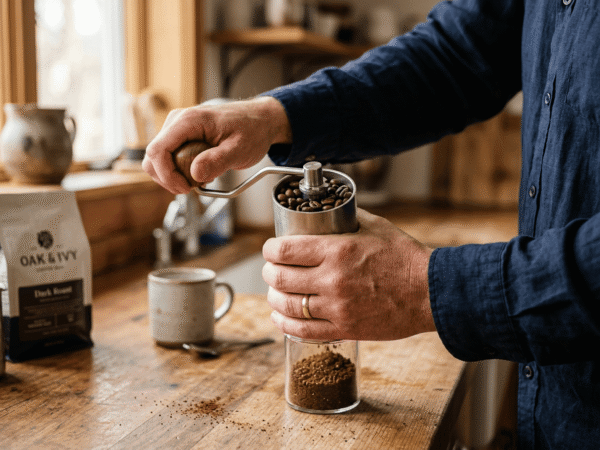
You’ll want a good hand coffee grinder or a burr grinder to get the right coarse grind, since blade grinders produce uneven particles that cause inconsistent extraction in a French press. That’s an additional $30–$100 depending on the grinder you choose.
Drip Coffee Maker Costs
A basic drip machine costs as little as $25, but decent models with SCA certification, thermal carafes, and programmable features typically run $60 to $200. Premium options from brands like Technivorm Moccamaster, Breville, or OXO can go above $300.
You’ll also pay for paper filters — roughly $5–$10 for a 100-count box. That’s not a huge expense, but it does add up over months and years. A reusable gold-tone mesh filter can eliminate this cost, though it also changes the flavor profile slightly (letting more oils through, similar to a French press).
Over a 5-year span, a French press setup (brewer + grinder) usually costs significantly less than a mid-range drip machine setup — especially when you factor in filter replacements and the electricity the machine uses.
Cleanup and Maintenance: The Unglamorous Truth
Nobody writes about cleanup, but it’s the thing that actually determines whether you use a brewer long-term or shove it into a cabinet and forget about it.
French Press Cleanup
Let’s be honest — cleaning a French press is kind of annoying. After each use, you have to scoop or rinse out a clump of wet coffee grounds from the bottom of the carafe. You can’t just dump them down the drain (they’ll clog your pipes over time). Most people knock them into a compost bin or the trash, then rinse and disassemble the plunger for cleaning.
The mesh filter screen needs regular deep cleaning too, because coffee oils build up over time and turn rancid, giving your next brew a stale, off-flavor. Once a week, take the whole plunger apart and scrub each component.
It takes about 2–3 minutes per cleanup. Not terrible, but definitely more involved than a drip machine.
Drip Machine Cleanup
With a drip machine, you pull out the paper filter (grounds and all), toss it in the bin, and rinse the brew basket. That’s it for daily cleaning — maybe 30 seconds.
The carafe needs regular washing, and the machine itself should be descaled with vinegar or a descaling solution every month or two, depending on how hard your water is. Mineral buildup inside the machine can affect water flow and brewing temperature, which quietly degrades your coffee quality without you even noticing.
Quick Fact: The NSF International found that coffee maker reservoirs are among the top 5 germiest spots in a kitchen. If you use a drip machine, clean that reservoir weekly.
Health Angle: Something Worth Knowing
Here’s a detail that rarely comes up in casual coffee comparisons but genuinely matters if you drink multiple cups a day.
French press coffee contains significantly higher levels of cafestol, a compound found in coffee oils. Research published in the European Journal of Preventive Cardiology (2020) found that unfiltered coffee — like French press — can raise LDL cholesterol levels when consumed regularly (five or more cups per day).
Paper-filtered drip coffee removes most of the cafestol. The same study found that filtered coffee drinkers had the lowest cardiovascular mortality risk compared to unfiltered and no-coffee drinkers.
Does this mean French press coffee is dangerous? Not at all. If you drink one or two cups a day, the cafestol levels are unlikely to cause meaningful changes in your cholesterol. But if you’re someone who goes through a full 34-ounce French press every morning and you already have elevated cholesterol, it’s worth having that conversation with your doctor.
Did You Know? The metal mesh filter in a French press lets through about 300x more cafestol than a standard paper filter used in drip machines.
Portability and Versatility
Think about where and how you drink your coffee — not just at home.
A French press is surprisingly portable. It doesn’t need electricity, so you can use it anywhere you have access to hot water — a hotel room, a campsite, an office break room. Some stainless steel models are practically indestructible, making them solid travel companions. Pair one with a travel coffee mug and you’ve got a complete kit.
French press is also versatile beyond coffee. You can use it to brew loose-leaf tea, make cold brew (just steep overnight in the fridge), froth warm milk for lattes, and even strain homemade broth. It’s genuinely a multi-purpose kitchen tool.
A drip coffee maker is a countertop appliance. It stays in your kitchen. It needs an electrical outlet. It does one thing — brew drip coffee — and that’s it. Not a criticism, just a reality check on flexibility.
If you’re someone who loves experimenting with different brewing styles, the French press gives you more room to play. If you’re curious about how it stacks up against other manual methods, comparisons like French press vs. pour over or AeroPress vs. French press are worth exploring too.
Who Should Pick the French Press?
The French press is your brewer if you fit a few of these descriptions:
You like bold, full-bodied coffee with rich texture. You enjoy the ritual of manually brewing your morning cup. You want an affordable setup with no ongoing filter costs. You drink one to three cups at a time, not a full pot. You travel often and want a brewer you can bring along. You also brew tea or cold brew and want a versatile tool.
The French press rewards patience and attention. It’s a five-minute process that feels intentional, and the coffee it produces has a depth that drip machines struggle to match — especially with darker roasts or medium-roast beans from Central and South America.
Who Should Pick the Drip Coffee Maker?
A drip machine makes more sense when these things describe your life:
You brew coffee for multiple people every morning. You want a set-it-and-forget-it process with minimal effort. You prefer clean, bright, lighter-bodied coffee. You’re health-conscious and want lower cafestol intake. You don’t want to deal with hands-on cleanup. You like having fresh coffee waiting when you wake up (programmable timers).
For most busy households, a reliable drip machine is genuinely the most practical choice. It’s consistent, it scales well, and it keeps coffee warm without extra effort. If you’re shopping on a budget, the best drip coffee makers under $100 offer impressive quality for the price.
Can You Own Both? (Yes, and Here’s Why You Might Want To)
Here’s something people don’t say enough: you don’t have to choose just one.
Plenty of coffee lovers keep a drip machine for weekday mornings when time is tight and use a French press on weekends when they can slow down and enjoy the process. The two methods produce genuinely different cups of coffee, so having both is like having both red and white wine in the house — different moods call for different brews.
A French press takes up barely any cabinet space and costs less than two bags of specialty coffee. Even if you primarily use a drip machine, having a French press as a backup or a weekend treat is a small investment with a real payoff.
FAQ
Does French press coffee have more caffeine than drip?
It depends on how you brew it, but generally, an 8-ounce cup of French press coffee contains around 80–100 mg of caffeine, while drip coffee averages 95–165 mg per 8-ounce cup. Drip machines often extract more caffeine because the water temperature is consistent and the contact time with grounds (via slow dripping) can be quite efficient. That said, if you steep your French press for longer than four minutes or use extra grounds, you can push the caffeine level higher. The difference isn’t dramatic either way.
Is French press coffee bad for your cholesterol?
Not if you drink it in moderation. French press coffee contains cafestol, a compound that can raise LDL cholesterol in people who drink large amounts of unfiltered coffee daily. One to two cups per day isn’t a concern for most healthy adults. If you already have high cholesterol or cardiovascular concerns, talk to your doctor — or switch to a drip machine with paper filters, which removes virtually all cafestol.
Which method wastes less coffee?
A French press tends to waste less coffee per brew because you control the exact amount you’re making. Drip machines, especially 10–12 cup models, sometimes encourage over-brewing. You make a full pot, drink two cups, and the rest sits on the hot plate getting stale. If waste bothers you, use a smaller drip coffee maker sized for your actual consumption, or brew only what you’ll drink in a French press.
Can I use the same coffee grounds for both methods?
You can use the same coffee beans, but you should grind them differently. French press requires a coarse grind — roughly the size of sea salt. Drip machines work best with a medium grind, closer to regular sand. Using drip-grind coffee in a French press will result in over-extraction and a muddy, bitter cup. A decent coffee grinder for drip coffee can usually be adjusted to produce a coarse grind for French press too, so one grinder handles both.
Which one is better for iced coffee?
Both can work, but drip coffee is generally easier to use for iced coffee because you can brew a strong batch and pour it directly over ice. French press works great for cold brew, though — just add coarse grounds and cold water, steep in the fridge for 12–24 hours, and press. If you want to explore cold brew seriously, a dedicated cold brew maker or even a pumpkin cream cold brew recipe can take things to the next level.
Your Brewer, Your Call
Picking between a French press and a drip coffee maker isn’t about which one is objectively “better.” It’s about what fits your morning, your taste, and your lifestyle. The French press gives you a richer, more hands-on experience with a bolder cup. The drip machine gives you ease, consistency, and volume.
If you love the idea of crafting your coffee and don’t mind a few extra minutes of cleanup, start with a French press. If you need coffee ready the second your feet hit the floor and you’re brewing for a household, a good drip machine is your best friend.
And if you’re still on the fence? Grab a $25 French press and try it alongside your drip machine for a week. You’ll know within three mornings which cup makes you happier. That’s really all that matters.