A single grind size adjustment can turn your French press coffee from muddy and bitter to smooth and flavorful. That’s not an exaggeration — it’s the reality most home brewers learn the hard way after weeks of disappointing cups. You buy great beans, heat your water carefully, time your steep perfectly, and still end up with something that tastes off. The culprit? Almost always the grind.
French press grind size isn’t just a “nice to know” detail. It’s the single biggest variable you control that determines extraction — how much flavor, oil, and aroma makes it from the ground coffee into your cup. Get it wrong, and no amount of technique fixes it. Get it right, and even a mid-range coffee can taste exceptional.
This guide walks you through exactly what grind size works best for a French press, why it matters so much, how to adjust based on taste, and what tools actually give you a consistent grind. Whether you’re brand new to French press brewing or troubleshooting a cup that just doesn’t taste right, you’ll find practical answers here.
Why Grind Size Matters So Much for French Press
Let’s start with the basics, because this is where everything clicks.
Your French press works on a principle called immersion brewing. Ground coffee sits fully submerged in hot water for about four minutes. There’s no paper filter pushing water through quickly like in a drip machine. There’s no pressure forcing water through tightly packed grounds like in espresso. Instead, the coffee and water hang out together, extracting flavor slowly and evenly.
Because of this extended contact time, the surface area of your coffee grounds plays a huge role. Finely ground coffee has way more surface area exposed to water. Coarsely ground coffee has less. Think of it like dissolving sugar — powdered sugar disappears almost instantly in water, while a sugar cube takes much longer.
If your grounds are too fine for a French press, too much gets extracted too fast. You end up with a bitter, harsh, over-extracted cup. The fine particles also sneak past the mesh filter, leaving sludge at the bottom and grit in every sip.
If your grounds are too coarse, the water can’t pull enough flavor out during those four minutes. Your coffee tastes thin, watery, sour, and generally underwhelming. That’s under-extraction.
The right grind size hits the sweet spot — enough surface area for proper extraction during the brew time, but coarse enough that the metal mesh filter does its job and keeps grounds out of your cup.
This is fundamentally different from what you’d want for other brew methods. If you’re curious about how French press stacks up against pour-over in terms of grind and flavor, comparing French press vs pour-over really highlights how much grind size changes everything.
What’s the Ideal French Press Grind Size?
Here’s the straightforward answer: coarse grind, roughly the texture of sea salt or raw sugar.
Pick up some coarse sea salt and rub it between your fingers. That’s your target. The particles should be visibly chunky and distinct. You should be able to see individual pieces without squinting. If it feels like sand, it’s too fine. If it looks like small pebbles, it’s a touch too coarse.
A useful visual reference:
- Too fine (espresso-like powder): Feels like flour or fine sand. Terrible for French press.
- Too fine (drip-grind level): Feels like table salt. Still too fine — you’ll get bitterness and sludge.
- Just right (coarse): Feels like sea salt or breadcrumbs. This is your target.
- Too coarse (extra chunky): Feels like cracked peppercorns. Water can’t extract enough, and coffee tastes weak.
Now, here’s something most guides skip: there’s no single universal “perfect” grind. Coarse is the starting point, yes. But your ideal grind depends on your beans, your water temperature, your brew time, and even your personal taste preference. The sea salt guideline gets you 90% of the way there. The remaining 10% is about tasting, adjusting, and dialing in — which we’ll cover below.
How Grind Size Affects Your Coffee’s Flavor
Understanding what grind to use is helpful. Understanding why it changes your coffee’s taste makes you a better brewer, because you’ll know how to fix things when something tastes off.
Coffee extraction happens in stages. Different compounds dissolve at different rates.
First to extract are acids and fruity, bright flavors. These dissolve quickly even with coarse grounds and short brew times. That’s why under-extracted coffee often tastes sour or sharp — you got the acids but missed everything else.
Next come the sugars and sweetness, along with the rich, balanced, “coffee” flavors most people enjoy. This is the flavor window you’re aiming for. A proper coarse grind with a four-minute steep lands you right here.
Last to extract are the bitter, astringent, harsh compounds — tannins and other heavy molecules. Over-extraction pulls too much of these out, making your coffee taste like burnt rubber or medicine. Fine grinds speed up extraction, pushing you into this zone even with normal brew times.
So here’s the practical takeaway: your French press grind size is really a time control mechanism. By using a coarse grind, you’re slowing extraction enough that a four-minute steep pulls out the good stuff without dragging along the bitter tail end.
Pro Tip: If your coffee tastes sour and thin, your grind is probably too coarse (or your brew time too short). If it tastes bitter and harsh, your grind is too fine (or your brew time too long). Adjust one variable at a time so you know what actually fixed the problem.
Burr Grinder vs Blade Grinder: Does It Really Matter?
Yes. And this is a hill worth standing on.
A blade grinder works like a blender — spinning blades chop beans randomly. Some pieces end up powder-fine, others stay in big chunks. You get an extremely uneven mix of particle sizes. For French press, this is a real problem. Those fine particles over-extract and create bitterness, while the big chunks under-extract and add sourness. You’re essentially brewing two different coffees in the same pot and mixing them together. The result is muddy, inconsistent, and frustrating.
A burr grinder crushes beans between two abrasive surfaces (burrs) set at a specific distance apart. Every particle comes out roughly the same size. The consistency difference is dramatic — it’s the single most impactful equipment upgrade most home coffee brewers can make.
Between the two types of burr grinders:
Conical burr grinders are the most common for home use. They’re quieter, generate less heat (which preserves flavor), and work well at the coarse settings French press requires. Both manual and electric versions exist.
Flat burr grinders produce even more uniform particles, but they’re typically more expensive and often geared toward espresso-level precision. For French press, a conical burr grinder is more than enough.
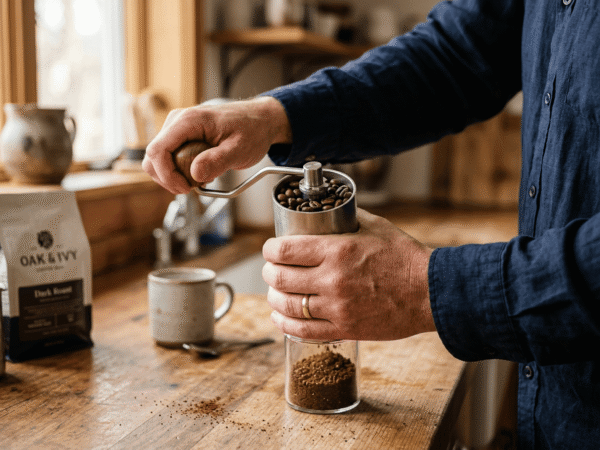
If you’re using a hand grinder and want something that gives you consistent coarse grinds without breaking the bank, a solid hand coffee grinder can genuinely transform your morning cup. Many experienced French press users actually prefer manual grinders because they offer excellent grind quality at the coarse end of the spectrum.
What if you only have a blade grinder? You can still make decent French press coffee. Pulse the grinder in short bursts (2-3 seconds each) instead of holding the button down. Shake the grinder between pulses to redistribute the beans. Aim for about 8-10 seconds total. It won’t be perfect, but it helps. And if you don’t have any grinder at all, there are creative ways to grind coffee beans without a grinder that still get you into the right ballpark.
How to Dial In Your French Press Grind
Starting with a coarse, sea-salt-sized grind is step one. But coffee is personal, and dialing in your grind based on taste is where you go from “decent cup” to “this is exactly what I want.”
Here’s a simple process that works:
Start with the baseline. Set your burr grinder to a coarse setting. Use a 1:15 coffee-to-water ratio (that’s roughly 30 grams of coffee to 450 ml of water, or about 2 tablespoons per 6 ounces if you don’t have a scale). Use water that’s just off the boil — around 200°F (93°C). Steep for exactly four minutes. Press and pour.
Taste with intention. Don’t just ask yourself “is this good?” Ask specific questions. Is it sour, acidic, or thin? That points to under-extraction — grind a little finer next time. Is it bitter, ashy, or harsh? That’s over-extraction — go coarser. Is it balanced, sweet, and full-bodied with a clean finish? You’ve found your spot. Stay there.
Change one thing at a time. If you adjust your grind and your brew time simultaneously, you won’t know which change made the difference. Adjust grind size in small increments — one or two clicks on your grinder — and keep everything else the same.
Keep notes for different beans. A light-roasted Ethiopian coffee and a dark-roasted Sumatran don’t behave the same way. Lighter roasts are denser and harder to extract, so they sometimes benefit from a slightly finer grind. Darker roasts extract more easily and can turn bitter quickly, so you might go slightly coarser. If you’re exploring different coffee bean options, knowing that each one might need a minor grind tweak saves you from trial-and-error frustration.
Quick Fact: James Hoffmann, one of the most respected coffee experts in the world and a World Barista Championship winner, actually suggests a medium-coarse grind for French press rather than the traditional extra-coarse. His argument — backed by cupping tests — is that the conventional wisdom of “as coarse as possible” can lead to under-extraction. A slightly finer grind (closer to coarse sand than sea salt) often produces a more balanced, sweeter cup. It’s worth experimenting with.
Brew Time and Grind Size: They Work Together
You can’t talk about French press grind size without talking about brew time, because they’re two sides of the same coin.
The standard recommendation is a four-minute steep. This works well with a coarse grind because it gives water enough time to extract balanced flavors from the larger particles.
But what if you want to adjust?
If you prefer a shorter brew (3 minutes): You’ll need a slightly finer grind to compensate for the reduced contact time. Not drip-fine — just a notch finer than your usual coarse setting.
If you prefer a longer brew (5-6 minutes): Go slightly coarser. The extra time means more extraction, and coarser grounds slow that down enough to prevent bitterness. Some people even do an 8-minute steep with a very coarse grind and find it produces a surprisingly smooth, mellow cup.
If you follow Hoffmann’s method: His technique involves a 4-minute steep, then breaking the crust, scooping off the foam, and waiting another 5-9 minutes before gently pressing and pouring. The total time is longer, but because the agitation is minimal after the initial steep, over-extraction isn’t as big a risk. For this method, a medium-coarse grind works beautifully.
The key principle: finer grinds need less time, coarser grinds need more time. They’re always in balance. If you change one, consider adjusting the other.
Water Temperature and Its Connection to Grind
Water temperature is another variable that interacts with grind size, and getting it wrong can undo all your careful grinding.
The ideal temperature for French press is between 195°F and 205°F (90-96°C). If you don’t have a thermometer, just bring water to a full boil and let it sit for 30-45 seconds. That gets you close enough.
Why does temperature matter in a grind size discussion? Because hotter water extracts faster. If your water is too hot and your grind is already on the fine side, you’ll over-extract quickly. If your water is too cool and your grind is very coarse, you’ll under-extract badly.
Water that’s too hot (boiling, 212°F/100°C) + a proper coarse grind = slight risk of over-extraction and bitterness. Let it cool a bit.
Water that’s too cool (below 185°F/85°C) + a coarse grind = flat, sour, under-extracted coffee. This happens often when people pour water into a cold glass French press — the glass absorbs heat and drops the water temperature significantly. A quick fix: pre-heat your French press by filling it with hot water for a minute, then dumping it out before brewing.
Did You Know? The difference between 195°F and 205°F water can change your extraction by roughly 10-15%. That’s enough to shift a cup from balanced to bitter, especially if your grind is already borderline fine. A cheap kitchen thermometer takes the guesswork out entirely.
Common French Press Grind Problems (And How to Fix Them)
Let’s get practical. Here are the problems people actually run into, and what to do about each one.
Problem: Coffee is bitter and unpleasantly strong.
Your grind is too fine. The small particles are over-extracting, pulling harsh compounds into your cup. Go two or three clicks coarser on your grinder. If you’re using a blade grinder, reduce your grinding time by a couple of seconds.
Problem: Coffee is sour, acidic, or tastes like it’s “missing something.”
Your grind is too coarse. The large particles aren’t giving up enough flavor during the steep. Go one or two clicks finer. You could also try extending your brew time by 30-60 seconds before adjusting grind.
Problem: Too much sediment and sludge in the cup.
This is the most common French press complaint, and grind size is usually the cause. Fine particles slip through the mesh filter. Make sure your grind is genuinely coarse — not medium, not medium-coarse, but coarse. If you’re using a blade grinder, this problem is almost unavoidable because of the uneven particle sizes. Switching to a burr grinder fixes this dramatically. As a workaround, you can pour your brewed coffee through a fine-mesh strainer or even a paper filter to catch the fines, though this removes some of the oils that give French press its distinctive body.
Problem: Coffee tastes different every time you brew.
Inconsistency almost always comes from inconsistent grinding. If you’re eyeballing the grind each time or using a blade grinder, your particle size varies from batch to batch. Use the same grinder setting, the same dose (weigh your coffee if you can), and the same brew time. Consistency in, consistency out.
Problem: Good beans but flat, boring coffee.
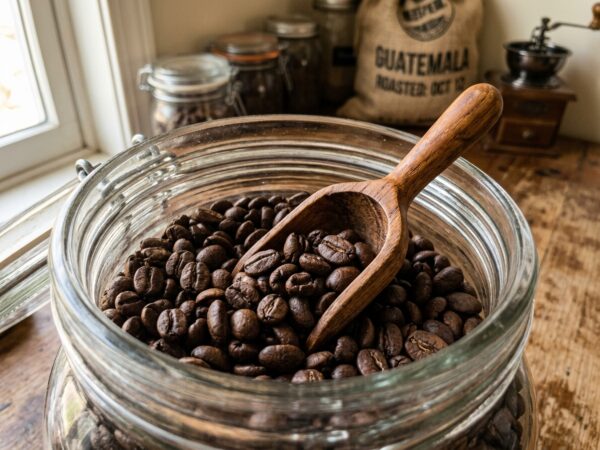
You might be grinding too far in advance. Ground coffee goes stale remarkably fast — within 15-20 minutes, volatile aromatic compounds start escaping. Grinding immediately before brewing makes a noticeable difference. If you’ve been buying pre-ground coffee, this alone could be the biggest upgrade for your French press. Proper coffee bean storage also plays a role — beans that have been exposed to air, light, or moisture lose flavor before you even grind them.
French Press Grind vs Other Brew Methods
Understanding where French press grind sits on the overall spectrum helps, especially if you use multiple brewing devices.
French press uses one of the coarsest grinds of any popular brew method. Here’s roughly how the spectrum looks, from finest to coarsest:
Turkish coffee uses an ultra-fine, powder-like grind. Espresso needs a very fine grind. AeroPress and Moka pot typically use fine to medium-fine. Pour-over (like V60 or Chemex) sits at medium to medium-fine. Drip coffee makers use medium. French press uses coarse. Cold brew uses extra-coarse.
If you also brew with a Moka pot or AeroPress, you’ll need a completely different grind setting for each. A grinder that handles both ends of the spectrum well is worth looking for. People who go between French press and Moka pot often notice this grind gap immediately — what works for one completely fails in the other.
Similarly, if you’re comparing the French press experience to espresso, the grind difference is one of the starkest contrasts. Espresso requires precision grinding measured in microns, while French press is far more forgiving. That’s actually one of the things people love about French press — it doesn’t demand laboratory-level accuracy to produce a great cup.
Best Grinder Settings for Popular Grinder Brands
Since “coarse” means different things on different grinders, here are approximate settings for some widely used models. These are starting points — always taste and adjust.
Baratza Encore / Encore ESP: Setting 28-32 out of 40. Start at 30 and adjust based on taste.
1Zpresso JX / JX-Pro (manual): About 3-3.5 full rotations from the finest setting. These are excellent manual grinders for French press.
Timemore C2 / C3 (manual): Around 22-26 clicks. Start at 24.
JavaPresse (manual): Turn the adjustment wheel to the coarsest end, then come back about 2-3 clicks finer.
Cuisinart DBM-8: Setting 14-18 on the grind selector.
OXO Brew Conical Burr Grinder: Setting 11-13 on the hopper dial.
If your grinder isn’t listed, look for the setting that produces particles roughly the size of coarse sea salt. When in doubt, start coarser and work finer one step at a time.
For those who appreciate the ritual of grinding by hand — which many French press lovers genuinely do — using a hand coffee grinder gives you real control over your grind and connects you more to the brewing process.
Does Coffee Roast Level Change the Ideal Grind?
It does, and here’s why.
Dark roasts are more porous and brittle. The roasting process breaks down the cellular structure of the bean, making it easier for water to penetrate and extract flavor. Dark roasts also have more soluble compounds sitting right at the surface. All of this means dark roasts extract faster. For French press, you might want to go a click or two coarser than your standard setting with dark roasts to avoid over-extraction.
Light roasts are denser and harder. They’ve spent less time in the roaster, so their cellular structure is more intact. Water has to work harder to pull flavor out. Light roasts can handle a slightly finer grind — still coarse, but on the finer end of coarse — to ensure you extract enough sweetness and body during those four minutes.
Medium roasts are the most forgiving and generally work well right at the standard coarse setting without adjustment.
Warning: If you switch between roast levels regularly, don’t just keep the same grinder setting. Take ten seconds to adjust. It genuinely affects your cup.
Grinding Fresh vs Pre-Ground: How Big Is the Difference?
Bigger than most people expect.
Coffee contains over 800 volatile aromatic compounds. These are responsible for the complex flavors and aromas that make coffee so appealing. Once you grind coffee, you massively increase the surface area exposed to air. Those volatile compounds start escaping immediately. Within 15 minutes of grinding, a measurable percentage of aromatics have dissipated. Within a few hours, the decline is significant. By the next day, pre-ground coffee has lost a substantial portion of its complexity.
Pre-ground coffee also has a fixed particle size. It’s ground for drip machines, which means medium grind. That’s too fine for French press. You’ll get over-extraction, bitterness, and a muddy cup with lots of sediment.
If you’re buying pre-ground coffee specifically labeled “for French press,” that’s better — at least the grind size is appropriate. But you’re still losing freshness. The flavor difference between freshly ground whole beans and pre-ground coffee in a French press is something most people can detect immediately, even without a trained palate.
The bottom line: If you own a French press and you’re still using pre-ground coffee, a grinder is the best investment you can make. Not a fancy one, not an expensive one — just a decent burr grinder that gives you a consistent coarse grind right before brewing.
FAQ
What number is French press on a coffee grinder?
It depends on your specific grinder, but generally you want to set it toward the coarser end. On a Baratza Encore, that’s around setting 28-32. On most grinders with numbered dials, aim for the top 20-25% of the range. The goal is particles the size of coarse sea salt. Start at whatever your grinder considers “coarse” and adjust finer one click at a time if your coffee tastes weak or sour.
Can I use regular pre-ground coffee in a French press?
You can, but the results won’t be ideal. Regular pre-ground coffee is typically ground to a medium size intended for drip coffee makers. In a French press, this finer grind leads to over-extraction (bitter taste) and excess sediment in your cup. If pre-ground is your only option, try reducing your steep time to about 2.5-3 minutes to partially compensate for the finer particles.
How do I know if my French press grind is too fine?
Three telltale signs: your coffee tastes bitter or ashy, there’s a thick layer of sludge at the bottom of your cup, and the plunger is very hard to press down. If pressing the plunger feels like you’re fighting it, fine particles are clogging the mesh filter. Go coarser immediately — even one or two grinder clicks can make a noticeable difference.
Does the type of French press affect what grind size I should use?
The French press itself doesn’t change the ideal grind size much, but the mesh filter quality matters. Cheaper French presses with loose or single-layer mesh filters let more fine particles through, so you might benefit from grinding slightly coarser with these. Higher-end models with double or triple mesh filters catch more fines, giving you a cleaner cup and slightly more flexibility with grind size.
Is French press grind the same as cold brew grind?
They’re close but not identical. Cold brew typically uses an extra-coarse grind — slightly larger than French press — because the brew time is dramatically longer (12-24 hours). The extended steep time compensates for the larger particle size. You can use a French press coarse grind for cold brew, but you might want to reduce your steep time slightly, or your cold brew could come out more bitter than intended. If you’re interested in cold brew, a dedicated cold brew coffee maker simplifies the whole process.
Your Grind Is Your Foundation
Everything you do with your French press — the water temperature, the steep time, the ratio, the technique — builds on top of your grind size. If the grind is wrong, nothing else you adjust can fully fix the cup. If the grind is right, even imperfect technique still produces something enjoyable.
Start coarse. Taste thoughtfully. Adjust in small steps. And grind your beans fresh, right before you brew. These aren’t fancy tips from a coffee snob — they’re practical steps that genuinely make your daily coffee better.
Your French press is one of the simplest, most elegant brew methods out there. Give it the right grind, and it’ll reward you with a rich, full-bodied cup that’s hard to beat. Grab your grinder, pick your favorite beans, and start dialing in. Your perfect cup is just a few adjustments away.