A hand pour over gives you some of the cleanest, brightest coffee you’ll ever taste. But let’s be honest — standing over a dripper at 6 AM, slowly pouring water in careful circles while half-asleep? That’s not everyone’s idea of a good morning. An electric pour over coffee maker takes that same beautiful extraction process and automates it, so you get specialty-grade flavor without the learning curve or the time commitment. These machines control water temperature, flow rate, and bloom timing — the exact variables that separate a great cup from a mediocre one. If you’ve ever thought about upgrading your coffee routine but didn’t want to sacrifice taste for convenience, this is probably the sweet spot you’ve been looking for.
What Exactly Is an Electric Pour Over Coffee Maker?
Think of it this way. A traditional pour over — like a Chemex or a V60 — relies entirely on your hands. You boil the water, you control the pour speed, you decide when to bloom the grounds. An electric pour over coffee maker does all of that automatically.
It’s not the same thing as a standard drip coffee machine, though. That’s where most people get confused. A regular drip coffee maker dumps hot water over a flat bed of grounds in a pretty basic way. It works, but it doesn’t replicate the careful, spiraling pour pattern that makes pour over coffee taste so clean and nuanced.
An electric pour over brewer is specifically designed to mimic what a skilled barista does by hand. The machine heats water to a precise temperature (usually between 195°F and 205°F), pre-wets the grounds for a bloom phase, and then distributes water evenly across the coffee bed in a controlled pattern. Some models even let you customize brew time, pulse intervals, and water temperature down to the degree.
Quick fact: The Specialty Coffee Association (SCA) certifies certain home brewers that meet their Golden Cup standard — and several electric pour over models carry that certification.
Why People Are Switching to Electric Pour Over Brewers
You might wonder why someone would spend $150 to $350 on an electric pour over when you can buy a ceramic dripper for $25. Fair question. Here’s the real answer: consistency.
When you brew by hand, your technique changes day to day. Maybe you poured a little faster this morning. Maybe the water cooled down a few degrees while you were distracted. Those small variables shift the flavor of your cup more than you’d think. A good electric pour over brewer removes that inconsistency entirely.
There’s also the time factor. A manual pour over for a single cup takes roughly 4 to 5 minutes of active attention. An electric machine lets you press a button and walk away. You’ll have a full carafe ready while you’re getting dressed or packing lunch.
And then there’s the taste gap between these machines and standard drip brewers. If you’ve ever done a side-by-side comparison of pour over vs drip coffee, you already know the pour over wins on clarity and flavor complexity. An electric pour over closes that gap without asking you to master a gooseneck kettle.
Key Features That Actually Matter
Not every electric pour over brewer is built the same. Some are genuinely engineered for specialty-level extraction. Others are basically drip machines with fancier marketing. Here’s what separates the good ones from the pretenders.
Water Temperature Control
This is non-negotiable. Coffee extracts best between 195°F and 205°F. Go too low, and you’ll get a sour, under-extracted brew. Go too high, and it turns bitter and harsh. The best electric pour over makers let you set the exact temperature, or at minimum, they’re calibrated to stay within that ideal range throughout the entire brew cycle.
Pro tip: If a machine doesn’t mention its brewing temperature anywhere in the specs, that’s a red flag. Cheap brewers often max out around 185°F, which isn’t hot enough for proper extraction.
Bloom Phase
When hot water first hits fresh coffee grounds, they release carbon dioxide gas — that’s the bloom. It’s a critical step because trapped CO2 creates a barrier that prevents even extraction. Hand pour over brewers always start with a bloom. But many drip machines skip it entirely.
A quality electric pour over brewer will pause after the initial wetting, giving the grounds 30 to 45 seconds to degas before the main pour begins. This single feature makes a noticeable difference in the final cup.
Showerhead Design
How water is distributed across the grounds matters enormously. Some machines use a single spout that dumps water in one spot — that creates channeling, where water finds the path of least resistance and over-extracts some grounds while under-extracting others.
Better machines use a wide showerhead that disperses water across the entire coffee bed, similar to how you’d pour in careful circles by hand. A few premium models, like the Breville Precision Brewer, actually mimic pulse pouring, which is something even experienced baristas respect.
Brew Basket Shape
Flat-bottom baskets and cone-shaped baskets produce different extraction profiles. Cone filters tend to create a faster flow and highlight brighter, more acidic notes. Flat-bottom baskets slow things down and deliver a more balanced, fuller-bodied cup. Some machines give you a choice between both, which is genuinely useful if your taste preferences shift depending on the bean you’re using.
Top Electric Pour Over Coffee Makers Worth Considering
Let me walk you through a few models that consistently earn praise from both coffee professionals and home brewers. These aren’t ranked — your best pick depends on your budget, batch size, and how much control you want.
Breville Precision Brewer
This is the one that serious coffee people tend to gravitate toward. It offers six brewing modes, including a dedicated pour over setting where you can place a cone dripper directly on the machine. You can adjust bloom time, flow rate, and water temperature. It’s SCA-certified. It brews up to 60 ounces. And it lets you switch between flat-bottom and cone baskets. Price sits around $300, which is steep — but for the level of control you get, it’s hard to beat.
Technivorm Moccamaster
A Dutch-made machine with a reputation that speaks for itself. The Moccamaster has been an SCA-certified brewer for years. It heats water to the ideal range quickly, distributes it through a unique spray arm, and brews a full pot in about 5 to 6 minutes. It doesn’t offer the deep customization of the Breville, but it’s incredibly consistent and built to last 10+ years. Most models run between $250 and $350. If you value reliability over tinkering, this is your machine.
OXO Brew 9-Cup
A more budget-friendly option that still punches above its weight. The OXO uses a rainmaker showerhead to distribute water evenly, and it’s SCA-certified. The interface is dead simple — just one button. It manages a solid bloom phase and keeps water temperature steady. At around $170 to $200, it’s an excellent entry point for someone stepping up from a basic cheap coffee maker.
Ratio Eight
This one’s for people who care about aesthetics as much as taste. The Ratio Eight is a beautifully designed machine with a die-cast aluminum body, hand-blown glass carafe, and a showerhead that mimics hand-pour technique. It’s SCA-certified, brews gorgeously, and looks like a piece of art on your counter. The catch? It costs around $495 to $595. That’s a lot of money, but you’re also getting a machine that doubles as kitchen décor.
Café Specialty Drip (by GE)
A newer entry that’s been turning heads. This Wi-Fi-enabled brewer lets you customize brew strength, temperature, and size from your phone. It uses a showerhead-style water distribution and has a built-in scale for precise dosing. At around $250, it bridges the gap between smart-home convenience and specialty coffee quality. It’s particularly appealing if you like the idea of starting your brew from bed.
How to Get the Best Results from Your Electric Pour Over
Buying the right machine is only half the equation. What you put into it and how you set it up makes just as much difference. Here are the variables that’ll take your brew from good to genuinely great.
Start with Fresh, Properly Ground Coffee
This sounds obvious, but it’s the single biggest factor in taste. Stale, pre-ground coffee will taste flat no matter how expensive your brewer is. Buy whole beans and grind them right before brewing. For pour over-style extraction, you want a medium grind — think the texture of sea salt. Too fine and the water backs up, causing over-extraction. Too coarse and it flows right through, leaving you with a weak, watery cup.
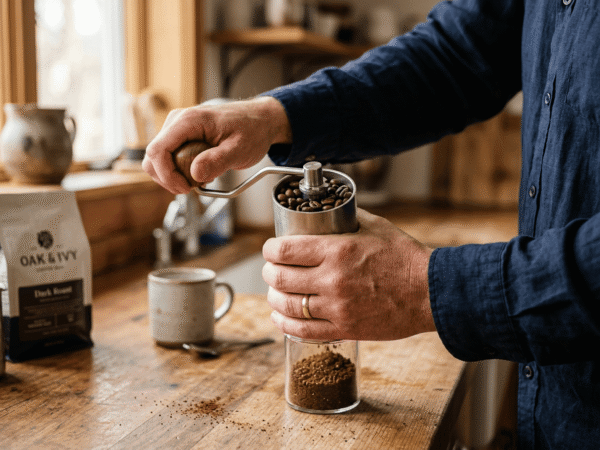
If you don’t own a grinder yet, a quality hand coffee grinder can produce consistent results without the noise of an electric model. And for those who want specific guidance on dialing in grind size, the principles that apply to a French press grind can help you understand why particle size matters so much.
Use the Right Coffee-to-Water Ratio
The SCA recommends a ratio of about 1:15 to 1:18 (coffee to water by weight). For most people, that translates to roughly 1 gram of coffee for every 15 to 17 grams of water. In simpler terms, about 2 tablespoons of ground coffee per 6 ounces of water. But honestly, a $15 kitchen scale is one of the best investments you can make here. Eyeballing it introduces the kind of inconsistency you bought the machine to avoid.
Water Quality Matters More Than You Think
Here’s something that surprises a lot of people. Your coffee is about 98% water. If your tap water tastes off — chlorinated, metallic, too hard — that flavor carries directly into your cup. Filtered water works well. Distilled water doesn’t, because it lacks the minerals that help with extraction. Brands like Third Wave Water even sell mineral packets specifically designed for brewing coffee. You don’t need to go that far, but a basic Brita filter makes a real difference.
Don’t Ignore the Carafe
Some machines come with thermal carafes, others with glass carafes sitting on a hot plate. If you’re someone who pours one cup and leaves the rest sitting for an hour, a thermal carafe is the better choice. Hot plates continue to cook the coffee, which breaks down the flavor compounds and turns it bitter over time. If you’re curious about keeping your coffee at the ideal temperature, you might find a good thermos for coffee useful for carrying it with you.
Electric Pour Over vs Manual Pour Over: Which Is Really Better?
This debate comes up constantly in coffee forums, and the honest answer is — it depends on what you value.
Manual pour over gives you total creative control. You can adjust your pour speed mid-brew. You can experiment with different pouring patterns. You can use a glass pour over coffee maker or a metal pour over and get subtly different flavor profiles from the same beans. For people who genuinely enjoy the ritual of brewing — the meditative process of standing at the counter and focusing on just this one thing — manual pour over is irreplaceable.
But here’s where electric models win. They deliver 95% of that flavor quality with roughly 5% of the effort. On a busy Tuesday morning when you’ve got 10 minutes before a meeting, you’re not doing a careful 4-minute hand pour with a gooseneck kettle. You’re pressing a button. And the best electric pour over machines produce coffee that most people — even trained tasters — can’t easily distinguish from a skilled hand pour in a blind test.
If you’re someone who drinks a single cup and wants total immersion in the process, manual is probably your path. If you’re making coffee for a household, or you just want consistently excellent coffee without the daily effort, electric is the smarter choice.
There’s also a middle ground. Some people use their electric pour over on weekdays and break out the manual setup on lazy weekend mornings. That’s honestly a pretty ideal setup.
Common Mistakes People Make with Electric Pour Over Brewers
Even with automation handling the heavy lifting, there are a few ways people accidentally sabotage their brew.
Using the wrong filter. Bleached paper filters, unbleached paper filters, and metal filters all produce different results. Paper filters give you the cleanest cup with the least sediment. Metal filters let more oils through, which adds body but can also add a slightly gritty texture. Make sure you’re using the filter type that matches your taste preference — and if you’re using paper filters, always rinse them with hot water first. Dry paper adds a papery, cardboard-like taste to your coffee. It’s subtle, but once you notice it, you can’t un-notice it.
Not cleaning the machine regularly. Mineral buildup from water (scale) gradually clogs the internal lines of your brewer. This reduces water flow, lowers the brewing temperature, and eventually makes your coffee taste off. Run a descaling solution through the machine every 1 to 3 months, depending on how hard your water is. White vinegar works in a pinch, but dedicated descaling solutions like Urnex Dezcal do a better job without leaving behind any residual taste.
Ignoring the bloom setting. Some machines have the bloom feature but leave it turned off by default. Check your settings. If your brewer offers a pre-infusion or bloom mode, turn it on. The 30 to 45 seconds it adds to your total brew time pays off enormously in flavor clarity.
Brewing with cold equipment. If your carafe and brew basket are cold when you start, they absorb heat from the brewing water. That drops the overall extraction temperature and under-extracts your coffee. A quick rinse of the carafe with hot water before you start solves this completely.
How Much Should You Expect to Spend?
Electric pour over coffee makers span a wide price range, and the jump in quality between price tiers is real — up to a point.
Under $100, you’re mostly looking at standard drip machines that might market themselves as pour over-style brewers. They work fine for basic coffee, but they usually lack temperature precision, bloom phases, and even water distribution. If you’re working with this budget, check out some solid coffee makers under $100 that deliver good value even if they’re not true pour over systems.
Between $150 and $250, you start getting into legitimate electric pour over territory. The OXO Brew 9-Cup lives here, and so do a few models from Bonavita and Cuisinart. These machines get the fundamentals right — water temperature, showerhead distribution, proper brew timing. For most people, this is the sweet spot of price versus performance.
Above $250, you’re paying for premium build quality, deeper customization, and often SCA certification. The Technivorm Moccamaster and Breville Precision Brewer sit in this tier. And at the far end, the Ratio Eight is essentially a luxury appliance. Whether the premium is worth it depends on how seriously you take your daily cup and how many years you plan to use the machine. A Moccamaster that lasts 12 years at $300 works out to about 7 cents per day — which is pretty easy to justify when you consider what you’d spend at a coffee shop.
Who Should (and Shouldn’t) Buy One
An electric pour over coffee maker is a great fit if you love clean, nuanced coffee but don’t want to manually brew every single day. It works well for households with multiple coffee drinkers, since most models brew 6 to 10 cups at a time. And it’s perfect for anyone who appreciates the pour over flavor profile but lacks the time or patience to master the manual technique.
It’s probably not the right choice if you only ever drink a single cup and prefer the simplicity of a one-cup pour over. It’s also not ideal if you’re on a tight budget — the worthwhile models start around $150, and you’ll still need a decent grinder. And if you genuinely enjoy the hands-on ritual of brewing, an electric machine might actually take away the part you love most.
FAQ
Is an electric pour over coffee maker the same as a drip coffee maker?
Not exactly. While both are automatic brewers, electric pour over machines are specifically engineered to replicate hand pour over technique. They control water temperature more precisely, include bloom phases for pre-infusion, and distribute water more evenly across the coffee bed. A standard drip machine gets the job done, but it doesn’t focus on these details the way a pour over brewer does. The difference is noticeable in the cup — pour over-style brewers tend to produce cleaner, brighter, more complex coffee.
What grind size should I use for an electric pour over coffee maker?
A medium grind works best for most electric pour over brewers. Picture the consistency of regular sand or sea salt. If your brew tastes bitter and harsh, your grind is probably too fine — go a step coarser. If it tastes sour or watery, you’re likely too coarse. A burr grinder gives you much more consistency than a blade grinder, so that’s a worthwhile upgrade if you’re serious about getting the best results from your machine.
Are SCA-certified brewers really worth the extra money?
The SCA certification means the brewer meets specific performance standards for water temperature, brew time, and extraction percentage. It’s not a marketing gimmick — it’s a legitimate quality benchmark developed by coffee industry professionals. That said, certification alone doesn’t guarantee you’ll love every cup. Your beans, grind, water quality, and ratio all play a role too. But SCA-certified machines give you a much stronger foundation to build on, and they consistently outperform non-certified models in blind taste tests.
How often do I need to clean an electric pour over coffee maker?
Rinse the brew basket and carafe after every use. Wipe down the showerhead weekly, since coffee oils build up there and eventually turn rancid. Run a full descaling cycle every 1 to 3 months, depending on your water hardness. If you notice your brew time getting longer or your coffee tasting a bit flat, that’s usually a sign that scale has built up inside the machine’s water lines.
Your Next Move
An electric pour over coffee maker sits in a really unique spot — it’s the closest you can get to hand-crafted specialty coffee without actually crafting it by hand every morning. The best machines genuinely deliver that clean, bright, complex pour over flavor with nothing more than a button press. And the worst machines? They’re just overpriced drip brewers with clever branding.
So here’s what I’d suggest. Figure out your budget and your batch size first. If you’re brewing for yourself, you might realize a single-cup pour over dripper is all you need. If you’re making coffee for the household and want cafe-quality results on autopilot, an SCA-certified electric pour over brewer in the $200 to $300 range will genuinely change your morning routine. Pair it with fresh whole beans, a decent burr grinder, and filtered water — and you’ll start wondering why you ever bothered with anything else.