A glass Chemex sitting on your countertop looks beautiful — until it slips from your wet hands and shatters into a hundred pieces on the kitchen floor. That’s the story of roughly one in five glass pour over owners, if you browse Reddit long enough. Metal pour over coffee makers exist precisely because real life isn’t a styled Instagram photo. They’re tough, they travel well, and the best ones pull flavors from your coffee grounds that rival any ceramic or glass dripper on the market.
But here’s the thing. Not every metal pour over is created equal. Some produce a muddy, over-extracted cup. Others let water rush through too fast, giving you something that tastes like tinted hot water. The material matters, the filter design matters, and even the shape of the dripper changes what ends up in your mug.
If you’re shopping for the best metal pour over coffee maker right now, you probably want something that brews a clean, flavorful cup — and doesn’t break the moment it falls off the counter. You’re in the right place. I’ve spent serious time comparing options, reading user feedback, and testing what actually works. Let’s get into it.
Why Go Metal? The Real Advantages Over Glass and Ceramic
You might wonder why anyone would pick metal over the classic glass or ceramic pour over drippers. The answer goes beyond just durability, though that’s a huge part of it.
Metal pour over coffee makers don’t break. Drop a stainless steel dripper on a tile floor and you’ll get a dent at worst. Drop a Chemex or a ceramic Hario, and you’re sweeping up shards and ordering a replacement. For anyone who camps, travels, or just has butterfingers, metal wins this round every time.
There’s also the heat factor. Stainless steel and titanium don’t absorb as much heat from your brewing water as thick ceramic does. That means more of your water’s thermal energy goes toward extracting flavor from the coffee grounds, not warming up the dripper itself. Preheating still helps, but metal gives you a slight edge in heat efficiency.
Weight matters too. A stainless steel pour over dripper weighs a fraction of a ceramic one. If you’re packing for a backpacking trip or even just storing it in a small kitchen, the lighter footprint makes a real difference.
And let’s talk about cleaning. Metal drippers — especially those with built-in mesh filters — rinse clean in seconds. No paper filters to buy, no soggy compost pile of used filters accumulating on your counter. You brew, you rinse, you’re done.
That said, metal isn’t perfect for everyone. If you love the ultra-clean, paper-filtered taste you get from a glass pour over coffee maker, a metal mesh filter will taste different. It lets more oils and fine particles through, giving your cup a fuller body but slightly less clarity. That’s not a flaw — it’s a style of coffee. Some people love it. Others prefer the paper-filter crispness.
The key is knowing what you want from your cup and picking accordingly.
What to Look for Before Buying a Metal Pour Over Dripper
Before I walk through specific products, you need to understand the features that separate a great metal pour over from a mediocre one. These details affect your daily brew more than brand names do.
Filter Type — Mesh vs. Laser-Cut vs. Paper-Compatible
This is the single biggest factor in how your coffee will taste.
Mesh filters are the most common in metal pour overs. They’re made from fine stainless steel mesh and let coffee oils and micro-fines pass through into your cup. The result is a richer, heavier body — closer to what you’d get from a French press than a traditional paper-filtered pour over.
Laser-cut filters have tiny, precise holes cut into a thin sheet of metal. These tend to produce a cleaner cup than mesh because the holes are more uniform. Brands like Able Brewing have popularized this style with their Kone filter. You still get more body than paper, but with better clarity.
Paper-compatible metal drippers are designed to hold standard paper filters (like Hario V60 or Melitta-style papers) inside a metal frame. You get the durability of a metal body with the clean taste of paper filtration. It’s the best of both worlds, though you’re still buying paper filters.
Cone Shape and Drain Design
Pour over drippers come in different shapes — flat bottom, wedge, and cone. Most metal options use a cone shape with either a single large drain hole or multiple smaller holes at the bottom.
A single large hole (like the V60 design) gives you maximum control over flow rate. Your pour technique directly affects extraction time. Multiple smaller holes slow the flow down, making the brewer more forgiving if your pour speed isn’t perfectly consistent.
If you’re newer to pour over brewing, look for designs with a slightly restricted flow. You’ll get more consistent results while you’re still refining your technique.
Size and Compatibility
Make sure the dripper fits what you’re brewing into. Most metal pour overs are designed to sit on top of a standard mug or a carafe. Some have wider bases meant for specific carafes, while others use a universal lip that fits mugs of various sizes.
If you want to brew more than one cup at a time, check the dripper’s capacity. Most single-serve metal pour overs handle 10–16 ounces comfortably. For larger batches, you’ll need a bigger dripper or a pour over drip coffee maker designed for multi-cup brewing.
Build Quality and Material Grade
Not all stainless steel is created equal. Look for 304 or 316 grade stainless steel — these are food-safe, corrosion-resistant, and won’t impart metallic flavors to your coffee. Lower-grade metals can leach a faint taste, especially with hot water and acidic coffee.
Titanium options exist too, and they’re even lighter and more durable. But they cost significantly more, and for most home brewers, quality stainless steel does the job perfectly.
Best Metal Pour Over Coffee Makers in 2025
Here are the metal pour over drippers that consistently perform well, based on real user feedback, brewing tests, and build quality.
1. Hario V60 Metal Dripper (Size 02)
Hario basically wrote the book on modern pour over brewing, and their stainless steel V60 is one of the most popular metal drippers on the market. It uses the same iconic spiral rib design and single large drain hole as the ceramic version but wrapped in lightweight, unbreakable stainless steel.
You’ll still use paper filters with this one (Hario’s own V60 papers or third-party options), so you get that clean, bright cup profile the V60 is known for. The metal body heats up quickly and doesn’t rob as much temperature from your water as the ceramic model.
Who it’s best for: Experienced pour over brewers who want a durable version of the classic V60 without changing their flavor profile. If you already own a ceramic V60 and want something for travel or outdoor use, this is your easiest transition.
What to watch for: The single large hole means flow rate depends entirely on your pouring speed and grind size. If you’re still learning, you might find the results inconsistent at first. Getting your grind size dialed in — a medium-fine for pour over — is essential.
2. Snow Peak Titanium Fold-Down Dripper
Snow Peak targets the outdoor crowd, and this titanium dripper shows it. The whole thing folds flat, weighs almost nothing, and will survive being thrown in a backpack with zero damage. It uses standard #2 or #4 cone filters and sits securely on most mugs and camp cups.
Titanium doesn’t affect flavor at all — you’ll taste only coffee, not metal. And because it folds completely flat, it takes up less space than a wallet in your pack.
Who it’s best for: Campers, hikers, and travelers who want pour over quality outdoors. If you’re already investing in lightweight titanium camp gear, this fits right in.
What to watch for: It’s expensive for what looks like a simple piece of metal. You’re paying for the titanium material and the engineering behind the fold-flat design. For home use only, you’d probably be happier spending less on a stainless steel option.
3. JavaPresse Pour Over Dripper (Stainless Steel with Mesh Filter)
JavaPresse offers one of the most popular filterless metal pour over drippers. Its dual-layer mesh filter eliminates the need for paper entirely. You get a fuller-bodied cup with more oils — think of it as a hybrid between pour over clarity and the body you’d get from a French press.
The dripper sits on top of your mug with a stable base, and the mesh is fine enough that most sediment stays out (though you’ll notice slightly more fines than a paper filter would catch).
Who it’s best for: Anyone who wants the convenience of no paper filters and enjoys a richer, more full-bodied pour over. It’s also a solid eco-friendly choice since you’re not throwing away filters after every brew.
What to watch for: Mesh filters require more thorough cleaning than a metal frame that holds paper. Coffee oils build up in the mesh over time, and if you don’t scrub it regularly, old oils go rancid and affect your brew’s taste. A quick brush with dish soap after each use prevents this.
4. COLE & MASON Pour Over Coffee Dripper
Cole & Mason’s stainless steel dripper brings a slightly different approach. It uses a laser-etched filter with a honeycomb pattern that balances body and clarity better than most mesh filters. The result sits somewhere between a paper-filtered cup and a French press — clean enough to taste individual flavor notes, but with enough oil to give the cup some richness.
The build quality is solid, and the dripper fits standard mugs without wobbling. It’s a mid-priced option that doesn’t feel cheap in your hands.
Who it’s best for: Brewers who want the no-filter convenience of a mesh dripper but a cleaner cup than most mesh filters deliver. If you’ve tried a mesh filter and found it too silty, the laser-etched design might be your sweet spot.
5. Able Brewing Kone Filter (For Chemex)
This one is a bit different — it’s not a standalone dripper but a reusable metal filter designed to replace paper filters inside a Chemex pour over brewer. The Kone is made from precision-etched stainless steel and fits the 6, 8, and 10-cup Chemex models.
The Kone changes the Chemex experience significantly. You get more body and oil in the cup compared to Chemex’s thick paper filters, which normally strip most oils out. Some people think the Kone makes Chemex coffee taste the way it should — full-flavored, complex, and less “thin.”
Who it’s best for: Chemex owners who want to stop buying expensive Chemex paper filters and prefer a richer cup. It’s also great for anyone comparing different Chemex vs. V60 brewing styles and wanting to experiment with metal filtration.
What to watch for: Purists who love the ultra-clean Chemex paper filter taste might not enjoy the change. It’s a matter of preference. Try it for a week before you make up your mind.
6. GSI Outdoors Ultralight Java Drip
GSI made this for backpackers, and it shows. The entire dripper weighs less than an ounce and packs down to the size of a tea bag. It’s basically a reusable mesh filter attached to a flexible wire frame that sits on your mug.
Don’t expect the same level of brew control you’d get from a rigid metal cone. But for the weight and packability, nothing else comes close. Pair it with a hand coffee grinder and some good beans, and you’ll drink better coffee on the trail than most people make at home.
Who it’s best for: Ultra-light backpackers and minimalist travelers who refuse to drink instant coffee but can’t justify carrying a full dripper.
What to watch for: The flexible design means it doesn’t sit perfectly stable on every mug. And because the mesh is fairly fine but not ultra-fine, you’ll get a bit of silt at the bottom of your cup. Think of it as trail coffee character.
How to Brew Great Coffee with a Metal Pour Over
Owning the right dripper is only half the equation. Your technique determines whether you get a great cup or a disappointing one.
Start with Fresh, Properly Ground Coffee
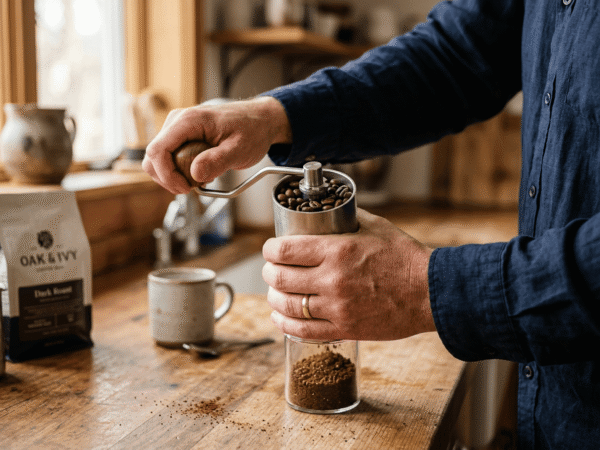
This sounds obvious, but it matters more with pour over than almost any other method. Use whole beans and grind them right before brewing. A medium-fine grind works for most metal pour overs — roughly the texture of table salt.
If you’re grinding too coarse, water passes through too fast and under-extracts. Too fine, and it drains painfully slowly while over-extracting bitter compounds. If you don’t have a good grinder yet, a reliable hand coffee grinder gives you surprisingly consistent results for the price.
Water Temperature and Ratio
Heat your water to about 200–205°F (93–96°C). If you don’t have a thermometer, bring your kettle to a boil and let it sit for 30 seconds. That gets you close enough.
For ratio, start with 1 gram of coffee for every 16 grams of water. So for a standard 12-ounce mug, you’d use about 22 grams of coffee. Adjust from there based on your taste — want it stronger, use more coffee or slightly less water.
The Pour Itself
Start by wetting all the grounds evenly with a small amount of water — just enough to saturate them. Wait 30 seconds. You’ll see the grounds puff up and release CO2 (this is called the bloom). Fresh beans bloom dramatically. Stale beans barely bubble at all. That bloom is actually a great freshness test for your coffee beans.
After the bloom, pour in slow, steady circles from the center outward. Don’t pour directly on the edges where there are no coffee grounds against the filter wall. Keep the water level consistent — you don’t want the dripper overflowing, but you also don’t want it to drain completely dry between pours.
Total brew time should land between 2.5 and 4 minutes, depending on your dripper, grind size, and pour speed.
Cleaning Your Metal Filter
If your metal pour over uses a built-in mesh or laser-cut filter, clean it after every use. Run hot water through it immediately after brewing and give it a light scrub with a soft brush. Once a week, soak it in a mixture of hot water and a drop of dish soap for 10 minutes, then rinse thoroughly.
Coffee oil residue builds up invisibly in metal filters. You won’t see it, but you’ll taste it — a stale, slightly rancid undertone that creeps into every cup. Regular cleaning prevents this entirely.
Metal vs. Ceramic vs. Glass — A Quick Honest Comparison
People often ask how metal pour overs stack up against ceramic and glass options. Here’s the truth without any fluff.
Durability: Metal wins by a mile. Glass is fragile. Ceramic is tougher than glass but still cracks on hard impacts. Metal survives almost anything.
Heat Retention: Ceramic holds heat the longest once preheated, which some argue produces a more stable extraction temperature. Metal heats up fast but also cools quickly. Glass falls in between. The practical difference in your cup? Minimal, if you preheat your dripper regardless of material.
Flavor Neutrality: All three are effectively flavor-neutral when you’re using quality materials. Cheap metals can taste metallic, but 304/316 stainless steel and titanium won’t affect your coffee’s flavor.
Aesthetics: This is personal. Some people love the look of a copper or brass pour over dripper sitting on their counter. Others prefer the minimalist elegance of glass or the handmade feel of ceramic. Your coffee doesn’t care how the dripper looks — but you might.
Portability: Metal is the clear winner. It’s lighter than ceramic, doesn’t break like glass, and many metal drippers fold flat or nest inside other gear.
If you’re primarily brewing at home on your kitchen counter and you enjoy the ritual and aesthetics, ceramic or glass might appeal to you more. If you want something practical, travel-friendly, and worry-free, metal is the smarter pick. You can explore different pour over and drip setups to see what fits your routine best.
Who Should (and Shouldn’t) Buy a Metal Pour Over
A metal pour over dripper isn’t the right choice for everyone. Here’s who benefits most.
You should buy one if:
You travel or camp frequently and want quality coffee on the go. You’re tired of buying paper filters every few weeks. You’ve broken a glass or ceramic dripper before and don’t want to repeat the experience. You prefer a fuller-bodied cup with more oils (if using a mesh or laser-cut filter). You want something that lasts years without needing replacement.
You might want to skip it if:
You strongly prefer the ultra-clean, bright taste that thick paper filters (like Chemex papers) produce. You’re brewing large batches and need something with bigger capacity — an electric pour over coffee maker might serve you better. You enjoy the process of using a beautiful ceramic or glass brewer and don’t need portability.
There’s no wrong answer here. It’s about matching the tool to how and where you actually make coffee.
A Note on Price — What’s Worth Spending?
Metal pour over drippers range from about $10 to $70, with titanium options pushing past $50 easily. Here’s a rough guide to what each price tier gets you.
Under $15 — Basic stainless steel mesh drippers. They work, but the mesh quality varies. Some produce a cleaner cup than others. JavaPresse and similar brands live here and deliver solid value.
$15–$30 — Better build quality, more refined filter designs (laser-cut, dual-layer mesh), and better mug compatibility. This is the sweet spot for most home brewers.
$30–$50 — Premium stainless steel options from brands like Hario. You’re paying for brand reputation, design refinement, and proven consistency.
$50+ — Titanium drippers (Snow Peak, Keith Titanium) and specialty designs. Worth it for ultralight travelers or gear enthusiasts. Overkill for someone who just brews at home.
Don’t overthink the price. A $15 metal dripper with good technique and fresh quality coffee beans will outperform a $50 dripper with stale pre-ground coffee every single time.
FAQ
Does a metal pour over coffee maker make coffee taste metallic?
No — not if it’s made from food-grade stainless steel (304 or 316 grade) or titanium. These materials are chemically inert and won’t leach any flavor into your coffee. If you taste metal, the dripper is either very low-quality or hasn’t been cleaned properly. Rinse it well before first use and you should be fine.
Can I use paper filters in a metal pour over dripper?
It depends on the design. Metal drippers like the Hario V60 Metal are specifically built to hold paper filters — they’re just the V60 shape in stainless steel instead of ceramic. Filterless mesh drippers, on the other hand, are designed to be used without paper. Some people do place a paper filter inside a mesh dripper for extra clarity, but it can restrict flow and alter brew time.
How long does a metal pour over coffee maker last?
With basic care, a quality stainless steel pour over dripper will last essentially forever. There are no parts that wear out, no glass to crack, and no ceramic to chip. Even the mesh filter in a filterless model holds up for years if you clean it regularly. Titanium options are even more durable, though stainless steel is already tough enough for a lifetime of daily use.
Is pour over coffee stronger than drip coffee?
It can be, but it doesn’t have to be. Strength depends on your coffee-to-water ratio, not the brewing method. Pour over gives you more control over that ratio than most automatic drip coffee makers, so you can dial in exactly how strong you want it.
What grind size should I use with a metal pour over?
Medium-fine works best for most metal pour over drippers — think table salt consistency. If your coffee drains too fast and tastes weak or sour, go finer. If it drains too slowly and tastes bitter or harsh, go coarser. Small adjustments make a big difference. A burr grinder gives you much more control than a blade grinder for this kind of fine-tuning.
Your Next Cup Is Waiting
Picking the best metal pour over coffee maker really comes down to three things — how you like your coffee to taste, where you plan to use it, and how much fuss you want to deal with. A simple stainless steel mesh dripper works beautifully for everyday home brewing. A titanium fold-flat model earns its price on the trail. And a metal V60 gives paper-filter purists a nearly indestructible version of their favorite brewer.
Whatever you choose, the real magic isn’t in the dripper itself. It’s in starting with fresh, well-stored beans, grinding them right before you brew, and pouring with a little patience. Nail those basics, and even the most affordable metal pour over will reward you with a cup worth savoring every single morning.