A single cup of pour over coffee takes about four minutes to brew. That’s less time than waiting in a drive-through line, and the result tastes noticeably better than what most machines produce. If you’re the only coffee drinker in your household — or you simply don’t want to brew an entire pot when you only need one cup — a single cup pour over coffee maker is exactly what you need.
But here’s the thing. Walk into any coffee gear shop or scroll through online listings, and you’ll find dozens of options. Ceramic cones, stainless steel drippers, plastic models, glass designs — all claiming to make the “perfect” cup. Some cost $5. Others cost $50. How do you pick the right one without wasting money?
That’s what this guide is about. I’ve spent years testing different pour over setups, talking to home baristas, and paying close attention to what actually makes a difference in your morning cup. Let’s break down what works, what doesn’t, and which single cup pour over coffee makers are genuinely worth your money right now.
Why a Single Cup Pour Over Makes Sense
You might be wondering — why not just use a regular drip machine or a pod brewer? Fair question. Let me give you the honest answer.
A drip coffee maker brews 8 to 12 cups at once. If you’re drinking alone, half that pot sits on a hot plate getting bitter and stale. A pod machine like a Keurig is convenient, sure, but you’re locked into pre-ground, pre-packaged coffee that was roasted who-knows-when. Plus, there’s all that plastic waste.
A single cup pour over dripper sits right on top of your mug. You boil water, grind your beans fresh, pour slowly, and in about four minutes you’ve got one clean, flavorful cup. No electricity needed for the brewer itself. No pods to throw away. No leftover coffee going to waste. And the taste? Noticeably brighter, cleaner, and more nuanced than what most machines produce.
If you’ve ever compared French press vs pour over coffee, you already know that pour over tends to produce a lighter, more clarity-driven cup. The paper filter catches oils and fine sediment, which gives you a smooth finish without any gritty texture. For a single serving, this method is hard to beat.
What to Look for in a Single Cup Pour Over Coffee Maker
Before I get into specific products, you need to understand what separates a good pour over dripper from a mediocre one. There are a few key factors that directly affect your brewing experience and the taste of your coffee.
Material Matters More Than You Think
The material of your dripper affects heat retention during brewing, and heat retention affects extraction. Here’s the quick breakdown:
Ceramic holds heat the best. It keeps your brewing temperature stable, which leads to more consistent extraction. The downside? It’s heavier and breakable. You’ll want to pre-heat it with hot water before brewing, otherwise the ceramic absorbs heat from your brew water and your coffee under-extracts.
Glass is similar to ceramic in terms of heat behavior but feels a bit more fragile. It looks beautiful on a counter, though, and many people love the aesthetic. If you’re interested in glass options specifically, check out this detailed look at glass pour over coffee makers.
Stainless steel is practically indestructible. It won’t shatter if you drop it, and it’s great for travel or camping. Heat retention is moderate — not as good as ceramic, but serviceable. For a deep dive on metal options, there’s a solid guide on the best metal pour over coffee makers.
Plastic (usually BPA-free Tritan or polypropylene) is the lightest and cheapest option. Surprisingly, many professional baristas actually prefer plastic drippers because they don’t steal heat from the brew water the way ceramic does before pre-heating. The Melitta and certain Hario models in plastic are legitimately excellent brewers.
Dripper Shape and Rib Design
This sounds like a minor detail, but it affects airflow and drainage speed, which in turn affects how your coffee tastes.
Cone-shaped drippers (like the Hario V60) have a single large opening at the bottom. Water flows through faster, giving you more control but less room for error. If your grind size or pour speed is off, you’ll taste it.
Flat-bottom drippers (like the Kalita Wave) slow things down a bit. The three small drain holes create a more even extraction, which means more forgiveness if your technique isn’t perfect yet. Many beginners find flat-bottom drippers easier to get consistent results from.
The ribs inside the dripper — those raised ridges along the walls — create space between the filter and the dripper wall. This allows air to escape during brewing, which helps water flow through at a steady rate rather than creating a vacuum seal. Deeper, spiral ribs (like on the V60) promote faster flow. Shorter, straight ribs slow things down.
Filter Type
Most single cup pour over drippers use either paper filters, metal filters, or cloth filters.
Paper filters produce the cleanest cup. They catch oils and micro-fines, giving you bright, clear coffee. The trade-off is ongoing cost — you’ll need to keep buying filters — and slight environmental waste, though paper filters are compostable.
Metal filters let more oils and body pass through, creating a richer, fuller cup that’s closer to French press texture. No recurring filter costs. But you’ll get some fine sediment at the bottom of your cup, and cleanup can be a bit more involved.
Cloth filters land somewhere in between. They produce excellent body without much sediment. The problem? They require careful maintenance. You need to rinse them after every use and store them in water in the fridge to prevent mold and off-flavors. Most people don’t keep up with this, honestly.
Best Single Cup Pour Over Coffee Makers for 2025
Alright, let’s get into the specific drippers that are worth your attention. I’m focusing on models that are widely available, well-reviewed by the coffee community, and that I’ve either personally used or seen extensively tested by trusted sources.
Hario V60 (Size 01 or 02)
The V60 is probably the most recognized pour over dripper on the planet, and there’s a good reason for that. Designed in Japan by Hario — a company that’s been making heatproof glass since 1921 — the V60 features a cone shape with large spiral ribs and a single open drain hole. This design gives you maximum control over flow rate.
The Size 01 is specifically designed for a single cup (1–2 cups), while the Size 02 can handle 1–4 cups. Most single-cup brewers do perfectly fine with the 02 size, which also gives you the flexibility to brew for two when you need to.
You can find the V60 in ceramic, glass, plastic, copper, and stainless steel. The plastic version costs around $9–$12 and genuinely brews just as well as the $30+ ceramic version. Professional coffee competitors have won championships using the plastic V60.
Who it’s best for: People who enjoy the process and want full control. If you’re willing to dial in your grind size and pour technique, the V60 rewards you with exceptional clarity and flavor complexity. It’s not the most forgiving dripper for complete beginners, but the learning curve isn’t steep if you follow a basic recipe.
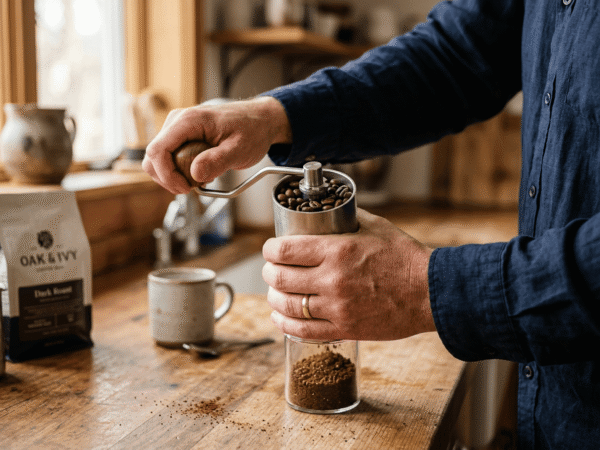
Pro Tip: Use a medium-fine grind — slightly finer than table salt. Your total brew time should be about 2:30 to 3:30 for a single cup. If it’s draining too fast, grind finer. Too slow? Grind coarser. Getting the right grind is honestly the most important variable, which is why owning a good hand coffee grinder makes a real difference.
Kalita Wave 155
The Kalita Wave 155 is the single-cup version of the popular Wave series. Made by Kalita, another respected Japanese coffee equipment company, this dripper uses a flat-bottom design with three small drain holes. The proprietary Wave filters have a wavy, pleated shape that minimizes contact between the filter and the dripper walls.
Why does that matter? Less contact means more consistent airflow and more even extraction. You don’t get channeling — where water finds one fast path through the coffee bed and leaves other grounds under-extracted. The result is a reliably smooth, balanced cup with very little effort.
The Wave 155 comes in stainless steel, glass, and ceramic. The stainless steel version is the most popular and typically runs $25–$35.
Who it’s best for: If you want consistency without fussing over technique, the Kalita Wave is your best friend. It’s more forgiving than the V60. Your pour doesn’t need to be perfectly controlled — the flat bed and restricted drainage do a lot of the work for you.
One thing to watch: The proprietary Wave filters can be slightly harder to find in local stores and cost a bit more than standard V60 filters. Buying in bulk online solves this.
Melitta Single Cup Pour Over
Here’s the thing about Melitta — the company literally invented the paper coffee filter back in 1908. Melitta Bentz, a German entrepreneur, poked holes in a brass pot, lined it with blotting paper from her son’s school notebook, and changed coffee forever. So yeah, they know what they’re doing.
The Melitta single cup pour over is the most budget-friendly option on this list, usually priced between $5 and $8. It’s a simple wedge-shaped plastic cone with small drain holes. It sits on top of your mug, you drop in a Melitta #2 cone filter, add coffee, pour water, and you’re done.
Is it fancy? No. Does it produce a great cup of coffee? Absolutely. The restricted flow rate makes it very forgiving, and the Melitta filters are cheap and available at virtually every grocery store.
Who it’s best for: Beginners, budget-conscious buyers, and anyone who wants a no-nonsense brewer that just works. It’s also a great option if you’re not sure whether pour over is right for you — spending $6 to find out is basically risk-free.
Origami Dripper
The Origami Dripper is a newer player that’s gained a serious following in the specialty coffee world. Designed in Gifu, Japan — a region famous for its ceramics — the Origami features a distinctive 20-rib design that looks like folded paper (hence the name).
What makes it unique is versatility. You can use it with cone-shaped V60 filters or flat-bottom Wave-style filters, depending on the type of brew you’re going for. With a cone filter, it brews faster and brighter. With a flat-bottom filter, it slows down and produces more body. One dripper, two personalities.
The ceramic version is gorgeous and comes in a variety of colors. There’s also a resin (AS resin) version that’s lighter and better for travel. Prices typically range from $25 to $40, depending on material and whether you include the wooden holder.
Who it’s best for: Coffee enthusiasts who like to experiment. If you enjoy switching between brew styles and dialing in different flavor profiles, the Origami’s flexibility is genuinely appealing.
Bee House Ceramic Dripper
The Bee House dripper comes from Tajimi, Japan, made by the Zero Japan ceramics company. It’s a wedge-shaped dripper (similar to Melitta’s cone shape) with two small drainage holes. This design creates a slightly restricted flow that forgives imperfect technique.
The Bee House uses standard Melitta #2 filters, which are cheap and available everywhere. The ceramic construction looks and feels premium, and it holds heat well during brewing. It’s available in several attractive colors.
One thing I really like about the Bee House — it has a built-in “rest” that sits securely on most standard mugs and even travel cups. You don’t need a separate stand or server.
Who it’s best for: Someone who wants the look and feel of a premium ceramic dripper with the ease of a forgiving, beginner-friendly design. It’s a great middle ground between the Melitta’s simplicity and the V60’s precision.
How to Brew a Great Single Cup of Pour Over Coffee
Having a good dripper is only half the equation. Your technique, water, and coffee quality matter just as much. Here’s a straightforward method that works across most single cup drippers.
The Basic Recipe
Coffee: 15–18 grams (about 2.5 to 3 tablespoons). For one cup, 15 grams is a good starting point.
Water: 250 ml (about 8.5 ounces) at 195°F to 205°F. If you don’t have a thermometer, bring water to a boil and wait 30–45 seconds.
Grind: Medium-fine. Think slightly finer than sand. If you’re grinding your own beans — which you really should be — a burr grinder gives you the most consistent particle size. Pre-ground coffee from a bag works in a pinch, but freshly ground beans taste noticeably better. For tips on grinding without fancy equipment, here’s a helpful piece on how to grind coffee beans without a grinder.
Ratio: Roughly 1:15 to 1:17 coffee to water. That means for every gram of coffee, use 15–17 grams (ml) of water.
The Brewing Steps
Start by placing your filter in the dripper and rinsing it with hot water. This serves two purposes — it removes the papery taste from the filter and pre-heats your dripper and mug. Dump the rinse water from your mug before brewing.
Add your ground coffee and give the dripper a gentle shake to level the bed. Start your timer and pour about 30–45 ml of water (roughly twice the weight of your coffee) over the grounds. This is called the bloom. You’ll see the coffee bed rise and bubble — that’s carbon dioxide escaping from fresh coffee. Wait 30–45 seconds.
After the bloom, pour the remaining water in slow, steady circles, starting from the center and spiraling outward, then back to the center. Avoid pouring directly on the filter walls. Try to keep the water level consistent — don’t let the bed dry out completely, but don’t flood it either.
Your total brew time should land between 2:30 and 3:30 for most drippers. If you’re using a Kalita Wave, expect closer to 3:00 to 4:00 because of the restricted flow.
Did You Know? The quality of your water makes a massive difference. Coffee is about 98% water, so if your tap water tastes off, your coffee will too. Filtered water works best. Distilled water is actually too pure — it lacks the minerals that help extract flavor compounds from the coffee.
Single Cup Pour Over vs. Other Single-Serve Methods
If you’re comparing the pour over approach against other ways to make one cup, here’s how they stack up.
Pour over vs. AeroPress: Both make excellent single cups. The AeroPress uses pressure and immersion, producing a concentrated, full-bodied brew that’s closer to espresso. Pour over gives you a cleaner, lighter cup with more nuance. If you’re curious about immersion methods, you might enjoy reading about the AeroPress vs French press debate, which covers similar ground.
Pour over vs. single-serve drip machines: Most single-serve drip machines (including pod brewers) don’t heat water to the right temperature and don’t bloom the coffee. They brew fast, which sounds good, but fast brewing means under-extraction, which means weak, sour, or flat-tasting coffee. A manual pour over gives you control over every variable.
Pour over vs. French press: French press produces a heavier, oilier cup because the metal mesh filter lets oils and sediment through. Pour over with a paper filter gives you a clean, bright cup. Neither is objectively “better” — it depends on what you enjoy. A detailed comparison of Chemex vs French press explores these flavor profile differences really well.
Common Mistakes People Make with Single Cup Pour Over
Let me save you some frustration. These are the errors I see most often from people who are new to pour over, and even from some who’ve been doing it for a while.
Using Boiling Water Straight Off the Stove
Water at a full boil (212°F) is too hot for most coffee. It over-extracts, pulling out harsh, bitter compounds. The sweet spot is 195°F to 205°F. Just let your kettle sit for 30 seconds to a minute after boiling. A gooseneck kettle with a built-in thermometer makes this easy, but it’s not strictly necessary.
Ignoring the Bloom
Skipping the bloom means carbon dioxide from the roasting process creates a barrier between water and coffee grounds. The gas pushes water away from the grounds, leading to uneven extraction. Take those extra 30 seconds. Your coffee will taste better for it.
Using the Wrong Grind Size
Too coarse, and water rushes through without extracting enough flavor. Your coffee tastes weak and sour. Too fine, and water can’t drain properly. It backs up, over-extracts, and your coffee tastes bitter and harsh. Medium-fine is the target — adjust from there based on your brew time.
Not Measuring Coffee or Water
I know, measuring sounds fussy. But coffee brewing is basically a ratio game. Too much water with too little coffee gives you a diluted, bland cup. Too much coffee with too little water gives you an overly strong, potentially bitter brew. A simple kitchen scale costs $10–$15 and transforms your consistency overnight.
Do You Need a Gooseneck Kettle?
Short answer: you don’t need one, but it makes things significantly easier.
A gooseneck kettle gives you a thin, controlled stream of water. This matters because pour over brewing is all about even saturation. With a regular kettle, the water comes out in an uncontrollable gush that disrupts the coffee bed, creates channels, and leads to uneven extraction.
Can you make good pour over coffee with a regular kettle? Yes, with practice. You can pour from a measuring cup with a spout, or even a saucepan poured carefully. But if you brew pour over regularly, a gooseneck kettle between $25 and $40 is one of the best investments you’ll make.
Electric gooseneck kettles from brands like Fellow, Bonavita, and Cosori let you set exact temperatures, which removes another variable from the equation. The Fellow Stagg EKG is the most popular choice in the specialty coffee world, though it’s pricier at around $100+. The Cosori gooseneck offers similar functionality for roughly half the price.
Best Beans for Pour Over Coffee
Your dripper and technique can only do so much. The coffee itself matters enormously.
Pour over brewing is a clean, transparent method. It highlights the natural characteristics of the coffee bean — origin flavors, processing method nuances, roast level subtleties. This means two things: great beans taste even better, and mediocre beans have nowhere to hide.
Light to medium roasts generally shine brightest in a pour over. You’ll taste fruity, floral, and citrus notes that get masked by darker roasting. Ethiopian coffees, for example, often show beautiful blueberry or jasmine flavors through a pour over that you’d never detect from a drip machine or a dark roast.
That said, if you prefer a chocolatey, nutty, full-bodied cup, medium to medium-dark roasts from Central and South America work wonderfully in a pour over too. There’s no wrong choice — just different flavor experiences.
The freshness of your beans matters just as much as the origin. Coffee is at its peak flavor roughly 7 to 21 days after roasting. Pre-ground coffee from a grocery store shelf might be months old. Buying whole beans from a local roaster or a reputable online source and storing your coffee beans properly makes a dramatic difference.
If you’re looking for specific recommendations, there’s a helpful guide on finding the best coffee beans to match your brewing method and taste preferences.
Traveling with a Single Cup Pour Over
One of the big advantages of a single cup dripper is portability. Most of them weigh almost nothing and take up barely any space in a bag.
The plastic Hario V60 01 weighs about 40 grams — less than a pair of sunglasses. The Melitta single cup weighs roughly the same. Toss it in your carry-on with a small bag of freshly ground coffee and a few filters, and you’ve got hotel-room coffee that’s infinitely better than whatever pod machine they’ve put on the desk.
For road trips and camping, a stainless steel dripper like the Kalita Wave 155 handles rough treatment without worrying about breakage. Pair it with a quality travel coffee mug, and you’ve got a genuinely portable coffee setup that weighs under a pound total.
Quick Tip: If you’re traveling and don’t want to carry a grinder, buy pre-ground coffee from a good roaster right before your trip. It won’t be as fresh as grinding on the spot, but if it’s freshly ground within a day or two, it’ll still taste great.
FAQ
What size grind should I use for a single cup pour over?
Medium-fine is the standard recommendation — slightly finer than regular sand but not as fine as espresso. If your coffee tastes sour or watery, try grinding finer. If it’s bitter or harsh, go coarser. Your total drain time is the best indicator: aim for 2:30 to 3:30 for cone drippers like the V60, and 3:00 to 4:00 for flat-bottom drippers like the Kalita Wave.
Is pour over coffee stronger than drip coffee?
It can be, but “strength” really depends on your coffee-to-water ratio, not the brewing method itself. Using the same amount of coffee and water, pour over and drip will produce similar strength. The difference is in flavor clarity — pour over tends to produce a cleaner, more defined taste because you control the variables more precisely.
How much does a good single cup pour over coffee maker cost?
You can get an excellent single cup dripper for as little as $6 (Melitta) to around $40 (Origami ceramic). The dripper itself is the least expensive part of the setup. Your bigger investments will be a decent grinder and, if you want one, a gooseneck kettle. The good news is that a solid complete pour over setup — dripper, filters, kettle, and grinder — can cost under $100 total and lasts for years.
Can I use a single cup pour over without a special kettle?
Absolutely. A gooseneck kettle makes pouring easier and more controlled, but it’s not mandatory. You can pour from a regular kettle slowly, use a measuring cup with a pour spout, or even pour from a saucepan. The key is pouring slowly and steadily. With practice, you can get good results with whatever you have on hand.
Are reusable metal filters worth it for pour over?
They save money on paper filters over time and produce a richer, fuller-bodied cup because they let oils pass through. But the cup will have a different character — more body, less clarity, and some fine sediment at the bottom. If you love the clean taste that defines pour over coffee, stick with paper filters. If you prefer a richer mouthfeel and don’t mind sediment, a metal filter is a great option.
Your Next Step
Here’s what I’d genuinely recommend if you’re ready to start. Pick the dripper that matches your personality. If you want simplicity and low cost, grab a Melitta. If you want the most beloved option in specialty coffee, go with the Hario V60 in plastic. If consistency with minimal effort is your priority, the Kalita Wave 155 won’t let you down.
Whichever you choose, invest in fresh, whole-bean coffee and grind it right before you brew. That single change will improve your coffee more than any piece of equipment ever could. A single cup pour over coffee maker is one of the simplest, most affordable ways to drink genuinely excellent coffee at home — and once you taste the difference, it’s really hard to go back to anything else.