A single coffee bean can taste wildly different depending on how you brew it. And if you’ve narrowed your choices down to a percolator and a French press, you’re standing at a fork where two very different brewing philosophies meet.
One method has been fueling kitchens and campfires since the 1880s. The other became a café icon in mid-20th-century Europe. Both are affordable, both skip the paper filter, and both have fiercely loyal fans who’ll argue till the pot runs dry.
But here’s the thing — they don’t make the same cup of coffee. Not even close. The percolator pushes boiling water up through grounds repeatedly, while a French press steeps grounds gently in hot water and separates them with a metal plunger. That core difference shapes everything: flavor, body, caffeine content, and even how your morning routine feels.
So instead of giving you a vague “it depends,” let’s break down exactly where each brewer shines, where it falls short, and — most importantly — which one fits your coffee personality.
How a Percolator Works (And Why It Tastes the Way It Does)
A percolator is beautifully mechanical. You fill the bottom chamber with water, place coarsely ground coffee in the perforated basket near the top, and apply heat. As the water heats up, it travels through a vertical tube, sprays over the coffee grounds, drips back down into the chamber, and cycles through again. And again. And again.
That repeated cycling is the key to everything a percolator does — good and bad. Because the already-brewed coffee keeps passing over the grounds, you get a very strong, very bold cup. Some people love that intensity. Others find it borders on bitter, especially if the percolation runs a few minutes too long.
Most stovetop percolators brew for about 7 to 10 minutes, while electric percolators handle the timing automatically and reduce the risk of over-extraction. Either way, the result is a hot, robust cup with a character that drip machines and pour-overs simply can’t replicate.
Quick fact: The percolator was patented by Hanson Goodrich in 1889, and it dominated American kitchens until automatic drip machines took over in the 1970s. It never disappeared, though — it just went underground (and to campgrounds).
How a French Press Works (And Why People Obsess Over It)
The French press — also called a press pot or cafetière — takes the opposite approach. You add coarsely ground coffee to the carafe, pour hot water over it (around 200°F, just off the boil), wait four minutes, then push the metal mesh plunger down to separate the grounds from the liquid.
That’s it. No cycling, no continuous heat, no complicated mechanics. Just immersion brewing in its simplest form.
Because the coffee grounds sit in the water without any movement or recirculation, you get a very different extraction pattern. The French press pulls out the oils, the subtle flavor compounds, and the fine sediment that a paper filter would trap. The result is a thick, full-bodied cup with a richness that feels almost creamy on your tongue.
Getting the right grind size for a French press matters more than most people realize. Too fine, and the grounds slip through the mesh filter into your cup, leaving you with a gritty, over-extracted mess. Too coarse, and the coffee tastes weak and watery. You’re aiming for a consistency that looks like coarse sea salt — each particle clearly visible, but not so chunky that water can’t extract the good stuff.
Flavor: Bold Punch vs Nuanced Richness
This is where the percolator vs French press debate gets personal, because taste is subjective. But let’s talk about what each method actually does to the coffee, objectively.
Percolator coffee tends to be bold, strong, and sometimes slightly bitter. The continuous cycling means the water extracts more from the grounds than a single-pass method would. If you’re using a dark roast, that effect gets amplified. For people who grew up drinking percolator coffee — or who just like their cup to hit hard — this is the good stuff.
The trade-off? Subtlety gets lost. Those delicate floral or fruity notes in a light-roast Ethiopian Yirgacheffe? The percolator will steamroll right over them. It’s not the brewer’s fault, exactly — it’s just the nature of continuous extraction at high temperatures.
French press coffee preserves more of the bean’s natural character. Because you control the steep time (usually four minutes) and the water temperature, you can pull out the sweetness, the acidity, and the aromatic compounds without pushing into harsh, over-extracted territory. The metal mesh filter lets the natural oils pass through, which adds body and complexity that paper-filtered methods can’t match.
If you’re curious how the French press stacks up against other manual brewers, the French press vs pour over comparison is worth a read — it highlights just how much the filter type alone changes your cup.
The bottom line on flavor: If you want bold, no-nonsense strength, the percolator delivers. If you want nuance, complexity, and a richer mouthfeel, the French press wins.
Caffeine: Which One Packs a Bigger Kick?
Here’s something that surprises a lot of coffee drinkers. Percolator coffee generally contains more caffeine per cup than French press coffee, and the reason is simple math.
Caffeine extraction depends on three things: water temperature, contact time, and how many times the water passes over the grounds. A percolator uses near-boiling water, cycles it through the grounds multiple times over 7 to 10 minutes, and keeps the temperature high throughout. That’s basically a caffeine-extraction dream scenario.
A French press uses slightly cooler water (ideally around 200°F), steeps for about 4 minutes, and the water only contacts the grounds once. You still get a solid caffeine hit — roughly 80 to 100 milligrams per 8-ounce cup — but a percolator can push that into the 120 to 150 milligram range for the same serving size.
Does that mean the percolator is “better” for caffeine? Only if you want more of it. Some people don’t need the extra buzz. And if you’re sensitive to caffeine, the French press gives you a strong-tasting cup without the jitteriness that percolator coffee sometimes brings.
Pro Tip: The coffee bean itself matters more than the brew method for caffeine content. Robusta beans contain almost twice the caffeine of Arabica beans, so your choice of quality coffee beans has a bigger impact than which brewer you use.
Ease of Use: Morning Simplicity vs a Small Learning Curve
Let’s be honest — nobody wants a complicated ritual at 6 AM. Both brewers are simpler than an espresso machine, but they differ in the kind of attention they demand.
Percolator ease of use depends on whether you go stovetop or electric. An electric percolator is about as easy as it gets: add water, add grounds, plug it in, and walk away. It stops automatically when the brewing cycle finishes. Stovetop percolators need a bit more babysitting. You have to watch the heat, listen for the right perking rhythm, and time it yourself. Leave it too long and you’ll over-extract. Pull it too early and the coffee tastes thin.
French press ease of use is dead simple in theory — boil water, add grounds, wait, press — but the details matter. Water temperature should be around 200°F (not a full rolling boil). Steep time should be close to four minutes. The grind needs to be coarse enough for the filter but fine enough for proper extraction. Once you nail those variables, the process becomes second nature. But your first few attempts might taste off until you dial things in.
Neither brewer is “hard” to use. The percolator is more forgiving if you go electric. The French press gives you more control but expects you to use it.
Brewing Capacity: A Cup for One or Coffee for a Crowd?
This is a practical consideration that a lot of comparison articles skip, but it matters more than you’d think.
French presses typically come in sizes ranging from 12 ounces (about 1 to 2 cups) up to 51 ounces (about 8 cups). The most popular home size holds around 34 ounces — enough for 3 to 4 mugs. That works great for one or two people, but if you’re hosting brunch or filling thermoses for a road trip, you’ll be brewing batch after batch.
Percolators, especially stovetop percolators, often start at 8 cups and go up to 12 cups for standard home models. Commercial and camping percolators can brew 20, 30, even 100 cups at once. That’s why church basements and campgrounds have relied on percolators for decades. When you need a lot of coffee and you need it hot, nothing beats a big percolator.
If you’re shopping for one or two people: A French press makes more sense. You brew only what you need, and leftover coffee in a French press gets over-extracted and bitter if it sits on the grounds.
If you regularly make coffee for groups: A percolator is hard to beat. It brews large batches and keeps them hot.
Portability and Durability: From Kitchen Counter to Campfire
Both brewers have a reputation for portability, but they handle the real world differently.
A French press is lightweight and compact, which sounds great for travel — until you remember that most French presses are made of glass. Drop it in a parking lot and you’re done. Stainless steel French presses exist and they’re much tougher, but they tend to cost more and you can’t see the brewing process.
Percolators — especially stovetop models — are almost indestructible. A stainless steel or aluminum percolator can take a beating, sit on a campfire grate, and still produce coffee year after year. There’s a reason percolators remain the go-to choice for camping coffee. They don’t need electricity (stovetop models), they don’t have fragile components, and they handle rough treatment without complaint.
If you’re brewing outdoors or on the road, a stovetop percolator is the more practical choice. For a kitchen counter or a desk at work, a French press does the job beautifully.
Cleanup: Nobody’s Favorite Topic (But It Matters)
Cleaning a French press is slightly annoying. You have to scoop out the wet grounds from the bottom of the carafe — and they like to cling. Then you disassemble the plunger, rinse the mesh filter, and make sure no old grounds are hiding between the filter plates. Skip the deep clean for a few days and you’ll notice stale, rancid coffee oil building up. It doesn’t ruin the press, but it will taint your next brew.
Cleaning a percolator is more straightforward in some ways and trickier in others. You dump the grounds from the basket (easy), rinse the pot (easy), but the internal tube and the basket’s perforations need regular scrubbing to prevent mineral and oil buildup. Hard water areas make this worse — calcium deposits can clog the tube and slow the percolation cycle over time.
Neither brewer is a nightmare to clean. But if you want total honesty, the percolator’s basket-and-dump design is slightly less messy day-to-day than fishing wet grounds out of a French press carafe with a spoon.
Cost: What Are You Actually Paying For?
Both brewers are budget-friendly compared to espresso machines, pod systems, or even high-end drip makers. But there are real price differences worth knowing.
A decent glass French press from brands like Bodum starts around $20 to $35. Stainless steel models run $30 to $60. You don’t need filters, pods, or electricity (just a way to boil water). The ongoing cost is basically just coffee beans.
Stovetop percolators range from $20 to $50. Electric percolators typically cost $30 to $80, with larger-capacity models pushing past $100. Like the French press, there are no paper filters to buy. Your recurring costs are coffee and water.
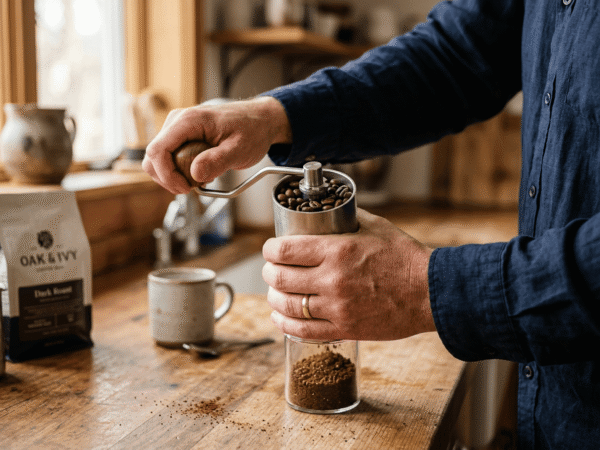
The real hidden cost with both brewers is the grinder. Both methods work best with freshly ground, coarse coffee. Pre-ground coffee from the grocery store will work, but it’s usually ground for drip machines — too fine for either a percolator or a French press. Investing in a good hand coffee grinder gives you control over grind size without breaking the bank, and you’ll notice the difference in your very first cup.
Which One Fits Your Life? A Practical Decision Guide
Forget about which brewer is “objectively better.” That question doesn’t have a real answer because people drink coffee for different reasons, in different settings, with different priorities. Here’s how to think about it instead.
Choose a percolator if you:
- Like bold, strong coffee and don’t mind a slightly bitter edge
- Regularly brew for more than two or three people
- Want something rugged for camping or outdoor use
- Prefer a hands-off process (especially with electric models)
- Enjoy that nostalgic, classic American coffee flavor
Choose a French press if you:
- Appreciate nuanced flavors and want to taste the bean’s character
- Usually brew one to four cups at a time
- Enjoy having control over brew variables (time, temperature, ratio)
- Want a quick brew — four minutes vs seven to ten
- Like a full-bodied, oil-rich cup
And here’s a thought most comparison articles won’t tell you: owning both is completely reasonable. A French press for your weekday morning ritual at home. A percolator for camping trips, holiday gatherings, or those mornings when you need coffee that could wake up the whole neighborhood. They don’t cost much individually, and they fill genuinely different roles.
If you’re also considering other alternatives, the French press vs espresso comparison and the French press vs drip breakdown can help you see where each brewer sits in the bigger coffee picture.
FAQ
Is percolator coffee stronger than French press coffee?
Yes, in terms of both flavor intensity and caffeine content. Percolator coffee cycles water through the grounds multiple times, which extracts more caffeine and produces a bolder taste. A typical 8-ounce cup of percolator coffee contains roughly 120 to 150 mg of caffeine, while a French press cup usually delivers 80 to 100 mg. If “stronger” means richer body and more complex flavor, though, some drinkers would actually give that title to the French press.
Can I use the same grind size for both a percolator and a French press?
You can, but the ideal grind differs slightly. Both methods use a coarse grind, but the percolator works best with a slightly coarser grind than the French press. Why? Because percolator water cycles through the grounds multiple times — if the grind is too fine, you end up with a bitter, over-extracted brew. A French press uses a single steep, so a medium-coarse grind extracts enough flavor in four minutes without letting grounds slip past the mesh filter. Getting your grind size right makes a noticeable difference with either brewer.
Which is better for camping — a percolator or a French press?
A stovetop percolator is the better camping brewer for most people. It’s made of durable metal, sits directly on a campfire or portable stove, brews large batches, and keeps coffee hot. A French press works at a campsite too, but the glass carafe is fragile, it brews smaller amounts, and you need a separate way to boil water. If you go the French press route, pick a stainless steel model and bring an insulated thermos to keep your coffee warm.
Does percolator coffee have more sediment than French press coffee?
Typically no — it’s the opposite. French press coffee usually has more fine sediment and oil in the cup because the metal mesh filter lets tiny particles through. Percolator baskets have small perforations that trap most grounds, so the finished coffee tends to be cleaner, though not as clean as paper-filtered drip coffee. If sediment bothers you with a French press, try using a slightly coarser grind and avoid pressing the plunger all the way to the bottom of the carafe.
How long does each method take from start to finish?
A French press takes about 5 to 6 minutes total: a minute or so to boil water, then a four-minute steep, then pressing. A percolator takes longer — about 10 to 15 minutes for a stovetop model (including heat-up time) and 7 to 12 minutes for an electric percolator. If speed is your priority and you’re brewing just a few cups, the French press wins by a comfortable margin.
Your Next Cup Starts with Knowing What You Want
The percolator and the French press have both survived decades of coffee trends for good reason — they each do something genuinely well. The percolator gives you volume, strength, and durability. The French press gives you control, flavor depth, and a brewing ritual that feels intentional.
Neither one is wrong. The “right” choice is whichever one matches how you actually drink coffee on a normal Tuesday morning.
If you’re still on the fence, start with the one that sounds more appealing right now. Brew with it for a week. Pay attention to what you enjoy and what bugs you. That real-world experience will tell you more than any article ever could — including this one.
And whatever you choose, grind your beans fresh. That single habit will improve your coffee more than any brewer swap ever will. A solid hand grinder and properly stored beans are the foundation. Everything else — percolator, French press, pour over, whatever — is just the fun part.