A single shot of espresso takes about 25 seconds to pull. A French press needs four full minutes to steep. That tiny gap in time creates two wildly different coffee experiences — different flavor, different body, different ritual, and honestly, a different relationship with your morning cup.
If you’re standing between these two brewing methods, wondering which one deserves a spot on your counter, you’re not alone. This is one of the most common coffee debates online, and people ask about it for very real, practical reasons. Maybe you’re setting up your first serious home coffee station. Maybe you’ve been drinking one style for years and you’re curious whether the other side lives up to the hype. Or maybe you just want better coffee without spending a fortune.
Here’s the thing — neither method is objectively “better.” They’re built for different moods, different palates, and different lifestyles. So instead of giving you a winner and a loser, let’s break down how they actually differ, what each one does best, and which one makes sense for your specific situation.
How Each Brewing Method Actually Works
Before comparing taste or cost, it helps to understand what’s happening inside the brewer. The mechanics behind French press and espresso are fundamentally different, and those mechanics shape everything — from flavor to texture to how forgiving the process is.
The French Press: Immersion Brewing at Its Simplest
A French press works through full immersion. You add coarsely ground coffee to the carafe, pour hot water over it, and let the grounds soak for about four minutes. Then you push down a metal mesh plunger that separates the grounds from the liquid.
That’s it. No electricity, no pressure, no paper filter. The metal mesh allows natural oils and fine particles to stay in your cup, which gives French press coffee its signature thick, almost velvety body. If you’ve ever noticed a slight sediment at the bottom of your mug, that’s normal — and it’s part of what makes this method unique.
Getting the right grind size for your French press matters a lot here. Too fine, and you’ll end up with a muddy, over-extracted brew. Too coarse, and the coffee tastes thin and weak.
Espresso: Pressure Does the Heavy Lifting
Espresso uses pressure-driven extraction. Hot water (usually around 200°F) gets forced through very finely ground coffee at roughly 9 bars of pressure — that’s about 130 PSI. The entire process happens in 20 to 30 seconds.
That intense pressure extracts flavors, oils, and dissolved solids at a speed and concentration that no other home brewing method can match. The result is a small, dense shot (usually 1 to 2 ounces) topped with crema — that golden-brown foam layer that espresso lovers obsess over.
Because so much happens so quickly, espresso is far less forgiving than French press. Small changes in grind size, dose, tamping pressure, or water temperature can dramatically shift the flavor. There’s a reason baristas spend months perfecting their technique.
Flavor and Taste: Two Very Different Cups
This is where the conversation gets personal, because taste is subjective. But the objective differences between these two brewing styles are significant enough that most people have a clear preference once they’ve tried both.
What French Press Coffee Tastes Like
French press delivers a full-bodied, rich, and rounded cup. Because the metal filter lets oils and micro-fines through, you get a heavier mouthfeel compared to paper-filtered methods. The flavor profile tends to be smooth, earthy, and deep. You’ll notice chocolate, nutty, and roasted notes more prominently.
The extended steeping time also means you get a broader extraction of flavors. Some people describe French press coffee as “complete” — you taste the whole bean, not just the highlights.
The flip side? It can sometimes taste slightly muddy or gritty if your technique isn’t dialed in. And delicate, fruity, floral notes from light-roast specialty beans can get buried under the heavier body. If you’re someone who loves bright, acidic coffee, French press might not showcase those qualities the way a pour-over setup would.
What Espresso Tastes Like
Espresso is concentrated and intense. You’re drinking a small amount of liquid, but it packs more dissolved coffee per ounce than any other method. The flavor is bold, sometimes syrupy, with a complexity that unfolds quickly on your palate.
A well-pulled espresso from quality beans can deliver remarkable sweetness, bright acidity, and layers of flavor that change as the shot cools. Bad espresso, on the other hand, is very obviously bad — sour if under-extracted, bitter and ashy if over-extracted. There’s less room to hide mistakes.
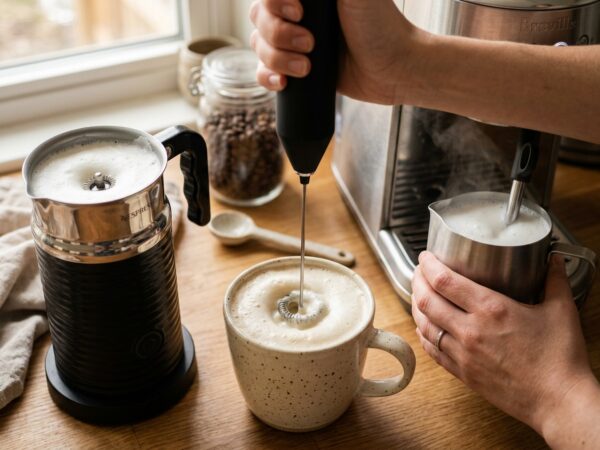
Espresso also serves as the foundation for milk-based drinks like lattes, cappuccinos, and flat whites. If those are your go-to orders at a café, that’s espresso doing the work underneath the steamed milk. French press coffee can’t replicate that concentrated base — diluting it with milk just makes it taste like weak, milky coffee.
Pro Tip: If you want to appreciate the difference clearly, try tasting both black, side by side, made with the same beans. The contrast is striking.
Cost: What You’re Really Spending
Let’s talk money, because this is often the deciding factor for people — and the gap between these two methods is enormous.
French Press: The Budget-Friendly Option
A solid French press costs between $20 and $50. Brands like Bodum’s Chambord and the Espro P7 (with its double micro-filter) cover a range from basic to premium. Even the best French presses rarely cross $100.
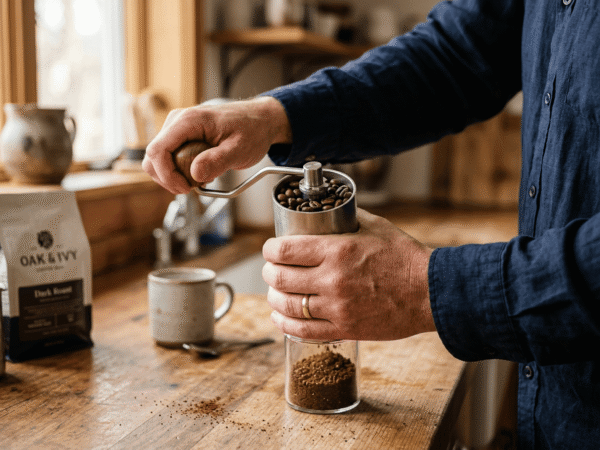
Beyond the brewer, you need coarsely ground coffee and hot water. That’s the entire equipment list. You can boil water in a regular kettle. You can buy pre-ground coffee if you’re not ready to invest in a grinder (though freshly ground always tastes better). If you do want a grinder, a quality hand coffee grinder runs between $30 and $80 and works beautifully for French press.
Total startup cost? Realistically, under $80 for everything you need to make genuinely excellent coffee.
Espresso: An Investment You Should Think About
Here’s where things get real. Entry-level espresso machines with a pressurized portafilter — like the Breville Bambino or DeLonghi Stilosa — start around $150 to $300. They’ll make espresso-style drinks, but purists will tell you the quality has limits.
Mid-range machines with proper pressure, PID temperature control, and unpressurized baskets (the Breville Barista Express, Gaggia Classic Pro, Rancilio Silvia) fall in the $400 to $800 range. And then there’s the prosumer and commercial territory — La Marzocco, Decent Espresso, Profitec — where you’re spending $1,500 to $3,000+.
And the machine is only part of it. Espresso demands a quality burr grinder capable of making very fine, consistent adjustments. A decent espresso grinder (Baratza Sette 270, Eureka Mignon series, 1Zpresso JX-Pro for manual) costs another $150 to $400.
Add a tamper, a scale, a knock box, maybe a WDT tool for distribution, and you’re looking at a total startup cost of $500 to $1,500 for a proper home espresso setup. That’s a serious commitment.
Quick Fact: The ongoing cost per cup is actually pretty similar for both methods — roughly $0.30 to $0.75 depending on your bean choice. Espresso uses less coffee per serving (about 18g for a double shot vs. 30g for a French press), but the equipment investment is where the real difference shows.
Ease of Use and the Learning Curve
If you’re a beginner, this matters way more than most comparison articles admit.
French Press: Forgiving and Straightforward
The French press learning curve is gentle. You can make a very good cup on your first try if you follow basic ratios (1:15 coffee-to-water is a solid start), use water just off the boil (around 200°F), and steep for four minutes.
Is there room to improve? Absolutely. You can experiment with brew time, water temperature, stirring techniques, and even the James Hoffmann method (which skips the plunge entirely and lets the grounds settle naturally). But the baseline quality is already high even without obsessing over details.
Cleanup is simple too. Dump the grounds, rinse the carafe, done. Some people find the used grounds slightly messy compared to popping out an espresso puck, but it’s a minor complaint.
If you’re curious how French press stacks up against other simple methods, you might enjoy our comparison of French press vs drip coffee or how it differs from a moka pot.
Espresso: A Skill You Develop Over Time
Making espresso at home is a hobby as much as it’s a coffee method. You need to dial in your grind size (tiny adjustments make big differences), get your dose right, distribute and tamp evenly, manage your machine’s temperature stability, and time your shot.
A classic target for espresso is 18g of ground coffee in, 36g of liquid out, in about 25 to 30 seconds. If your shot runs too fast, it’ll taste sour and watery. Too slow, and it’ll be bitter and harsh. Adjusting grind size by even one or two notches on your grinder can swing the result from undrinkable to exceptional.
This isn’t meant to scare you off — lots of people genuinely love the process. The tinkering, the ritual, the satisfaction of pulling a great shot. But be honest with yourself about whether that sounds exciting or exhausting. If you just want good coffee with minimal effort, French press wins this category without a fight.
Did You Know? The word “espresso” doesn’t actually mean “fast” in the way most people think. It comes from the Italian word meaning “pressed out” — referring to the water being pressed through the coffee grounds. The speed is a byproduct of the pressure, not the point.
Time and Convenience: Your Morning Routine Matters
Your brewing method has to fit your life. That 6:45 AM alarm doesn’t care about your coffee philosophy.
French press takes about 5 to 6 minutes total — boiling water, steeping, plunging, pouring. It’s hands-off during the steep, so you can brush your teeth or check your phone while it brews. And it makes multiple cups at once. A standard 34-ounce press brews about 4 cups, which is great if you share with a partner or want seconds.
Espresso is technically faster per shot — under a minute once the machine is warmed up. But here’s the catch: machine warm-up time. Most home espresso machines need 15 to 30 minutes to reach stable brewing temperature. Some higher-end machines with insulated boilers heat up faster, but budget machines definitely need that warm-up.
So the real-world time for espresso is more like 20 to 35 minutes from flipping the switch to drinking your first sip, unless you put your machine on a smart plug or timer.
Also, espresso makes one or two servings at a time. If you’re brewing for a group, you’re pulling shot after shot, which gets tedious fast. French press is clearly the more practical choice for multi-cup situations.
Health Considerations Worth Knowing
People don’t always think about this, but your brewing method does affect what ends up in your cup beyond flavor.
French press coffee contains higher levels of cafestol and kahweol — two compounds found in coffee oils. These diterpenes are linked to modest increases in LDL cholesterol levels when consumed regularly in significant amounts. A 2020 study published in the European Journal of Preventive Cardiology found that unfiltered coffee (including French press) was associated with slightly higher cholesterol levels compared to filtered coffee.
Espresso falls somewhere in the middle. It’s unfiltered too, but because you drink much smaller volumes per serving, the total cafestol intake is lower per cup than French press.
Warning: If your doctor has flagged cholesterol as a concern, this doesn’t mean you need to avoid French press entirely. Drinking 1 to 2 cups daily is generally fine for most people. But if you’re consuming 5+ cups of unfiltered coffee per day, it’s worth a conversation with your healthcare provider.
Caffeine content is another common question. A typical 8-ounce cup of French press coffee contains about 80 to 100mg of caffeine. A double espresso shot has roughly 60 to 80mg. Per ounce, espresso is far more concentrated, but since you drink less volume, the total caffeine intake per serving is actually slightly lower.
Which One Fits Your Lifestyle?
This is really what the decision comes down to. Your preference between French press and espresso probably depends less on which one makes “better” coffee and more on how you live, what you enjoy, and what you’re willing to invest.
French Press Makes More Sense If You:
Prefer a simple, meditative morning ritual. Want full-bodied, rich coffee without fuss. Don’t want to spend much on equipment. Brew multiple cups at once for yourself or others. Travel often and want something portable (a French press works anywhere you have hot water). You’re newer to specialty coffee and want an approachable entry point.
Espresso Makes More Sense If You:
Love concentrated, intense coffee flavors. Enjoy milk-based drinks like lattes and cappuccinos at home. View coffee brewing as a skill-based hobby you want to develop. Have the budget for quality equipment. Prefer a quick single serving once your machine is warmed up. Want café-quality drinks without the café price tag over time (the math works out after about a year if you were spending $5/day at a coffee shop).
Some people end up owning both — and that’s not as redundant as it sounds. A French press for slow weekend mornings, an espresso machine for quick workday shots and afternoon lattes. If your budget allows it, the two methods complement each other beautifully.
If you’re also exploring other options outside these two, it’s worth checking out how French press compares to an AeroPress or even a Chemex. Different tools solve different problems.
The Beans Matter More Than You Think
Here’s something most comparison articles skip over: no matter which method you choose, the quality of your coffee beans has a bigger impact on your cup than the brewer itself. A $30 French press with freshly roasted specialty beans will outperform a $2,000 espresso machine loaded with stale, pre-ground supermarket coffee.
For French press, medium to dark roasts tend to shine. The immersion process highlights body and sweetness, which these roast levels bring out naturally. Single-origin beans from Brazil, Colombia, or Sumatra work beautifully.
For espresso, medium roasts are a versatile sweet spot. Traditional Italian-style espresso leans darker, but the specialty coffee world has shifted toward medium and even light roasts that showcase brighter, fruitier notes in espresso form. If you’re choosing beans specifically for espresso, here’s a helpful guide on the best coffee beans for espresso machines.
Regardless of method, buy whole bean coffee and grind it fresh right before brewing. Pre-ground coffee starts losing aroma and flavor within minutes of grinding. A decent hand grinder is one of the best investments you can make for any brewing method. Your coffee will taste noticeably better overnight.
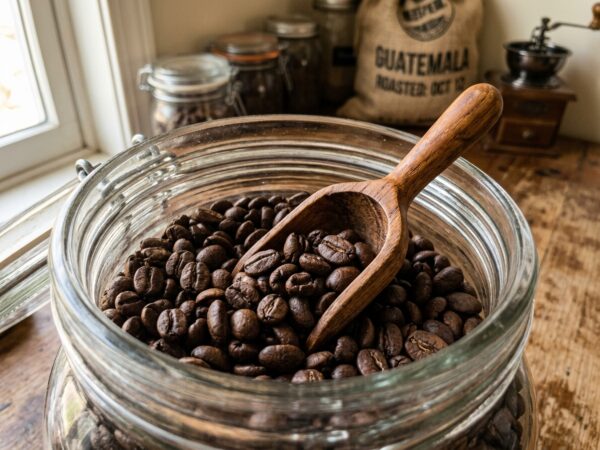
And don’t forget proper storage. Keep your beans in an airtight container, away from light, heat, and moisture. Simple step, big difference.
FAQ
Is French press coffee stronger than espresso?
It depends on how you define “stronger.” By concentration, espresso is far more intense — it has more dissolved coffee per ounce. But by total caffeine per serving, an 8-ounce cup of French press coffee often delivers slightly more caffeine than a single or double espresso shot. So if you mean bold flavor, espresso wins. If you mean caffeine kick from a full cup, French press edges ahead.
Can I make espresso-style coffee with a French press?
Not really. Espresso requires high pressure (9 bars) to achieve its characteristic concentration and crema. A French press uses zero pressure — it’s purely gravity and immersion. You can brew a stronger French press by using a higher coffee-to-water ratio, but it won’t taste like espresso. If you want a pressure-brewed concentrate without a full espresso machine, a moka pot gets closer to that style.
Which method wastes less coffee?
Espresso uses less coffee per serving — about 14 to 18 grams for a double shot, compared to 28 to 35 grams for a typical French press serving. If you’re tracking how quickly you go through a bag, espresso is more efficient per cup. But keep in mind you’ll probably pull multiple shots per day, so the weekly usage often evens out.
Is French press coffee bad for you?
Not for most people. The concern about unfiltered coffee and cholesterol (due to cafestol) is real but modest. If you’re drinking a reasonable amount — say, 2 to 3 cups daily — and you don’t have existing cholesterol issues, French press coffee fits perfectly well into a healthy routine. If you’re concerned, alternating between French press and a paper-filtered method can reduce your cafestol intake.
Do I need an expensive grinder for French press?
No. French press uses a coarse grind, which is much more forgiving than espresso’s ultra-fine requirements. Even a $30 to $50 hand burr grinder does an excellent job for French press. Espresso, on the other hand, practically demands a high-quality grinder with precise micro-adjustments — and those cost significantly more.
So, Which One Deserves Your Counter Space?
If you’ve read this far, you probably already have a gut feeling about which method calls to you. Trust that instinct.
French press is quiet, simple, and deeply satisfying in its own way. It’s coffee stripped down to the essentials — grounds, water, time. There’s something genuinely calming about pressing that plunger down on a Sunday morning with nowhere to rush off to.
Espresso is a different kind of love. It’s more demanding, more technical, and more expensive to do well. But that first time you pull a shot at home that rivals what your favorite café serves? That feeling is hard to beat.
You don’t have to commit to one forever. Start with whichever matches your budget and lifestyle right now. Your coffee journey will evolve — and that’s exactly how it should work. The best brewing method is the one that gets you excited to make coffee tomorrow morning.