Brew the same beans in a V60 and a Chemex, and you can end up with cups that feel almost like different coffees. One often tastes brighter and more lively. The other comes out cleaner, softer, and smoother. If you’re comparing V60 vs Chemex, you probably don’t need coffee jargon. You need a clear answer on taste, ease, cost, and which one actually fits your morning routine.
V60 vs Chemex at a glance
The short answer
The biggest difference in V60 vs Chemex is simple: a Hario V60 gives you more control and a more vivid cup, while a Chemex gives you a cleaner, lighter cup because it uses much thicker paper filters.
A V60 is a cone-shaped dripper. You place it over a mug or server, add a paper filter, and pour water by hand. It’s known for clarity, control, and flexibility.
A Chemex is both a brewer and a carafe in one piece. It was designed by chemist Peter Schlumbohm in 1941, and it became famous not just for coffee, but for its design too. In fact, the Chemex is part of MoMA’s permanent collection in New York.
So which one should you pick?
If you want single-cup brewing, lower cost, and more control, the V60 usually makes more sense.
If you want very clean coffee, easy serving for two or more people, and a beautiful brewer on the counter, the Chemex is a strong pick.
Here’s the side-by-side view that matters most:
| Factor | V60 | Chemex |
|---|---|---|
| Brewer style | Cone dripper | Brewer + carafe |
| Filter type | Thin paper filters | Thick proprietary paper filters |
| Cup profile | Bright, punchy, aromatic | Clean, smooth, tea-like |
| Body | Slightly more texture | Lighter body |
| Control | High | Moderate |
| Best for | 1–2 cups | 2–4 cups |
| Learning curve | A bit steeper | Easier to get a clean cup, but not foolproof |
| Up-front cost | Lower | Higher |
| Portability | Great, especially plastic V60 | Poor, glass and bulky |
Quick fact: The V60 gets its name from its 60-degree cone angle. That angle, along with the spiral ribs and large hole at the bottom, is a big part of how it brews.
What actually changes in the cup?
The filter matters more than most people think
A lot of people look at these brewers and think, “They’re both pour-over, so how different can they be?” Fair question. The answer is: more than you’d expect.
Think of the filter as a gate. It decides how much oil, fine coffee dust, and dissolved flavor gets into your cup.
V60 filters are thinner. They let more of the coffee’s natural oils and tiny particles pass through. That usually gives you more aroma and a little more texture.
Chemex filters are much thicker. They catch more oils and fine particles. That’s why Chemex coffee often tastes extra clean, almost polished.
Neither result is “better” on its own. It depends on what you enjoy.
If you like coffee that feels crisp and expressive, the V60 often wins.
If you like coffee that feels elegant, smooth, and almost tea-like, the Chemex has a clear edge.
Brewer shape and flow change extraction too
The word extraction just means how much flavor the water pulls from the coffee grounds.
A V60 has a large opening at the bottom. Water can move through it quickly, especially if your grind is too coarse or your pour is too aggressive. That’s why the V60 rewards good technique. Small changes in grind size, pouring speed, or water flow can change the cup a lot.
The Chemex slows things down. Its thick filter and deeper coffee bed often create a longer brew time. That slower pace can round off rough edges and give you a softer cup.
Still, slower doesn’t always mean easier. Grind too fine in a Chemex, and the brew can stall. “Stall” just means the water drains painfully slowly. Then your coffee can taste dry, heavy, or flat.
Which one tastes stronger?
This is one of the biggest points of confusion in V60 vs Chemex.
If by “stronger” you mean more concentrated, either brewer can make equally strong coffee. Strength mostly comes from your coffee-to-water ratio.
If by “stronger” you mean bolder in flavor, the V60 often feels stronger. It tends to highlight brightness, aroma, and detail in a more direct way.
The Chemex can taste lighter even with the same beans and the same ratio. That’s because the thicker filter removes more of the stuff that adds weight and intensity.
Here’s a real-world example.
Take a washed Ethiopian coffee with floral and citrus notes. In a V60, you might get lemon, jasmine, and a crisp finish. In a Chemex, the same coffee may taste softer, sweeter, and more like black tea with citrus.
Try a medium-roast Colombian coffee, and the gap changes a bit. The V60 might give you brighter fruit and cocoa. The Chemex might lean more toward smooth caramel and a clean finish.
Common misconception: cleaner doesn’t mean weaker. It just means more of the coffee oils and tiny particles got trapped in the paper.
One more practical point: if you add milk and sugar to your coffee, the V60 vs Chemex difference gets smaller. Not invisible, but smaller. If you drink your coffee black, the choice matters much more.
Which one is easier to brew every day?
Is the V60 harder to master?
In most cases, yes.
The V60 gives you more control, and control is great once you know what you’re doing. But it also means your mistakes show up faster.
Pour too fast? The cup may taste thin.
Grind too coarse? You may get a sour, empty brew.
Pour in one spot too hard? Water can rush through one area and ignore the rest of the coffee bed.
That said, the V60 is still the brewer I’d suggest to many beginners. Sounds odd, right? Here’s why.
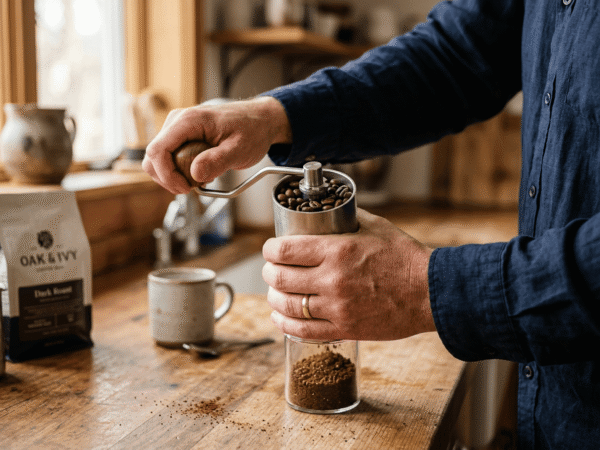
A plastic V60 02 is cheap, durable, and easy to practice with. You can brew one mug at a time, waste less coffee, and learn quickly. A consistent grinder matters a lot here, so if your setup needs work, this guide on choosing a coffee grinder for drip coffee is worth a look.
You don’t need perfect barista hands either. A gooseneck kettle helps, especially with the V60, but you can still make good coffee with a regular kettle if you pour slowly and stay steady.
Is the Chemex better for beginners?
Sometimes, yes. Sometimes, not really.
The Chemex makes it easier to get a cup that tastes clean and smooth. Its thick filter does some of the smoothing for you. That’s helpful if you want coffee with low sediment and a tidy flavor profile.
But the Chemex also asks for a few things beginners don’t always think about.
You need to rinse the filter well, or you may taste paper.
You need to place the folded filter correctly, with the thicker side over the pour spout, or airflow can suffer.
You often use more coffee per brew, which means each practice round costs a bit more.
And if you mostly brew one mug before work, a Chemex can feel like extra glass and extra effort.
So here’s the honest answer: if your goal is one daily cup and lower cost, the V60 is usually the smarter first buy. If your goal is serving two or three people with clean, elegant coffee, the Chemex may feel easier and more natural.
Four things that quietly ruin both brewers
A lot of bad cups get blamed on the brewer when the real problem is somewhere else.
- Stale beans: Flat beans make flat coffee. Good coffee bean storage habits help more than most people realize.
- Inconsistent grind: Too many fine particles can choke a Chemex. Too many large chunks can make a V60 taste weak.
- No scale: Eyeballing coffee and water makes repeatable results almost impossible.
- Skipping the filter rinse: You’ll lose heat and may add a papery taste to the cup.
If your coffee tastes sour and hollow, grind a little finer.
If it tastes bitter or takes forever to finish, grind a little coarser.
That small adjustment fixes more brews than fancy technique ever will.
Cost, size, and daily-use reality
Up-front cost and gear
A V60 is usually the cheaper way in.
A plastic V60 often costs very little, and it brews shockingly well for the price. Ceramic, glass, and metal versions cost more, but the brewing idea stays the same.
The Chemex costs more up front. You’re paying for the glass vessel, the design, and the fact that it works as both brewer and server.
Still, don’t get too hung up on the brewer alone. Your grinder, scale, kettle, and fresh beans matter more than the jump from one dripper material to another.
Also, don’t assume plastic means “cheap quality.” Plenty of home brewers and baristas still prefer the plastic V60 because it’s durable, light, and easy to use.
If breakage worries you, take a look at these best metal pour over coffee maker options. They’re handy if you want something tougher than glass.
Filter cost and availability
This part gets ignored in a lot of comparisons, but it matters if you brew every day.
V60 filters are usually cheaper and easier to find. As of 2026, both V60 and Chemex filters are easy to buy online, but local shops still tend to stock V60 papers more often.
Chemex filters cost more per brew. Not wildly more, but enough to notice over time.
If you brew daily on a budget, the V60 wins the long game.
Single cup or batch brew?
This is where the decision often gets easy.
A V60 shines for one person. You can put it right on top of your favorite mug and brew 250 to 350 ml without much fuss. A V60 02 can also handle more, so one brewer works well for solo mornings and the occasional second cup.
The Chemex shines once you move into shared coffee. It feels right at home brewing for two, three, or four people.
There’s one catch that trips up a lot of buyers: Chemex cup sizes are smaller than most people expect.
A 6-cup Chemex does not mean six big diner mugs. Chemex counts a cup at about 5 ounces. In real life, that’s closer to two large mugs plus a little extra.
So if you mostly brew one cup, the Chemex can feel oversized. If that’s your routine, you may want to browse options made for solo brewing in this roundup of the best single cup pour over coffee maker.
Cleanup and durability
Both brewers are pretty easy to clean.
The V60 has less glass to handle, especially if you use the plastic version. Rinse it, dry it, and you’re done.
The Chemex is still simple, but it’s bulkier. The narrow neck can make cleaning a little awkward if you don’t have a bottle brush. It also takes up more shelf space.
And yes, it’s glass. Beautiful glass, but still glass.
Warning: If you’re clumsy before your first coffee, the Chemex asks for trust.
For travel, rushed mornings, or office use, the V60 is usually the more practical choice.
For slow weekend brewing at home, the Chemex feels special in a way few brewers do.
Who should choose V60 and who should choose Chemex?
Choose the V60 if you want control and flexibility
The V60 is a great fit if you enjoy tweaking things.
Maybe you like trying different beans and actually noticing the differences. Maybe you brew one mug at a time. Maybe you want a cheap entry point without locking yourself into a big brewer.
That’s V60 territory.
It also suits people who want to learn. The feedback is fast. You change the grind, the pour, or the recipe, and you can taste what happened.
If you’re not even sure pour-over is your style yet, it may help to read this French press vs pour over comparison. Some people really want heavier, fuller coffee, and that’s a different path.
For most home brewers, a plastic V60 02 is the safest first buy.
Choose the Chemex if you care most about clean cups and presentation
Some people want coffee that looks beautiful, brews for a small group, and tastes extra clean.
That’s where the Chemex earns its place.
It’s perfect for slow breakfasts, guests at the table, or anyone who loves a lighter body and a polished cup. The Chemex also smooths out some of the harsher notes in darker or less delicate coffees.
And let’s be honest, the ritual matters too. Brewing with a Chemex feels good. It turns coffee into a moment.
If you want step-by-step help after buying one, this Chemex pour-over guide will walk you through the process.
Do you need both?
Not always.
A lot of coffee people own both because they enjoy the difference in the cup. That makes sense if you brew often and like experimenting.
But if you already own one and your results are only okay, don’t rush to buy the other. A better grinder, fresher beans, or a more repeatable recipe may improve your coffee more than a second brewer.
Here’s the plain advice.
Own a Chemex but want more brightness, faster single cups, and more control? Add a V60.
Own a V60 but want cleaner batch brews and a more elegant serving setup? Add a Chemex.
Using dark roasts with milk most of the time? You probably don’t need both.
Common misconception: owning more brewers doesn’t automatically mean better coffee. Learning one brewer well usually helps more.
Two easy recipes that work
Simple V60 recipe for one mug
Use this as a starting point, not a rule carved in stone.
You’ll need: 15 g coffee, 250 g water, medium-fine grind, water around 92–96°C.
- Rinse the V60 filter with hot water and dump the rinse water.
- Add the ground coffee and level the bed gently.
- Start your timer and pour about 30 g of water to wet all the grounds. This is the bloom, which helps fresh coffee release trapped gas. Wait 30 to 40 seconds.
- Pour slowly in small circles up to 150 g, then keep going to 250 g.
- Aim to finish the brew around 2:30 to 3:15.
If it tastes sharp or sour, go a bit finer.
If it tastes bitter or drags too long, go a bit coarser.
Simple Chemex recipe for two mugs
This is a reliable place to start for a 6-cup Chemex.
You’ll need: 30 g coffee, 500 g water, medium-coarse grind, water around 92–96°C.
- Fold and place the Chemex filter so the thicker multi-layer side sits over the spout.
- Rinse the filter well with hot water, then pour out the rinse water.
- Add the coffee and bloom with about 60 g of water for 45 seconds.
- Pour in steady pulses until you reach 300 g, then 400 g, then 500 g.
- Let the brew finish around 4:00 to 5:30, remove the filter, and serve.
A little slower than the V60? That’s normal.
If it stalls and tastes dry, your grind is probably too fine.
Pro tip: Change only one thing at a time. Don’t change the grind, dose, and pour style all in the same brew or you won’t know what fixed the cup.
- FAQ Section
Is V60 or Chemex better for beginners?
For most people, a plastic V60 02 is the better beginner buy because it’s cheaper, uses less coffee per practice brew, and works well for one mug. The Chemex can still be beginner-friendly if you usually brew for two or more people and want a very clean cup. The V60 teaches technique faster. The Chemex gives you a smoother result more easily.
Does Chemex make stronger coffee than V60?
No, not by default. Strength mostly depends on your coffee-to-water ratio. A Chemex often tastes lighter because its thick filter removes more oils and fine particles. A V60 often feels bolder because more aroma and texture make it into the cup. So the flavor impression changes, even if the actual strength is similar.
Can you use Chemex filters in a V60?
You can force it in a pinch, but it’s not a good everyday idea. Chemex filters are thicker and shaped differently, so they change flow a lot. That can make a V60 brew much slower and less predictable. For steady results, use V60 filters in a V60 and Chemex filters in a Chemex.
What grind size should you use for V60 and Chemex?
Start with medium-fine for a V60 and medium-coarse for a Chemex. In kitchen terms, V60 coffee should look a bit like table salt. Chemex coffee should look closer to coarse sand or sea salt. Then adjust by taste. Sour and thin usually means go finer. Bitter and slow usually means go coarser.
Is Chemex just a pour-over coffee maker?
Yes. A Chemex is a type of pour-over coffee maker. What makes it different is its all-in-one glass carafe design and its very thick paper filters. Those filters change the cup quite a bit, which is why Chemex coffee tastes cleaner than coffee from many other pour-over brewers.
- Conclusion
If your real life looks like one fresh mug before work, the V60 is probably the smarter choice. It’s cheaper, smaller, and more flexible.
If your best coffee moments happen on a slow morning with two or three people at the table, the Chemex makes a lot of sense. It serves beautifully and gives you that clean, smooth cup people love it for.
Pick the brewer that matches your routine, not the one that just looks nice online. Then brew the same recipe for a week, change one variable at a time, and trust your taste. That’s where better coffee starts.